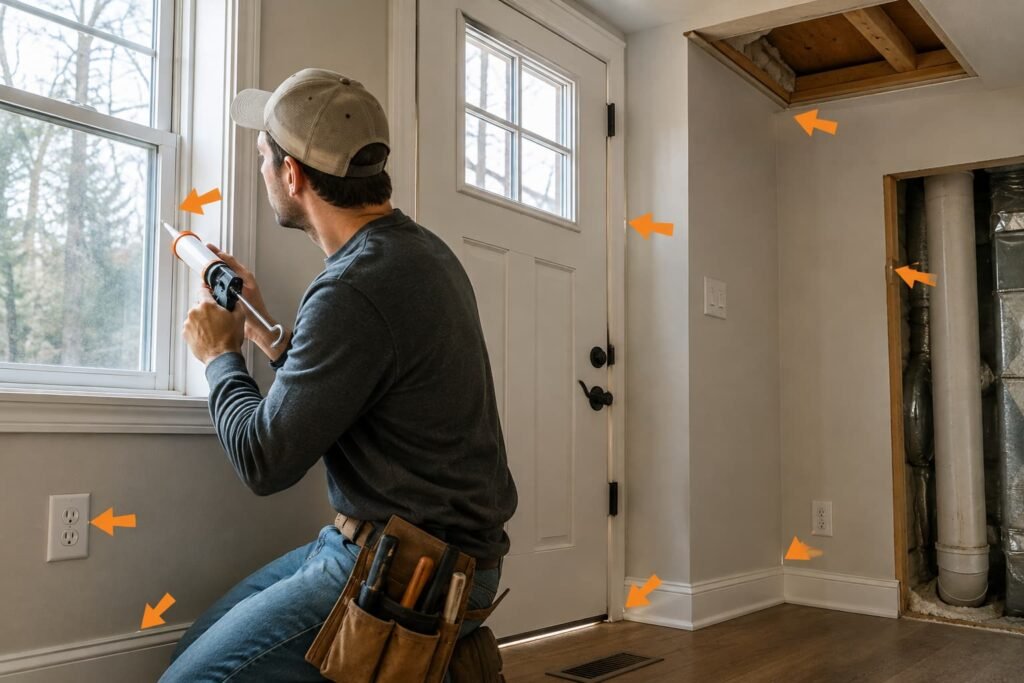
The usual home energy upgrades priority order is: deal with safety problems, find where the heat goes, air seal, insulate (attic first), seal leaky ducts, then replace heating, cooling and water heating equipment when it is due. Windows usually come last. A failing furnace or a safety hazard jumps the line. We print no payback figures here, because no public source can give one for your house without measuring it.
Windows, insulation, furnace, water heater. If you can afford one of them this year, the sections below show how to choose from what your own house is telling you.
The Home Energy Upgrades Priority Order at a Glance
Here is the whole sequence in one table. Each step is explained below.
| Step | What it covers | Why it sits here |
|---|---|---|
| 0. Safety check | Old wiring, vermiculite, gas and oil appliances | Energy work can make these worse |
| 1. Find the loss | A walk-through, then a blower door test | You cannot rank what you have not found |
| 2. Air sealing | Attic floor, top plates, rim joist | Insulation does not stop moving air |
| 3. Insulation | Attic first, then floors and basements | Works as rated once the air is stopped |
| 4. Ducts | Ducts in the attic, crawl space or garage | Leaks there lose air outside |
| 5. Equipment | Furnace, air conditioner, heat pump, water heater | Sized for the improved house |
| 6. Windows and doors | Repair, storm windows, replacement | Costly per opening; failed units come forward |
Treat it as a default, not a law. The rest of this page covers when to follow it and when to break it.
Step Zero: Safety Problems and Anything That Is Failing
Some things come before any energy work. ENERGY STAR's Attic Air Sealing Project guide (read 2026-09-24) warns: "Sealing in some cases can cause naturally venting combustion appliances to back-draft gases back into your home, creating unsafe conditions." If you have an oil or gas furnace, boiler or water heater, the same guide suggests hiring a Home Performance Contractor to test those appliances "before and after sealing your home."
The guide flags two more stop signs. Knob and tube wiring, which it dates to before 1930, "can be a fire hazard when in contact with insulation." That is a licensed electrician's call, and the insulation waits until the electrician has made it. Vermiculite insulation "may contain asbestos," and ENERGY STAR says not to disturb it unless an approved lab has tested it.
Failing equipment jumps the line too. A furnace that will not heat in January, or a water heater leaking from the tank, is a repair or replacement job now, whatever any list says. The licensed trade for that system comes first. The envelope can wait.
Step One: Find Where the Heat Actually Goes
You cannot put fixes in order until you know what is wrong. A slow walk with a flashlight and a notebook finds most of the big items: thin attic insulation, open chases around chimneys and plumbing stacks, gaps at the rim joist, and ducts with loose joints. Our DIY home energy audit walk-through covers the route, room by room.
If you want a measurement rather than a list, a blower door test puts a number on how leaky the whole house is. Our guide to the blower door test and what the number means explains how to read the result.
A professional assessment ends in a ranked list too. ENERGY STAR's Home Performance Assessment page (read 2026-09-24) describes it as "a prioritized list of improvement measures based on health and safety issues, comfort, and overall cost-benefit." Health and safety are named first there as well.
Step Two: Air Sealing Comes Before Insulation
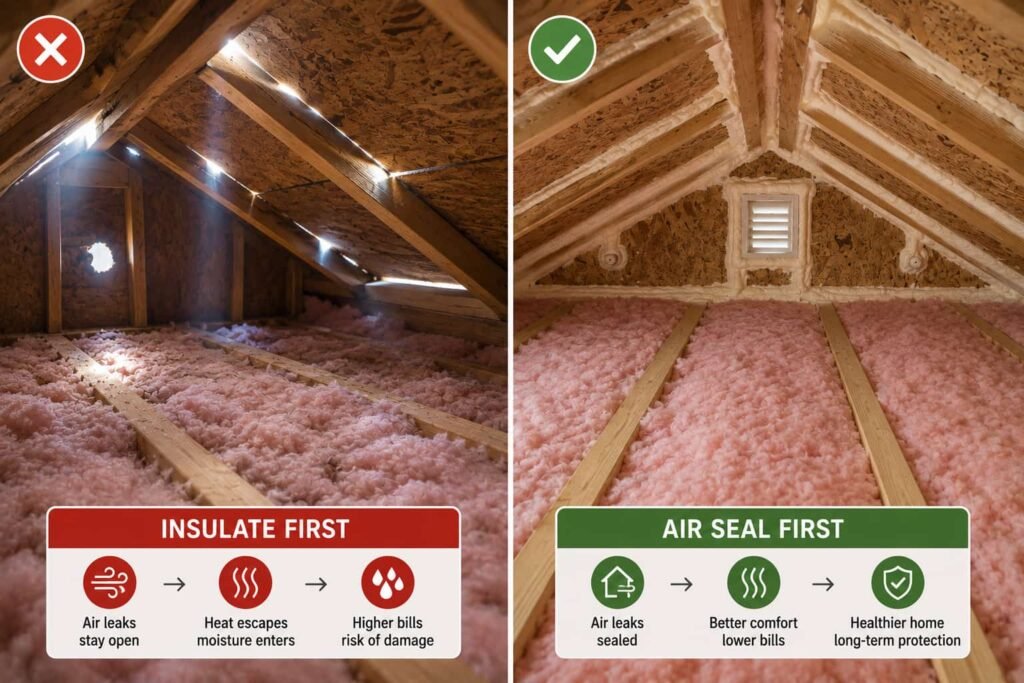
This is the step people skip most often, and the order matters. Fiberglass batts and loose-fill insulation slow heat moving through them, but they are not air barriers. Warm air leaking up through gaps in the ceiling carries heat past the insulation and into the attic.
ENERGY STAR builds this order into its own instructions. The attic air sealing guide says: "EPA recommends that you complete the attic insulation project after this project." There is a practical reason as well. Once new insulation covers the attic floor, the top plates, wire holes and plumbing penetrations underneath are buried and much harder to reach.
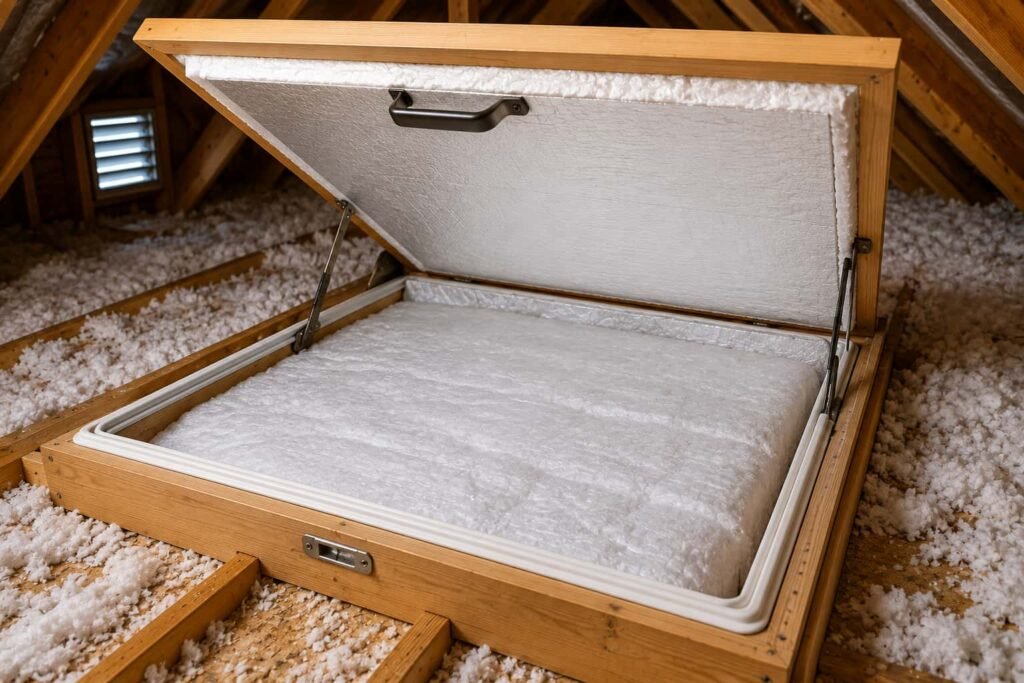
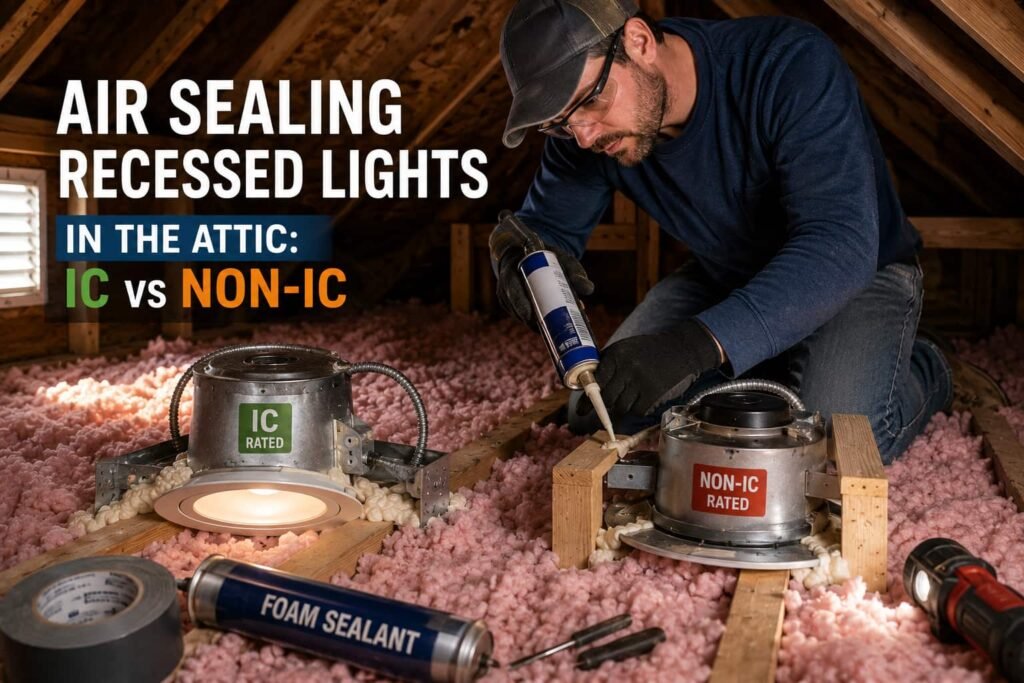
The usual targets are the attic floor, the tops of interior walls, the attic hatch, gaps around chimneys and flues, and the rim joist in the basement. Our explainer on why you air seal before you insulate covers the reasoning.
Step Three: Insulation, Starting With the Attic
With the leaks sealed, insulation can do its job. The attic usually comes first because it is often the easiest part of the house to reach and to add depth to. Floors over unheated crawl spaces and basement rim joists come next. Closed walls usually come last, because they are the hardest to get into.
This is the one savings figure we quote on this site. ENERGY STAR's Why Seal and Insulate? page (read 2026-09-24) says: "EPA estimates that homeowners can save an average of 15% on heating and cooling costs (or an average of 11% on total energy costs) by air sealing their homes and adding insulation in attics, floors over crawl spaces and basements." Read it as an average across many homes, not a forecast for yours. It covers sealing and insulating together, which is one more reason to treat them as a pair.
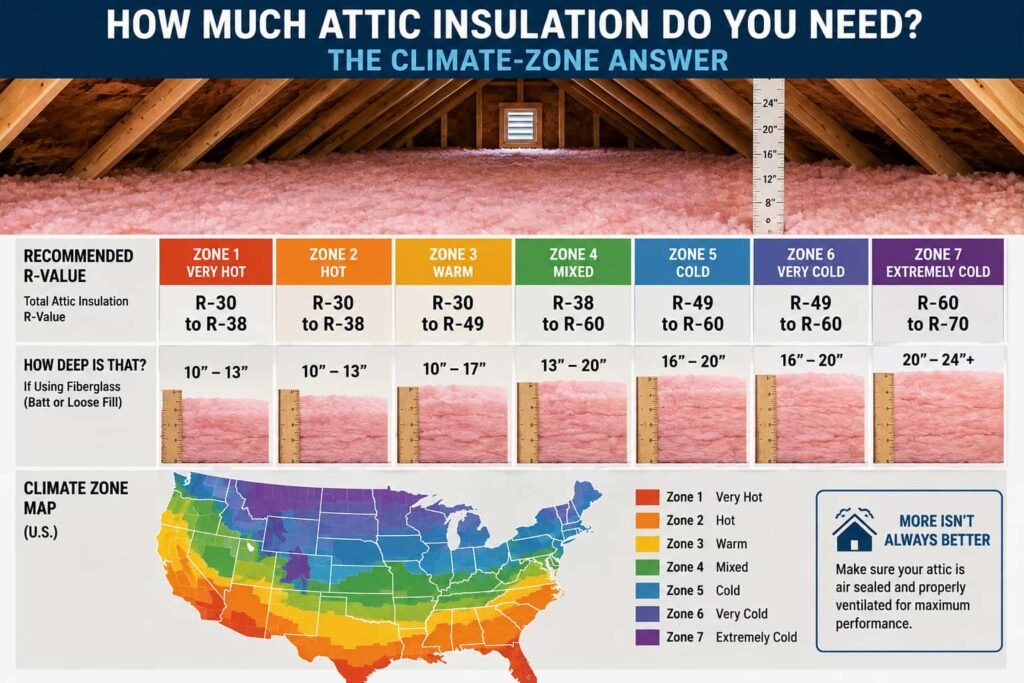
How much to add depends on your climate zone. Our guide to how much attic insulation you need uses the ENERGY STAR table, which is based on the 2021 IECC. State and local code adoption varies, and your local building department governs.
Step Four: Ducts Outside the Heated Space
If your ducts run through an attic, a crawl space or a garage, a leak in them loses air you already paid to heat or cool. That air ends up outside the living space instead of in a room.
That is why duct sealing sits after the envelope and before new equipment. A tight house with leaky attic ducts still wastes energy, and a new furnace or heat pump connected to those ducts carries the same loss forward.
Sealing the duct joints you can reach is often within a careful homeowner's skills. Anything that means opening the equipment, changing the layout of the system or working near the furnace's venting belongs to a licensed HVAC technician. Attic duct work also brings attic hazards with it: heat, footing and wiring.
Step Five: Equipment on Its Own Schedule
Heating, cooling and water heating equipment follow a different logic. The natural time to upgrade them is when they fail or wear out.
Two ideas help. Replacing working equipment early means buying a whole new unit to capture the difference in efficiency, while replacing at failure means you were buying a unit anyway, so the only question is which one. And the envelope work changes the answer. A sealed and insulated house needs less heating and cooling than it did, so a new system sized to match the old one can end up bigger than the house now needs.
That is where a room-by-room load calculation earns its place. The industry method is ACCA Manual J, and a careful HVAC contractor runs one instead of copying the old unit's label. The installation belongs to licensed trades: an HVAC technician with EPA Section 608 certification for refrigerant work, a gas fitter for gas lines, a plumber for water heater connections and an electrician for new circuits.
Where Windows and Doors Fit
Windows are often the first upgrade people think of and the last one this order reaches. New windows are among the most expensive items on this list, bought one opening at a time, and the attic, the air leaks and the ducts can usually be dealt with first.
The exceptions are real. Broken glass, a rotted sash, or fog between the panes from a failed seal is a repair problem, and repairs come forward. So does an exterior door that no longer closes tight against its weatherstripping.
Replacement is not the only option either. ENERGY STAR's Home Upgrade page (read 2026-09-24) lists "High Performing Windows or Storm Windows" among its six improvements, and says you "can choose the improvements that make the most sense for your home and implement them at your own pace." Program details change, so confirm them on ENERGY STAR's or DOE's live pages before you plan around them. This guide does not cover tax credits or rebates.
Why We Will Not Rank These by Payback
Many pages answer this question with a payback table, and their percentages rarely agree with each other.
Our position, plainly: no public source gives a payback figure that holds for your house, so we will not print one. What decides your real order is a short list of variables, most of which you can check yourself.
- Climate zone. Cold and hot climates lose energy in different places and seasons.
- Fuel and local price. Gas, oil, propane and electricity prices differ by place and move over time.
- How leaky the house is now. A blower door number tells you; a guess does not.
- Existing insulation depth. Almost nothing is a different job from topping up.
- Equipment age and condition. A furnace near the end of its life changes the math.
- Where the ducts run. Inside the heated space or outside it.
- Who does the work. Your own labor and a contractor's price are different numbers.
A single figure that ignores all seven is a sales number, not a measurement.
If You Can Afford One Upgrade This Year
Start from what the house shows you, not from someone else's ranking.
| What you see | What usually goes first | Why |
|---|---|---|
| Furnace or water heater failing or unsafe | Repair or replacement by a licensed trade | Failure and safety override the order |
| Gas or oil appliances, and a plan to air seal | A drafting test before and after sealing | ENERGY STAR flags back-drafting risk |
| Drafts, a hot upper floor, thin attic insulation | Seal the attic floor, then insulate | ENERGY STAR ties its estimate to this pair |
| Attic or crawl space ducts with open joints | Seal what you can reach; a technician for the rest | Conditioned air is lost outside |
| Broken, rotted or fogged windows | Repair or replace those units | A failed unit is a repair job |
| No clear symptom | The DIY walk-through | You cannot rank what you have not found |
If two rows apply, the higher row usually wins: safety and failure first, then the envelope, then everything else.
When the Usual Order Changes
A few common situations reorder the list.
- A renovation opens walls or ceilings. Sealing and insulating an open cavity is far simpler than working through a finished surface later.
- Wet insulation or a moisture problem. Fix the water first. Insulating over a leak hides it.
- Knob and tube wiring anywhere in the work area. The job stops until a licensed electrician has assessed the wiring.
None of these changes the principle underneath. Reduce what the house needs first, then size and buy the equipment that supplies it.
Frequently Asked Questions
Should I insulate or replace windows first?
In most houses, air sealing and attic insulation come before window replacement. They use low-cost materials over large areas, and ENERGY STAR ties its sealing-and-insulating savings estimate to exactly that pair. A broken, rotted or fogged window is the exception and can come forward as a repair.
Should I air seal or insulate first?
Air seal first. ENERGY STAR's attic air sealing guide says "EPA recommends that you complete the attic insulation project after this project." New insulation also buries the gaps you need to reach.
Should I replace an old furnace before insulating?
If the furnace is failing or unsafe, it comes first, and a licensed HVAC technician handles it. If it still works well, sealing and insulating first lets a contractor size the replacement to the house as it will be, using a load calculation such as ACCA Manual J.
Is there a payback figure for each upgrade?
Not one that holds for every house, so we do not print one. It depends on climate, fuel prices, air leakage, insulation depth, equipment age, duct location and who does the work. The one figure we quote is ENERGY STAR's average for sealing and insulating together.