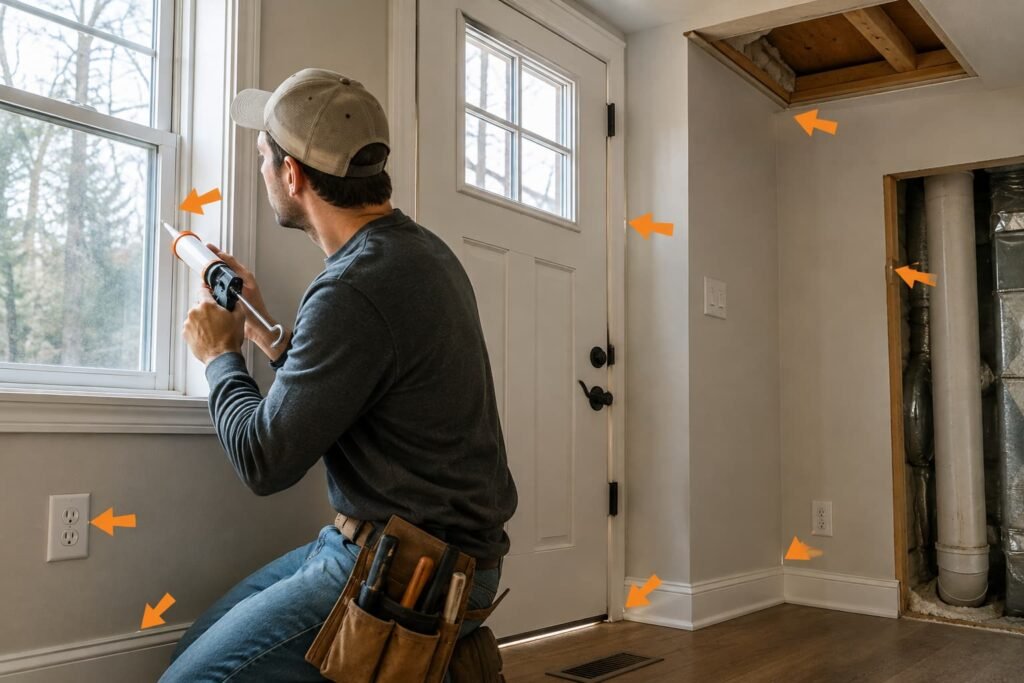
Replacement window installation air leaks almost always come from the joint around the window, not from the glass. The usual causes are a frame set out of square, a gap between the new frame and the old opening that was left empty or stuffed with loose fiberglass, interior trim put back without sealing, and exterior sealant that stops short. Before you blame the window, rule out cold air sliding off the glass. It feels like a draft, but it is not a leak.
This guide shows you how to tell which one you have, what to look at in each spot, and who should fix it.
Is It a Leak, or Just Cold Glass?
Glass is the coldest surface in most rooms. On a cold night, room air touching the pane cools, gets heavier and sinks. It slides down the glass, spills off the sill and rolls across the floor. You feel it on your ankles and it feels exactly like a draft. This is convection, and it happens even with a perfectly sealed window.
A real leak is outside air moving through a gap. The two behave differently:
- Convection is strongest on calm, very cold nights. It comes off the middle of the glass and falls straight down.
- A leak gets worse when the wind blows. It comes from a joint: a corner, a seam in the trim, the edge of the moving sash.
A lit incense stick settles the question. Hold it in front of the center of the glass, then along each joint. Smoke that drifts slowly downward off the glass is convection. Smoke that flutters, gets pulled sideways or blows back toward you at a joint is a leak. Only the second one is an installation question.
How to Test for Replacement Window Installation Air Leaks
Pick a cold, windy day. Wind pushes air through gaps that would sit still on a calm day, so a leak you missed in September often shows up in January.
- Close every exterior window and door in the house.
- Close and lock the window you are testing. On a double-hung or slider, the lock is what pulls the two sashes tight together.
- Turn on the bathroom exhaust fans and the range hood. They pull a little air out of the house, so outside air pushes in harder at every gap.
- Move a lit incense stick slowly along each joint: sash to frame, frame to trim, trim to wall, the sill (the stool), and any outlet on the same wall.
- Mark every spot where the smoke moves with a small piece of painter's tape.
Skip step 3 if your home has a fireplace, a wood stove, or a gas or oil appliance that vents up a chimney. Running exhaust fans hard can pull combustion gases back into the house. In that case, test on a windy day without the fans, or have a professional auditor do it with a combustion safety check.
This is the same smoke walk-through we use in a DIY home energy audit. If you want every leak in the house to show at once, a blower door test depressurizes the whole house with a calibrated fan, and window leaks become easy to find.
Four Places a New Window Leaks, and Whose Problem Each Is
Once your tape marks are up, sort them by location. The spot tells you the likely cause.
| Where the smoke moves | What else you notice | Likely installation cause | Usually fixed by |
|---|---|---|---|
| Between the moving sash and the frame | Lock is hard to engage, sash binds or rattles, uneven gap along the edge | Frame out of square, level or plumb; frame bowed by foam | Installer resets the window; manufacturer if a part is defective |
| Where the frame meets the interior trim | Trim feels cold, smoke pulls in at the corners | Gap between frame and opening left open or only stuffed with fiberglass | Installer |
| Where the trim or stool meets the wall | Air along the painted seam, dust lines on the trim | Trim reinstalled without sealing the joint | Installer, or you if the job is signed off |
| Outside, where the frame meets siding or brick | Draft plus water stains after storms | Sealant missing, cracked or stopping short at the corners | Installer |
| Middle of the glass, falling down | Worst on calm, very cold nights | Not a leak: convection off cold glass | Nobody; glass choice, not installation |
Most drafts on new windows land in rows two and three. Those are installation joints, and they are the installer's work.
Installation Mistakes You Can Check For
You do not need tools beyond a tape measure, a flashlight and the incense stick for these checks.
The frame is out of square
A window set square, level and plumb shows an even line of frame (the reveal) around the sash on all sides. A frame that is racked shows a wide gap on one side and a tight one on the other. Other signs: a double-hung lock that only lines up if you push on the sash, meeting rails that sit offset from each other, or a casement that does not pull tight when you crank it closed. Measure the frame opening corner to corner in both directions. If the two diagonals are noticeably different, the frame is out of square, and no amount of caulk will close the gap at the sash.
The gap behind the trim was stuffed, not sealed
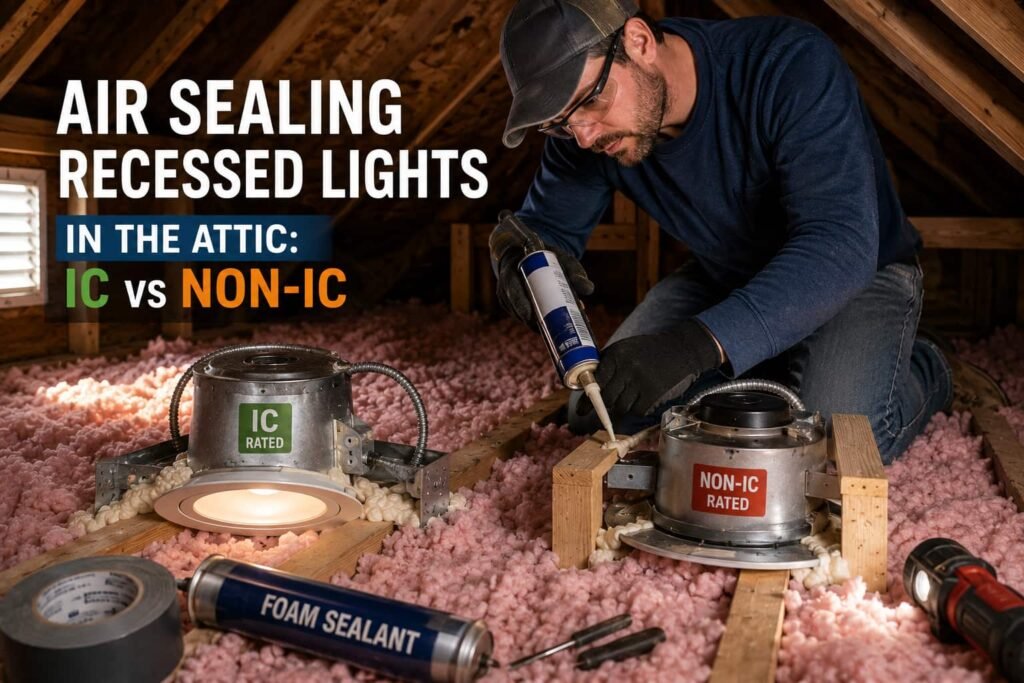
Every window has a gap between the new frame and the rough opening or old frame. Loose fiberglass pushed into that gap slows heat but does not stop air; air passes right through it. The gap needs an air seal: foam made for windows and doors, or backer rod with sealant over it. Our guide to matching caulk, foam or backer rod to the gap explains which material fits which width. You usually cannot see this gap without pulling the trim, so ask the installer to open one window's trim and show you. In a house built before 1978, do not pull painted trim yourself: ENERGY STAR's windows, doors and skylights page (read September 23, 2026) notes that contractors replacing windows must use lead-safe work practices under EPA rules.
Foam that pushed the frame out of shape
General-purpose expanding foam can push hard enough to bow a vinyl or thin frame inward. The sign is a sash that is tight in the middle of its travel and loose at the ends, or a lock that suddenly got harder to close after the job. A bowed jamb opens a gap at the weatherstrip that the window was never designed to have. That is a reset, not a sealant touch-up.
An insert install that left the old frame leaking
An insert (also called a pocket) replacement sits inside the old frame. Andersen's insert window replacement page (read September 23, 2026) describes inserts as installing "directly into the existing frame of the window you want to replace." That saves trim and plaster, but it means the old frame is still part of the air barrier. In older houses with double-hung windows, the old frame often hides hollow sash-weight pockets that connect to the wall cavity. If nobody filled and sealed them, air can bypass the new window entirely. Ask your installer what was done with the weight pockets.
Exterior sealant that stops short, or seals the wrong thing
From the ground, look where the frame or the metal capping meets the siding or brick. You want a continuous bead with no open corners or cracks. Do one thing carefully: the small slots or holes along the bottom of the frame are weep holes. They let water drain out and must stay open. Sealant over them is its own mistake. Leave upper-floor windows to the installer; this check is not worth a ladder.
The window was never fully locked
It sounds too simple, but check it first. A double-hung or slider left closed but unlocked can leak at the meeting rail on every windy day.
What to Do Once You Find the Leak
Read your paperwork before you touch anything. There are usually two warranties. The window maker's product warranty covers the unit. The installer's workmanship warranty covers how it went into the wall. Frame gaps, square and level, trim sealing and exterior sealant are all workmanship. A caulk bead you add yourself to a joint the installer is responsible for can complicate a claim, so call first.
When you call, bring evidence:
- Photos of each tape mark, with the date and the weather that day.
- Which window, which joint, and what the smoke did.
- Your ENERGY STAR and NFRC labels. The same ENERGY STAR page advises saving both as documentation.
Ask which installation instructions the crew followed. ENERGY STAR states that certified windows, doors and skylights "are required to have installation instructions packaged with the product or readily available online." Andersen's page says its instructions cover "preparing the rough opening, sealing, shimming, fastening, flashing and water management." If the crew skipped the sealing step, that is your case in one sentence. Ask for a reset where a frame is out of square, not a thicker bead of caulk over it.
What you can safely do yourself, once the job is signed off: seal the painted seam where the interior trim meets the wall. Anything at the moving sash, including its weatherstrip, is a call to the installer or the manufacturer under warranty, not a DIY job.
The Honest Part: The Window May Not Be Your Biggest Leak
Here is what a window quote rarely tells you. Even a perfect install leaves the rest of the house as leaky as it was. The draft you feel near the window may be coming from an outlet on the same wall, or from the whole house pulling cold air in low and pushing warm air out high through the attic.
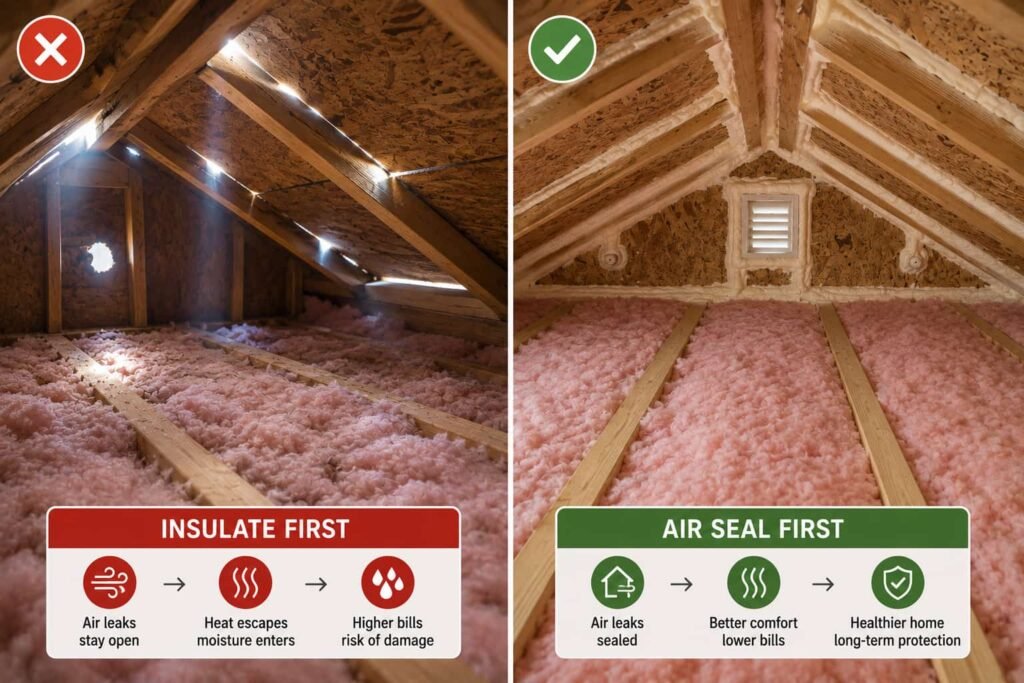
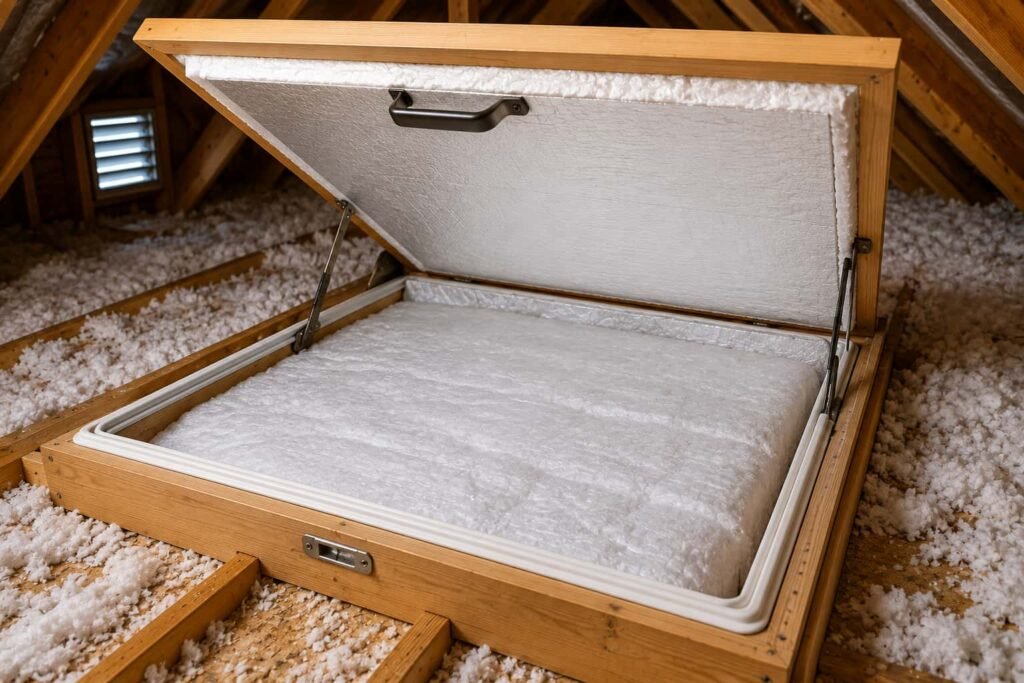
We will not give you a number for how much of your heat loss runs through the windows. It depends on the house, the climate and the windows, and a general figure would be a guess. What we can say is that the places that usually leak most are the ones you cannot see: attic top plates, plumbing and wiring holes, the rim joist, the attic hatch. Our guide on how to air seal your house walks through them in the order that pays off.
If you still have drafts after the installer fixes the joints, the window was probably not the whole story.
Checklist Before the Final Payment
Walk through this with the installer on site, on the coldest, windiest day you can manage:
- Every window locks without force and the reveal is even on all sides.
- The incense stick stays calm at every sash, trim and stool joint.
- The installer can tell you what went into the frame gap, and it was a sealant, not only fiberglass.
- On insert jobs, you know what happened to the old sash-weight pockets.
- Exterior sealant is continuous and the weep holes are open.
- You have the product labels, the warranty papers and the name of the installation instructions used.
Frequently Asked Questions
Should new replacement windows leak any air?
A new window, installed correctly and locked, should not produce a draft you can feel at its joints. If smoke moves at the trim, the frame edge or the sash on a windy day, something in the installation or the unit needs attention. Cold air falling off the glass on a calm night is convection, not a leak.
Why do my new windows feel cold even though nothing is leaking?
Room air touching cold glass cools and sinks, then rolls across the floor. It is strongest on still, very cold nights. An incense stick held in front of the glass shows it: the smoke drifts downward rather than being pulled sideways at a joint.
Can I just caulk around the new window myself?
You can seal the seam where interior trim meets the wall once the job is signed off. Leave the frame gap, the sash and the exterior joints to the installer while the workmanship warranty is active, and never seal the weep holes at the bottom of the frame.
Do insert replacements leak more than full-frame replacements?
Not automatically. An insert keeps the old frame, so there are more joints to seal and the old frame must be sound. A full-frame job exposes the rough opening, so the gap can be sealed directly. Either one leaks if the installer skips the air seal around the frame.
How do I find leaks that the incense test misses?
A blower door test run by an energy auditor depressurizes the whole house, which makes small leaks much easier to find. It also shows whether the windows are really where your drafts come from.