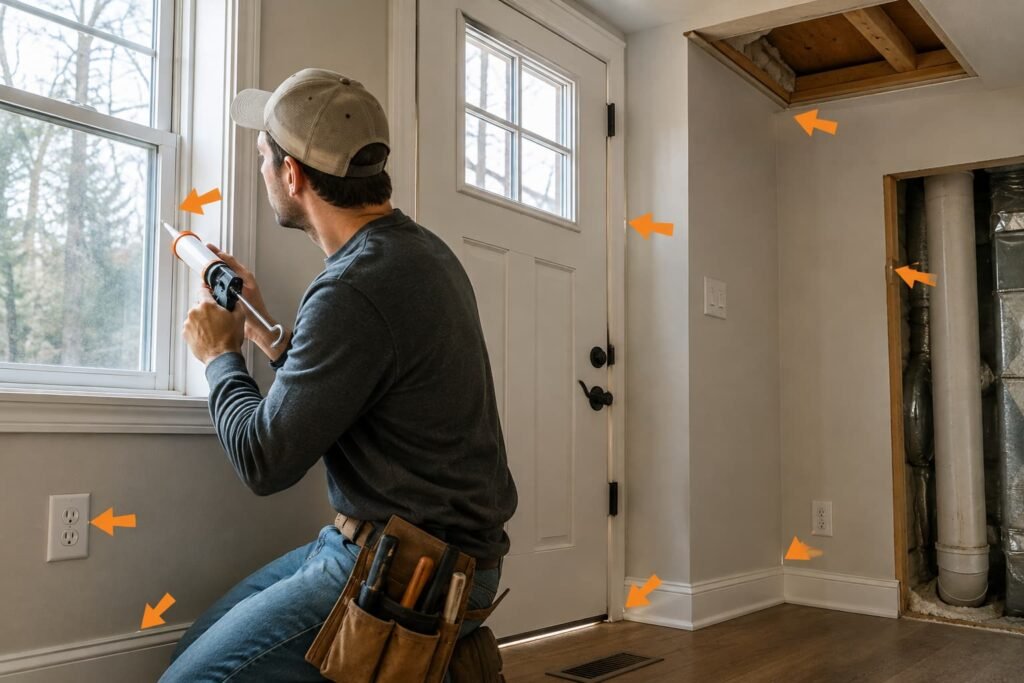
Short answer: Your single pane windows energy options, short of replacement, come down to four moves. Repair the sash so it closes and holds its glass. Add a second layer of glass with an exterior storm window or an interior insert, ideally low-e. Hang an insulating shade for nights. And before any of that, seal the attic and basement, because that is usually where more heat escapes. Original windows can stay.
That is the whole plan. The rest of this page explains the order, the trade-offs between each option, and the one hazard in old windows that most guides leave out.
What a single-pane window actually loses
An old window loses heat in two different ways, and each option below fixes a different one.
The first is conduction through the glass. One sheet of glass is a thin barrier between a warm room and cold air. Heat moves straight through it. No amount of caulk changes that. Only a second layer of glass, or something covering the glass, slows it down.
The second is air leakage around the sash, the meeting rail and the frame. Loose putty, a warped sash, a cracked pane or a gap at the sill lets outside air in directly. That is the draft you feel on your hand.
Knowing which one dominates tells you where to spend. A DIY home energy audit will show you whether the windows are leaking air or simply cold to the touch, and it will also show you the leaks elsewhere that may matter more. If you want a number for the whole house, a blower door test explains how leaky the building is overall, which puts the windows in context.
Why the window is rarely the first job
Window companies sell windows, so window pages lead with windows. The building tells a different story.
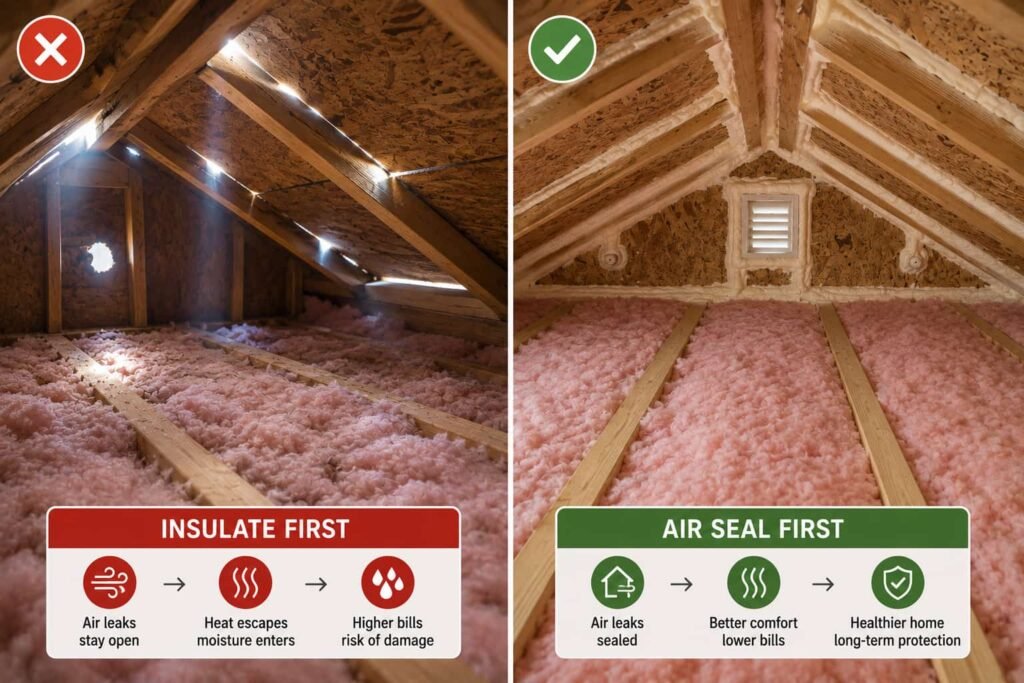
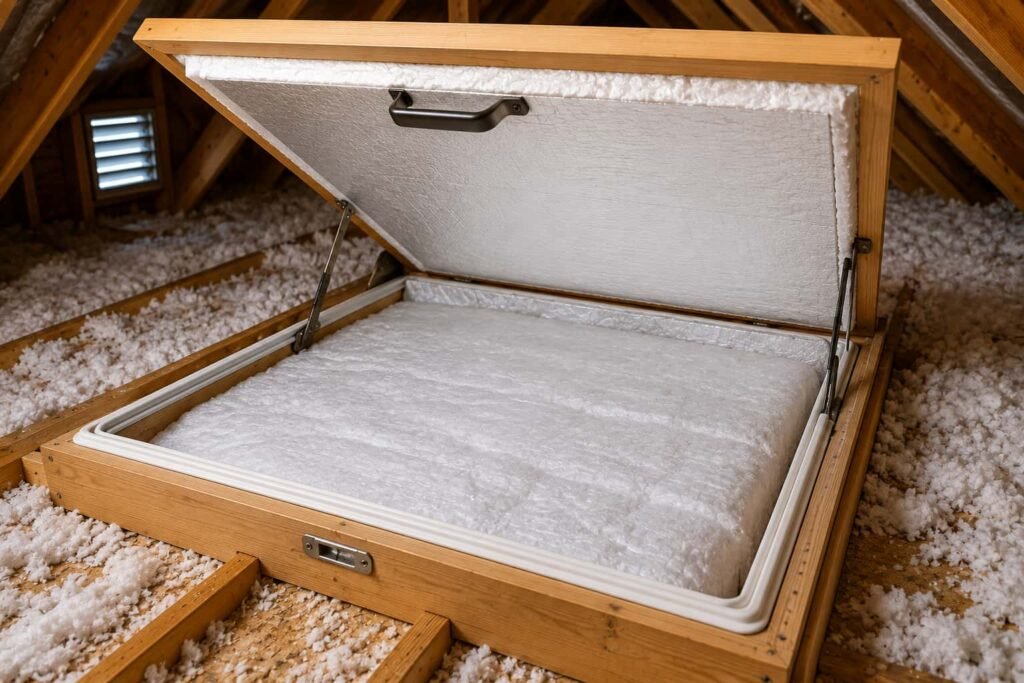
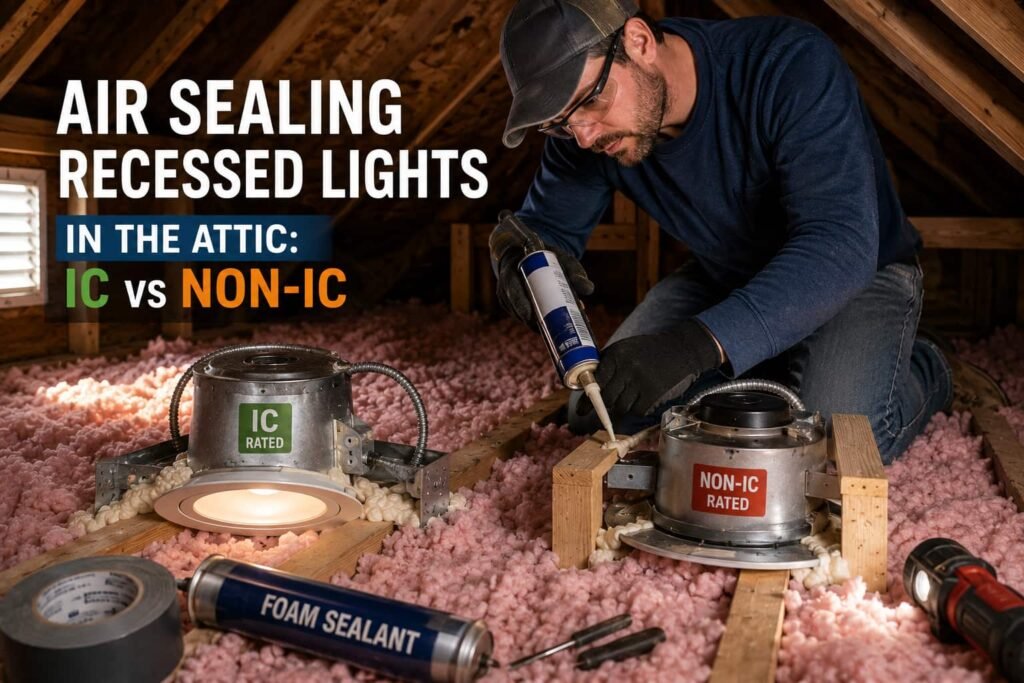
In most houses, the biggest air leaks are at the top and bottom: attic floor penetrations, top plates, the rim joist and the basement. Warm air rises and escapes through the ceiling, and cold air is pulled in low to replace it. A drafty window is often the place you feel that movement, not the place that causes it.
ENERGY STAR's "Why Seal and Insulate?" page, which we read on 2026-09-23, states: "EPA estimates that homeowners can save an average of 15% on heating and cooling costs (or an average of 11% on total energy costs) by air sealing their homes and adding insulation in attics, floors over crawl spaces and basements." That is an average across modeled homes, not a promise for yours. It is also the reason we put windows after the attic. We explain the sequence in more detail in why you air seal before you insulate.
Single pane windows energy options, compared
Here is each option by what it fixes, what it costs you in effort and what it cannot do. We have left out prices on purpose; they vary too much by size, region and window count to be useful.
| Option | Fixes conduction? | Fixes air leakage? | Keeps original look? | Main limit |
|---|---|---|---|---|
| Repair and reglaze the sash | No | Partly | Yes | Glass is still single |
| Exterior storm window | Yes | Yes, over the whole opening | Mostly, if color-matched | Can hide decorative exteriors |
| Interior storm or insert | Yes | Yes, if it seals tightly | Yes, from outside | Condensation risk on the old sash |
| Low-e storm (exterior or interior) | Yes, more than clear glass | Same as above | Same as above | Can darken already tinted glass |
| Insulating cellular shade | Partly, when closed | Little | Yes | Only works when drawn |
| Full replacement | Yes | Yes | Often no | Highest cost, loses original sash |
Weatherstripping the sash and applying window film are the other two options people mention. Both are separate jobs, and this page does not cover how to do them.
Step one: check the window before you add anything
Every layer you add depends on the window underneath. ENERGY STAR's storm window guidance puts it plainly: "Storm windows work best when installed over working primary windows that are in good condition."
So walk every window first and note:
- Rot at the sill and the bottom rail. Push a screwdriver tip into the wood. Soft wood that gives is a repair job before it is an energy job.
- Loose or missing glazing putty. Putty that has cracked and fallen away lets water in and rattles the glass.
- Cracked or broken panes. A broken pane is a hole in the wall. Replace the glass first.
- Whether the sash moves and locks. A sash that will not close fully cannot seal against anything.
The National Park Service's Preservation Brief 9: The Repair of Historic Wooden Windows is the standard reference for this survey and for the repair itself. It treats most old wood sash as repairable, not disposable, and it warns that moisture is the main cause of decay in wooden windows.
Exterior storm windows: the layer that also protects the sash
An exterior storm window mounts on the outside of the existing frame. It adds a second pane of glass and a trapped air space, and it shields the old sash and putty from rain and sun.
This is the option the National Park Service leans toward for historic windows where it is feasible. Its weatherization guidance for historic buildings notes that "a 2002 study confirmed that installing a storm window over a historic window can achieve a similar thermal performance to that of a new low-E vinyl replacement window."
Two things to get right:
- Drainage. Moisture that gets between the storm and the old sash has to leave. ENERGY STAR's storm window specification excludes exterior storm windows that have no weep holes or other way to drain that space. Never caulk the weep holes shut.
- Appearance. Frames come in wood, aluminum and vinyl. A color that matches the existing trim makes the storm far less visible from the street.
The main drawback is visual. On a highly decorative or multi-light window, an exterior storm can hide the detail you are trying to keep.
Interior storm windows and inserts: the removable option
An interior storm or insert fits inside the existing frame, on the room side. From the street, nothing changes. Many press-fit or magnetic designs come out for summer or cleaning, which also makes them a reasonable choice for long-term renters who cannot alter the exterior.
The National Park Service suggests interior storms may be preferable where an exterior storm would conceal important details. Its Preservation Brief 9 also names the risk: moist room air that gets past an interior storm can condense on the colder original window behind it and slowly damage the sash.
The practical rule that follows from that: an interior storm should seal tightly to the room, so warm, moist air does not reach the old glass. If you see water collecting on the original sash behind an insert, the insert is leaking air and needs attention before the wood does.
One more check before you order: bedrooms need an escape route. ENERGY STAR notes that storm windows come in "operable and fixed models," and that choice matters most in rooms where emergency escape and rescue windows may be needed. A fixed insert over a bedroom's only window is the wrong product.
Low-e glass on a storm window: what the ENERGY STAR label adds
Plain clear glass on a storm window already helps. Low-emissivity (low-e) glass goes further, because its coating reflects heat back toward the room.
The ENERGY STAR storm windows page, which we read on 2026-09-23, says certified storm windows "use 'low emissivity' or low-e glass to improve the energy performance of your home." The current specification took effect on September 5, 2018, and certified products are rated for emissivity, solar transmittance and air leakage by climate zone. ENERGY STAR also publishes its own national-average savings estimate for low-e storms installed over single-pane clear glass. Read that estimate on the page itself, with its assumptions, rather than a number repeated secondhand.
ENERGY STAR's home upgrade guidance on windows and storm windows, read the same day, describes certified storm windows as costing about one half to one quarter as much as common replacement windows, with much lower cost installation.
Two cautions from the same ENERGY STAR page: a low-e storm over already tinted glass may cut visible light noticeably, and in very hot climates where temperatures often go above 115 degrees Fahrenheit, heat can build up between the panes.
Insulating shades: the night-time layer
A closed cellular (honeycomb) shade traps air against the glass. It does nothing while it is open, so think of it as the layer for nights and cold, cloudy days, not a substitute for a storm window.
If you want a product with measured performance rather than a sales claim, look for a rating from the Attachments Energy Rating Council (AERC). AERC is a nonprofit, set up with U.S. Department of Energy support, that rates window attachments such as cellular shades and storm windows. Its label shows separate ratings for warm and cool climates, so you can compare products on the same terms.
A shade is the cheapest layer to try and the easiest to undo. It also works on top of a storm window, not instead of one.
Lead paint: the part most guides skip
If your house was built before 1978, assume the window paint and putty may contain lead until testing says otherwise. Old windows are one of the worst places for it, because the sash rubs the frame every time it opens and scraping putty makes dust.
Under the U.S. EPA's Renovation, Repair and Painting (RRP) Rule, anyone paid to disturb painted surfaces in a pre-1978 home must be lead-safe certified. EPA lists window replacement as a covered activity, and it is not eligible for the small-job exemption. So if you hire someone to repair sash, reglaze or install storms that involve scraping or cutting paint, ask to see their certification.
The rule generally does not apply to homeowners working on their own home. EPA does publish do-it-yourself lead-safe practices, and some states run stricter programs of their own, so check your state before you pick up a heat gun or a scraper. If children under six live in or visit the house, this step is not optional in our view.
When replacement actually makes sense
We are not against new windows. Sometimes they are the right call:
- The frame itself is rotted through, not just the sash.
- The sash is too far gone to repair and would need to be remade.
- You are opening the wall for other work, such as re-siding or structural repair.
- The window cannot be made to open, and the room needs it for escape.
If you land there, compare replacement units on their NFRC label, not on a sales sheet. And read the quote carefully, because "full frame" and "insert" replacement are very different jobs.
If you are looking at a weatherization or efficiency program to help pay for any of this, confirm the current details on the U.S. Department of Energy's live program page before you plan around it. Program rules change, and we do not repeat them here.
A sensible order for a house full of single-pane windows
Put together, the order we suggest is:
- Find the loss. Run an audit, even a simple one, before buying anything.
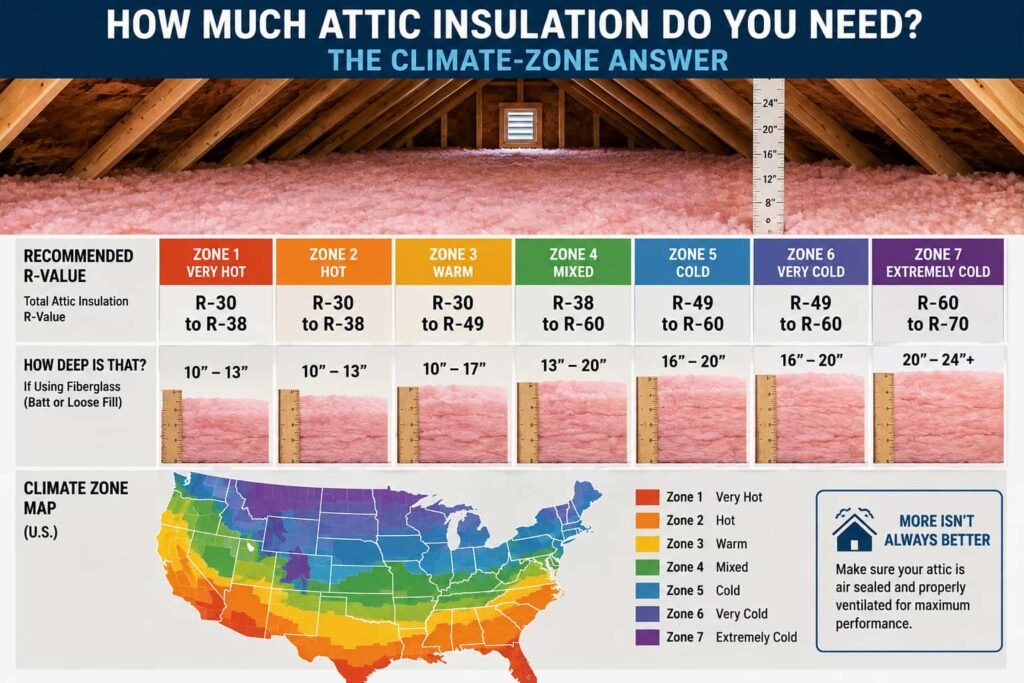
- Seal and insulate the big holes. Attic floor, rim joist, basement. Check how much attic insulation you need for your climate zone while you are up there.
- Repair the windows. Glass, putty, rot, sash operation. Lead-safe throughout.
- Add a second layer. Exterior storm where the look allows, interior storm where it does not. Choose low-e where it suits your climate.
- Add shades last. They are the finishing layer, not the fix.
What we can't tell you
We cannot tell you how much you will save. That depends on your climate, fuel price, how many windows you have, which way they face, and how leaky the rest of the house is. No public source gives a figure for your house, so we will not put a number on it. What we can say is that the order above puts your money where the sources say the losses usually are, and it keeps the original windows in play.
Frequently asked questions
Are single-pane windows always bad for energy?
On their own, one pane of glass conducts a lot of heat. But a sound single-pane sash with a good storm window over it is a two-layer window. The National Park Service cites a 2002 study finding that a storm over a historic window can perform about as well as a new low-E vinyl replacement.
Should I choose an interior or an exterior storm window?
Exterior storms protect the old sash from weather and are the National Park Service's usual preference for historic windows. Interior storms leave the outside unchanged and suit decorative facades and renters. An interior storm must seal tightly, or moisture can condense on the original window behind it.
Do storm windows need to be ENERGY STAR certified?
No, but certification tells you the storm uses low-e glass and has been checked for emissivity, solar transmittance and air leakage for your climate zone. Clear-glass storms still add a layer. Check the ENERGY STAR product finder for certified models.
Is it safe to scrape and reglaze old windows myself?
If the house was built before 1978, treat the paint and putty as possibly containing lead. Follow EPA's do-it-yourself lead-safe practices, keep children away from the work, and check your state's rules. Anyone you pay for this work must be EPA lead-safe certified.
Can I just add thicker curtains instead?
Closed insulating shades or heavy curtains help at night, but they do nothing when open and they do not stop air leaking around the sash. They work best as a final layer on top of a repaired window and a storm, not as the only fix.