Short answer: On the NFRC label, U-factor and SHGC measure two different kinds of heat. U-factor is how fast heat escapes through the window; lower is better everywhere. SHGC is how much of the sun's heat comes in. In hot climates you want it low. In cold climates it can be higher, because winter sun helps, and ENERGY STAR now sets a minimum SHGC in the Northern zone. Match both numbers to your ENERGY STAR climate zone.
That is the whole idea. The rest of this page shows you where each number sits on the sticker, what ENERGY STAR asks for in each zone, and the one case where "lower is better" is the wrong rule.
What the NFRC label is, and what it is not
The National Fenestration Rating Council (NFRC) is a nonprofit that runs a rating and labeling program for windows, doors and skylights. The label is the sticker on the glass or frame of a new unit. It reports how the product performed under a standard rating method, so you can compare one brand against another on the same terms.
Two things the label is not. It is not a pass or fail. NFRC reports numbers; it does not tell you whether they are good enough for your house. And it is not the ENERGY STAR label. ENERGY STAR sets the cutoffs, and certified products carry its label next to the NFRC one.
ENERGY STAR's page on residential windows, doors and skylights, which we read on 2026-09-25, puts the relationship plainly: products "must meet U-Factor and, where applicable, Solar Heat Gain Coefficient (SHGC) requirements based on climate zone." The NFRC label gives you the numbers. The climate zone tells you which numbers to care about.
The five ratings on the sticker
SoftLite Windows, a window manufacturer, publishes a plain summary of the NFRC ratings, which we read on 2026-09-25. Here is what each one measures and which direction is better.
| Rating | What it measures | Scale | Better is | On every label? |
|---|---|---|---|---|
| U-factor | Rate of heat transfer through the window | Typically 0.20 to 1.20 | Lower | Yes |
| SHGC (solar heat gain coefficient) | Share of the sun's heat that passes through | 0 to 1 | Depends on climate | Yes |
| VT (visible transmittance) | Share of visible light that passes through | 0 to 1 | Higher, for daylight | Yes |
| Air leakage (AL) | Air passing through the unit, in cubic feet per minute per square foot | 0.01 to 0.30 | Lower | Optional |
| Condensation resistance (CR) | How well it resists condensation | 1 to 100 | Higher | Optional |
Notice the SHGC row. It is the only rating where the right answer changes with where you live. That is why most confusion about the label is really confusion about SHGC.
U-factor: the number that matters everywhere
U-factor is the window's answer to one question: how easily does heat move through it when it is warmer on one side than the other?
It works like the opposite of an R-value. Insulation is rated by R-value, where higher is better. Windows use U-factor, where lower is better. A window with a U-factor of 0.22 lets heat through more slowly than one at 0.32.
In a cold climate, U-factor is the heating number. It decides how much of the warm air you paid for leaks out through the glass and frame all winter. In a hot climate, it still matters, because the same property slows heat coming in. ENERGY STAR's windows page says it is "important to choose a low U-factor for all windows in warmer climates" too.
So if you remember one rule, make it this one: compare U-factor first, and lower is better in every zone.
SHGC: the number that changes with your climate
SHGC is the share of the sun's heat that gets through the window. An SHGC of 0.23 means less solar heat comes through than an SHGC of 0.40.
Whether you want that heat depends on the season you pay the most to fight.
- Cooling-dominated climates. Sun through a window is heat your air conditioner has to remove. You want a low SHGC.
- Heating-dominated climates. Winter sun through a south window is free heat. A very low SHGC throws some of it away.
- Mixed climates. Both matter, and the orientation of each window starts to decide it.
This is the part the "lower is always better" advice gets wrong. It holds for U-factor. It does not hold for SHGC in the north.
ENERGY STAR's climate zone criteria, dated
ENERGY STAR splits the country into four window climate zones: Northern, North-Central, South-Central and Southern. Version 7.0 of its criteria for residential windows, doors and skylights was finalized on October 20, 2022 and took effect on October 23, 2023, according to Window + Door magazine's coverage, which we read on 2026-09-25.
The window criteria below are as published by Tencom, a window components supplier, in its summary of Version 7.0, read on 2026-09-25. Andersen Windows' own Version 7.0 guide for professionals, read the same day, reports the same U-factor cutoffs and the same Northern, South-Central and Southern SHGC limits. ENERGY STAR's key product criteria page shows the official tables as images, so check your zone there before you buy.
| ENERGY STAR zone | U-factor | SHGC |
|---|---|---|
| Northern | 0.22 or lower | 0.17 or higher |
| North-Central | 0.25 or lower | 0.40 or lower |
| South-Central | 0.28 or lower | 0.23 or lower |
| Southern | 0.32 or lower | 0.23 or lower |
Two notes on that table. In the Northern zone, ENERGY STAR also allows an "equivalent energy performance" path: a window with a slightly higher U-factor can still qualify if its SHGC is high enough to make up for it. And patio doors that are more than half glass have separate criteria. Andersen and Harvey Windows both report a U-factor cutoff of 0.26 for those doors in the Northern and North-Central zones.
Why the Northern zone has a minimum SHGC
Look at the Northern row again. It is the only one with "or higher" in the SHGC column.
That is the reason this page exists. In a heating climate, a window that blocks almost all solar heat also blocks the winter sun that would have warmed the room for nothing. A minimum SHGC keeps a certified Northern window from blocking so much sun that it throws that gain away.
The equivalent-performance path makes the same point from the other side. A Northern window that lets in more solar heat is allowed a little more heat loss through the glass.
What this means at the store: in the North, do not pick the lowest SHGC on the shelf just because low sounds good. Pick the lowest U-factor you can, then check that the SHGC is not below what your zone expects.
Match the number to the wall, not just the zone
The zone sets the cutoff. The direction each window faces decides which number you lean on. ENERGY STAR's windows page, read on 2026-09-25, gives this orientation guidance:
| Window faces | Cold climate | Warm climate |
|---|---|---|
| South | Higher SHGC and a low U-factor | Low SHGC |
| East and west | Low SHGC, or shade them, especially west | Low SHGC |
| North | SHGC matters less; lowest U-factor you can afford | SHGC matters less; still choose a low U-factor |
West windows take the low afternoon sun, which is why ENERGY STAR singles them out. If you are replacing only a few windows, those are often the ones where the label matters most.
A 60-second way to read the sticker
When you are standing in front of a window with a label on it, do this in order:
- Find your ENERGY STAR zone. ENERGY STAR's online Climate Zone Finder asks for your state and county.
- Check the U-factor against your zone. At or below the cutoff, move on. Above it, that unit is not ENERGY STAR for you.
- Check the SHGC against your zone. In the South-Central and Southern zones, at or below 0.23. In the Northern zone, at or above 0.17.
- Think about the wall. A west window in Texas and a south window in Minnesota want different SHGC, even in the same brand.
- Glance at VT. Coatings that cut solar heat can also cut daylight. If two units tie on U-factor and SHGC, the higher VT gives a brighter room.
- Look for air leakage, if listed. It is optional on the label, so an absent number is not a bad sign, but a listed one lets you compare.
Code is a different question
ENERGY STAR is a voluntary label. Your building code is not voluntary, and it is not the same map.
Building codes in the U.S. mostly draw on the International Energy Conservation Code (IECC) and the International Residential Code (IRC), which use their own numbered climate zones, not ENERGY STAR's four. Each state, and many cities, adopt their own edition, sometimes with local changes. So the U-factor a replacement window must meet under code is set by your local building department, and it can differ from the ENERGY STAR cutoff. If a permit is involved, ask the building department which values apply to your address.
If you are hoping a program will help pay for new windows, confirm the current details on the U.S. Department of Energy's live program pages before you plan around it. Program rules change, and we do not repeat them here.
What the label cannot tell you
The label rates the window as built in a controlled test. It cannot rate the installation.
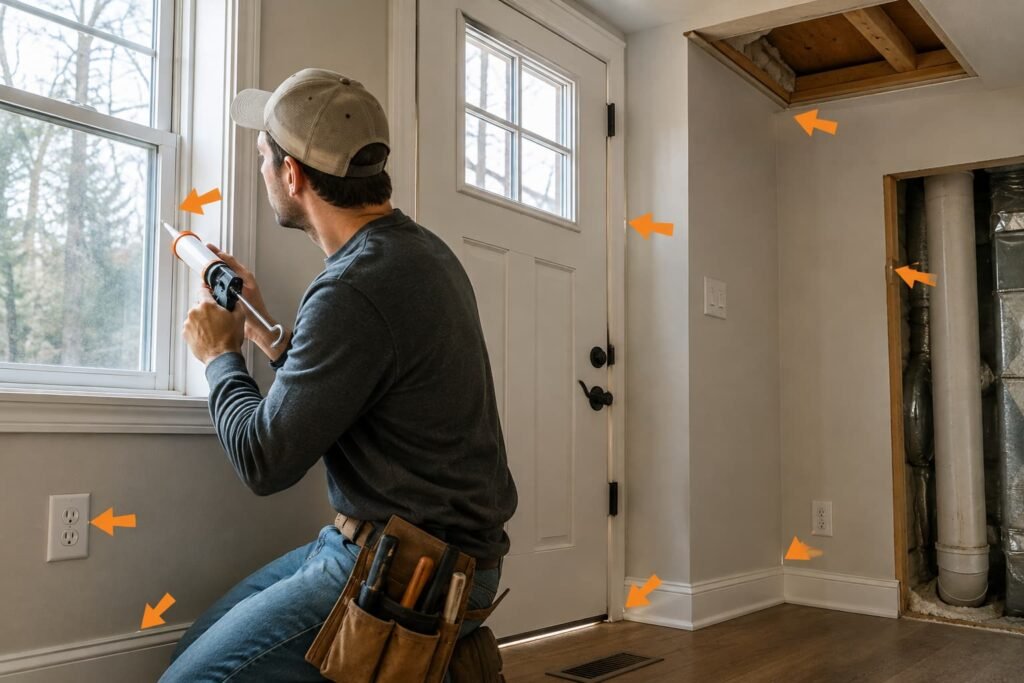
A low U-factor window set in an opening with gaps around the frame will still leak air where the window meets the wall. That leak does not show up on any sticker. It shows up as a draft at the trim. A simple smoke pencil test for air leaks will find it after the installer leaves.
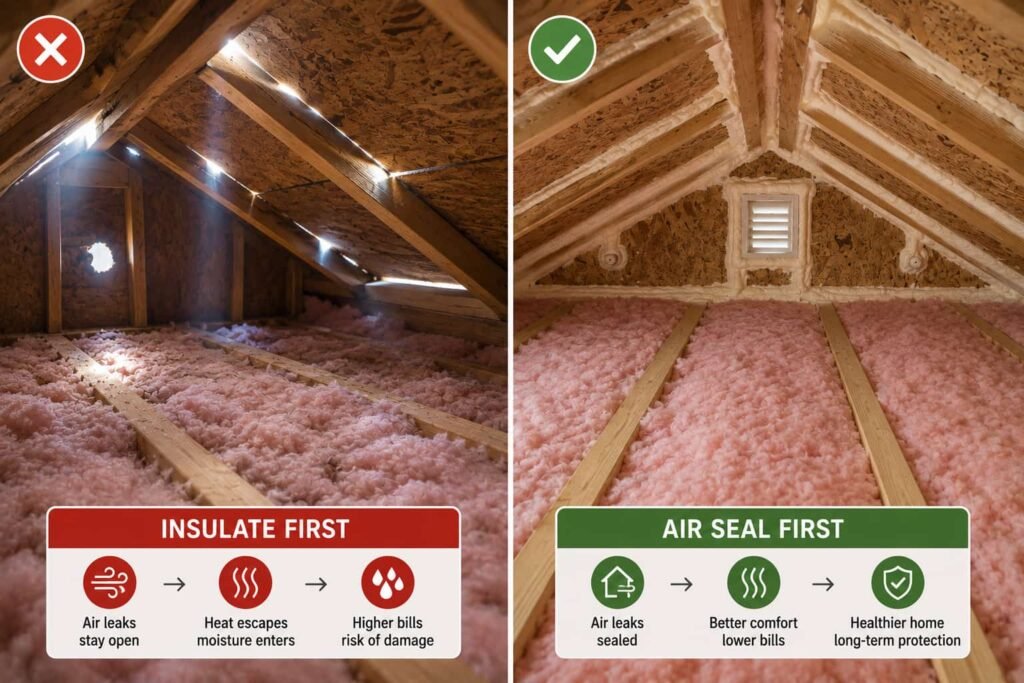
The label also cannot tell you whether windows are the right first job. In most houses, the bigger losses are at the attic floor and the basement. We explain why the order matters in why you air seal before you insulate, and a DIY home energy audit will show you where your own house is losing heat before you spend on glass. We will not put a savings figure on new windows for your house. It depends on your climate, your fuel, how many windows you replace and which way they face, and no public source gives that number for a single home.
Frequently asked questions
Is a lower U-factor always better?
Yes. U-factor measures heat transfer through the window, and lower means less heat moves through. That holds in every climate. ENERGY STAR's windows guidance recommends a low U-factor for all windows, including in warm climates.
Is a lower SHGC always better?
No. A low SHGC blocks solar heat, which helps in hot climates. In cold climates, winter sun through a south-facing window is useful heat. ENERGY STAR's Version 7.0 criteria set a minimum SHGC of 0.17 for Northern zone windows.
What is a good U-factor for a window?
It depends on your ENERGY STAR zone. Under Version 7.0, the window cutoffs run from 0.22 or lower in the Northern zone to 0.32 or lower in the Southern zone. Check ENERGY STAR's own criteria page for your zone before buying.
Does the NFRC label mean the window is ENERGY STAR certified?
No. The NFRC label reports the ratings; it does not certify anything against a cutoff. A certified window carries a separate ENERGY STAR label that shows which climate zones it qualifies for.
Why is air leakage missing from some NFRC labels?
Air leakage and condensation resistance are optional ratings. A manufacturer can leave them off. U-factor, SHGC and visible transmittance appear on every label.