Short answer: Low-E glass, explained simply, is glass with a microscopically thin metallic coating that reflects heat instead of letting it radiate through. In winter it keeps room heat inside; in summer it can keep the sun's heat out. It is not always better in the same way, though. A coating tuned to block sun can also block winter sun you want on a south window, darken already tinted glass, and cut daylight. Pick the coating for your climate and each wall.
That is the core of it. The rest of this page explains how the coating works, the two broad families of low-E, and the specific cases where it works against you.
What "low-E" means
"Low-E" is short for low emissivity. Emissivity is how readily a surface gives off radiant heat.
Vitro Architectural Glass, a glass manufacturer, explains it in its guide to how low-E glass works, which we read on 2026-09-25: "ordinary clear glass has high emissivity of approximately 0.84, allowing heat to pass readily," while "low-e coatings have very low emissivity, meaning heat is reflected rather than transmitted."
The coating targets long-wave infrared, the kind of heat a warm room or a hot patio gives off. Visible light still passes through, which is why a low-E window looks like ordinary glass.
Andersen Windows describes the effect in one line in its low-E guide, read the same day: "Metallic-based Low-E coatings help reflect heat, keeping it on the side of the glass where it originated." Room heat stays in the room. Outdoor heat stays outdoors.
How low-E shows up on the NFRC label
You will not find the word "emissivity" on most window stickers. You will see its effect in the numbers on the NFRC label.
- U-factor measures how fast heat moves through the whole window. Lower is better in every climate.
- Solar heat gain coefficient (SHGC) measures how much of the sun's heat comes through. Some low-E coatings lower it a lot, some only a little.
- Visible transmittance (VT) tells you how much daylight gets through. Higher means a brighter room.
This is where the choice actually happens. Two low-E windows can have similar U-factors and very different SHGC. One is built to let winter sun in. The other is built to keep summer sun out. Both are "low-E." Vitro notes the trade-off plainly: higher solar control "may lower visible light transmittance."
The two broad families of low-E
Window makers sell many named coatings, but most fall into two groups by what they favor.
| Type | What it favors | Where it tends to fit |
|---|---|---|
| Passive, or high solar gain, low-E | Lets more of the sun's heat in while keeping room heat from escaping | Heating-dominated climates, especially south-facing windows |
| Solar control low-E | Blocks more of the sun's heat while still passing daylight | Cooling-dominated climates, and east and west windows |
There are also two ways of making the coating. Vitro describes the hard, or pyrolytic, coat as "applied during the float glass manufacturing process," with a "more durable surface" but "slightly higher emissivity." The soft, or sputtered, coat is applied by "magnetron sputter vacuum deposition" and offers "very low emissivity" with "high solar control performance."
Andersen's own range shows the family split: one coating it describes as optimized for northern heating needs, a tinted sun option for southern cooling needs, and others positioned for all climates. Every manufacturer names these differently. Ignore the brand names and compare the U-factor, SHGC and VT on the NFRC label.
When low-E works against you
This is the section most glass pages skip. Low-E is a good default, but the wrong coating in the wrong place can cost you something.
| Situation | What goes wrong | What to do instead |
|---|---|---|
| South-facing window in a cold climate | A strong solar control coating blocks winter sun that would have warmed the room | Choose a higher-SHGC coating with a low U-factor for that wall |
| Existing tinted glass with a low-E storm over it | The window gets noticeably darker | Check VT, or skip the low-E storm on those windows |
| Low-E storm window in a very hot climate | Heat can build up between the storm and the original window | Read ENERGY STAR's hot-climate caution before buying |
| Room that depends on daylight | A strong solar control coating can cut visible light | Compare VT, not just SHGC |
| Cool, clear, humid mornings | Dew forms on the outside of the glass | Nothing; it is normal and clears in the sun |
Each of those comes from a named source, below.
Winter sun on a south wall
ENERGY STAR's page on residential windows, doors and skylights, which we read on 2026-09-25, says that in colder climates the ideal south-facing window has "higher solar heat gain coefficient (SHGC) and a low U-factor to reduce heat loss." A low-E coating that blocks most of the sun defeats that. It is the same reason ENERGY STAR's Version 7.0 criteria for the Northern climate zone include a minimum SHGC, not just a maximum.
The same page says east and west windows should have "low SHGC or be shaded," especially west-facing ones, and that in warm climates a low SHGC matters for south, east and west windows. So one house can reasonably want different coatings on different walls.
Low-E storm windows over tinted glass or in extreme heat
Low-E also comes on storm windows. ENERGY STAR's storm windows page, read on 2026-09-25, describes the coating as "microscopically thin, almost invisible" and says it "reduces heat loss through the window glass when it is cold outside."
It also gives two cautions. If your windows already have tinted glass, a low-E storm "may reduce the visible light transmitted through the window, making them even darker." And "in very hot climates and under certain conditions, low-e storm windows can trap heat between the original window and the storm window."
Dew on the outside of the glass
Owners of new low-E windows sometimes see fog on the outside of the glass on a cool morning and assume a defect. Vitro's page on condensation, read on 2026-09-25, explains that "on cool, clear nights, when there is no wind, and high relative humidity, condensation often forms on outdoor glass surfaces." Because the glass lets so little room heat through, the outer pane stays cold. Vitro's test is simple: "If the condensation disappears when the sun comes up and warms the air, the insulating glass is working properly."
Fog trapped between the panes is a different problem. It does not clear in the sun, and it points to the glass unit itself rather than the coating.
Is low-E worth it on a replacement window?
On a new window, low-E is common enough that the real question is usually which coating, not whether. ENERGY STAR's windows criteria are built around U-factor and SHGC limits by climate zone, and the coating is one of the tools makers use to hit them.
What we will not do is put a savings figure on it for your house. That depends on your climate, fuel, window area, orientation and how leaky the rest of the house is. ENERGY STAR publishes its own national-average estimate for certified windows on its site; read it there with its assumptions.
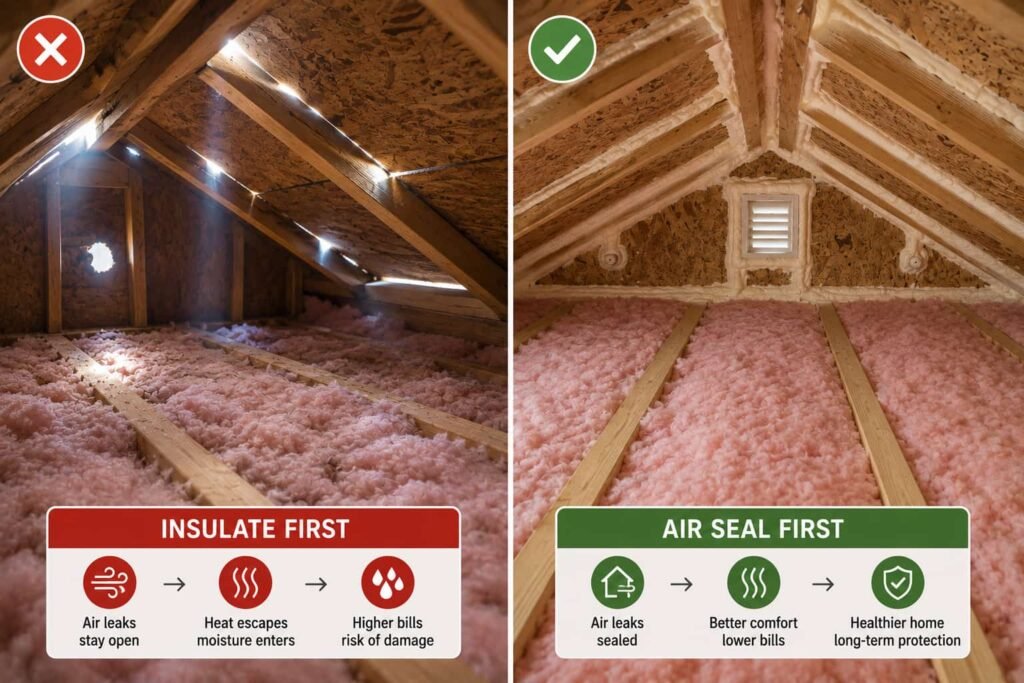
Also keep the order in mind. The glass is rarely where a house loses the most heat. A DIY home energy audit will show you where yours does, and in most homes the attic floor and basement come first. We explain why in air seal before you insulate. A new low-E window set in a leaky opening still leaks at the frame, which a smoke pencil test for air leaks will show.
Code, climate zones and your building department
ENERGY STAR is a voluntary label with four window climate zones: Northern, North-Central, South-Central and Southern. Building codes in the U.S. mostly draw on the International Energy Conservation Code (IECC), which uses its own numbered climate zones. States and cities adopt their own editions, often with changes.
So whether a replacement window must meet a particular U-factor or SHGC is a local question. If a permit is involved, ask your building department which values apply at your address. And if you are counting on a program to help pay for new windows, confirm the current details on the U.S. Department of Energy's live program page first. Program rules change, and we do not repeat them here.
How to choose, in order
- Find your ENERGY STAR climate zone. ENERGY STAR's Climate Zone Finder asks for your state and county.
- Decide which season costs you more. Heating-dominated homes lean toward passive low-E; cooling-dominated homes lean toward solar control.
- Look at each wall. South windows in cold climates want more solar gain. West windows almost everywhere want less.
- Read the NFRC label, not the coating name. Compare U-factor, SHGC and VT.
- Check daylight. If a room is already dim, give VT extra weight.
Frequently asked questions
What does low-E glass actually do?
It reflects radiant heat. A microscopically thin metallic coating keeps heat on the side of the glass where it started, so room heat stays in during winter and outdoor heat stays out in summer, while visible light still passes through.
Is low-E glass always better?
It usually lowers heat loss, but not every coating suits every window. A strong solar control coating can block winter sun you want on a south wall in a cold climate, and it can cut daylight. Match the coating's SHGC to your climate and the window's direction.
Does low-E glass block sunlight?
It passes most visible light but can reduce it, especially coatings built to block a lot of solar heat. Compare the visible transmittance (VT) number on the NFRC label if daylight matters.
Why is there condensation on the outside of my new low-E windows?
Because the glass keeps room heat in, the outer pane can get colder than the air on cool, clear, humid nights. Vitro, a glass maker, says that if the dew clears once the sun warms the air, the glass is working properly.
Can I tell if my windows already have low-E?
The maker's paperwork or order confirmation usually names the coating. On older windows with no paperwork, a window professional can check the glass for a coating.