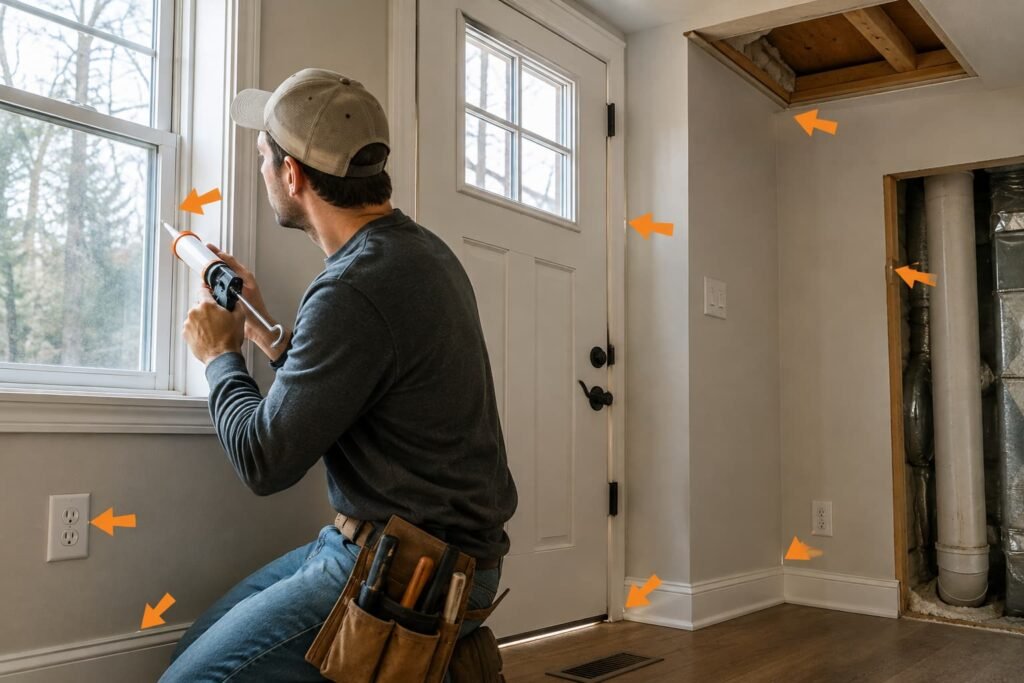
The right sliding glass door drafty fix depends on which joint is leaking. Most patio door drafts come from four places: a panel left unlocked, rollers that have sagged so the panel sits crooked, worn pile weatherstrip at the jamb or where the two panels overlap, and gaps around the outside of the frame. Find the joint first, then fix it in that order. Caulk in the track is never the answer, because the track has to drain.
This guide walks through the check, the fixes you can do, and the point where a door technician or the installer should take over.
Why a Sliding Door Leaks Differently From a Hinged Door
A hinged front door closes against a stop and squeezes a gasket flat. A sliding door cannot do that. The moving panel has to glide past the fixed panel and the frame, so it seals with brushes and fins instead of compression. Those brushes are called pile weatherstrip. They look like a strip of short, dense fuzz.
That design has three weak spots. The pile wears flat and stops touching. The panel rides on rollers, and when the rollers wear or the house settles, the panel drops or tilts, so the seals line up on one end and gap on the other. And the track at the bottom is built to carry water out through small drain slots, so it can never be sealed shut the way a door threshold can.
Andersen's help page on gliding patio door weatherstrip (read September 27, 2026) describes the job of those seals plainly: they create "a weather-tight seal between the operating and stationary patio door panels, as well as between the patio door panel edges and the frame." Those are exactly the joints you will test.
Leak, or Just Cold Glass?
A patio door is a wall of glass, and glass is the coldest surface in the room. Room air touching it cools, sinks and rolls across the floor. You feel it at your ankles, and it feels like a draft. It is not a leak. It happens even when every seal is perfect.
The two behave differently. Convection is worst on calm, very cold nights and comes down off the middle of the glass. A leak gets worse when the wind blows and comes from an edge: the lock side, the overlap between panels, the bottom corners.
Hold a lit incense stick in front of the middle of the glass. Smoke that drifts slowly down is convection. Then hold it at the edges. Smoke that gets pulled sideways or pushed back at you is a leak. Only the second one is something a repair fixes. If the glass itself is the problem, that is a glazing question, not a seal question.
The Sliding Glass Door Drafty Fix Starts With Finding the Joint
Pick a cold, windy day. Close every other window and exterior door so the wind has one fewer way in.
- Close the sliding panel and lock it.
- Move the incense stick slowly up the lock-side jamb, where the moving panel closes against the frame.
- Move it up the interlock, the tall joint where the moving panel overlaps the fixed panel.
- Move it along the head, across the top of both panels.
- Move it along the bottom, where each panel meets the track, and check both bottom corners.
- Move it around the outside edge of the whole frame, where the frame meets the wall trim.
Mark each spot where the smoke moves with painter's tape. The same smoke walk-through works everywhere in the house, and our guide on how to find air leaks in your house covers the rest of the rooms. If the house has a fireplace, wood stove or a gas or oil appliance venting up a chimney, do not run exhaust fans to exaggerate the draft. That can pull combustion gases back into the house.
Fix 1: Lock It and Check What the Lock Does
It sounds too simple, but start here. On many sliding doors the latch is what pulls the moving panel tight against the lock-side jamb. A panel that is closed but unlocked can sit a little off the seal, and on a windy day the air finds that gap.
Lock the door and repeat the smoke test at the lock-side jamb. If the draft stops, you have your fix. If the lock will only catch when you lift or push the panel, the latch is fine and the panel is not sitting where it should. That points to the rollers, which is the next fix. Do not bend the latch hook or move the keeper to force it. That hides a sagging panel instead of correcting it.
Fix 2: Adjust the Rollers So the Panel Sits Square
The moving panel rides on two rollers at its bottom. Most doors have an adjustment screw for each one, reached through a small hole near the bottom of the panel, often behind a plastic cap. Turning a screw raises or lowers that end of the panel.
When one roller has sagged, the panel tilts. The gap at the lock-side jamb is then wide at the top and tight at the bottom, or the reverse, and the pile only touches along part of the edge. Raising or lowering one end brings the panel edge back parallel to the jamb, so the seal touches along its full length.
Work in small turns, one side at a time, and slide the panel open and closed after each adjustment. Stop when the edge is parallel, the panel glides without dragging and the lock engages without force.
If the screw turns but nothing moves, or the door grinds and scrapes, the rollers may be worn out. Andersen's page on gliding patio door rollers (read September 27, 2026) says to inspect them if they make noise or sliding "has become difficult," and that "the patio door panel must be removed to inspect the rollers." Replacements are needed if they are "difficult to spin, chipped, cracked, or worn."
Taking the Panel Out: Know When to Stop
A full glass door panel is heavy and awkward, and it can fall outward or inward once it is free of the head track. Lifting it out is a two-person job at the minimum. Read your door maker's removal instructions for your model first, because the method differs by brand and series.
Stop and call a door technician if any of these apply:
- The glass is cracked, chipped or loose in its frame. Do not lift a damaged glass panel.
- You cannot find the brand or model, and so cannot find the instructions or matching parts.
- The fixed panel is the one leaking. On many doors it is fastened and sealed into the frame, and removing it is an installation job.
- The door is still under the installer's workmanship warranty. Call them before taking anything apart.
There is no prize for doing this alone. A dropped patio door panel is a worse problem than a draft.
Fix 3: Replace the Pile and Interlock Weatherstrip
If the panel sits square and smoke still moves at the jamb or the interlock, look at the pile. Healthy pile stands up and brushes the opposite surface. Worn pile is matted, flattened, torn or missing in sections. Some doors also have a thin plastic fin down the center of the pile, and a torn fin leaks.
Replacement weatherstrip is specific to the door. Andersen's weatherstrip page lists different parts by series: interlock strips, astragals, pile and plugs, with separate guides for each product line. Other makers work the same way. Buy by the door's brand and series, not by a generic "patio door" label, and match the height of the pile. Pile that is too short will not reach; pile that is too tall makes the door hard to slide and can push the panel off its track.
Two other small parts matter here. Dust plugs, small foam or pile blocks at the top and bottom of the interlock, close the corners where the overlapping seals end. When they are missing, those corners whistle. They are cheap and easy to overlook.
If your door has a lot of air moving at the frame corners, check the sealing basics in our guide on how to air seal your house, because the joints around the frame are part of the same air barrier.
Fix 4: Seal the Outside of the Frame, Not the Track
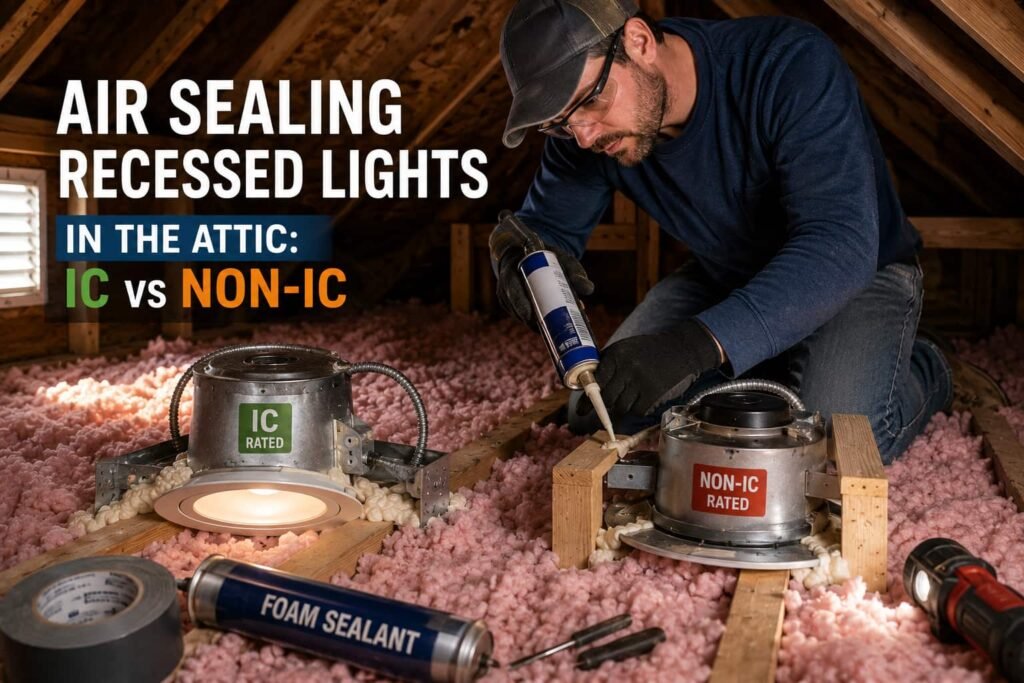
If the smoke moves where the door frame meets the interior trim or the wall, the leak is around the unit, not inside it. That is a gap between the door frame and the rough opening. It is the same kind of joint as around any window or door, and the fix is an air seal, not more weatherstrip. Our guide to matching caulk, foam or backer rod to the gap explains which material suits which width.
Now the important part. The bottom track and sill are designed to catch water and drain it outside through small slots or holes, called weep holes. Never caulk the track, the sill channel or the weep holes. Sealing them can trap water in the sill and push it indoors or into the floor framing. Keep the track clean with a soft brush and a vacuum so the rollers ride freely and the drain slots stay open.
If a newly installed door leaks around the frame, that joint is the installer's work. Call them before you seal it yourself.
What Not to Do
- Do not caulk the track, the weep holes or the interlock. The first two drain water; the third has to slide.
- Do not screw the moving panel shut for winter. It becomes an exit you cannot use in an emergency.
- Do not stack weatherstrip on top of worn pile. It makes the panel bind and does not seal.
- Do not bend the latch or keeper to force a sagging panel closed. Fix the rollers.
- Do not lift a panel with cracked or loose glass.
When the Door Itself Is Done
Some doors are past repair. The frame may be warped, the track bent or worn through, or the sealed glass unit failed, which shows as fog between the panes. Parts for older doors can also be hard to find.
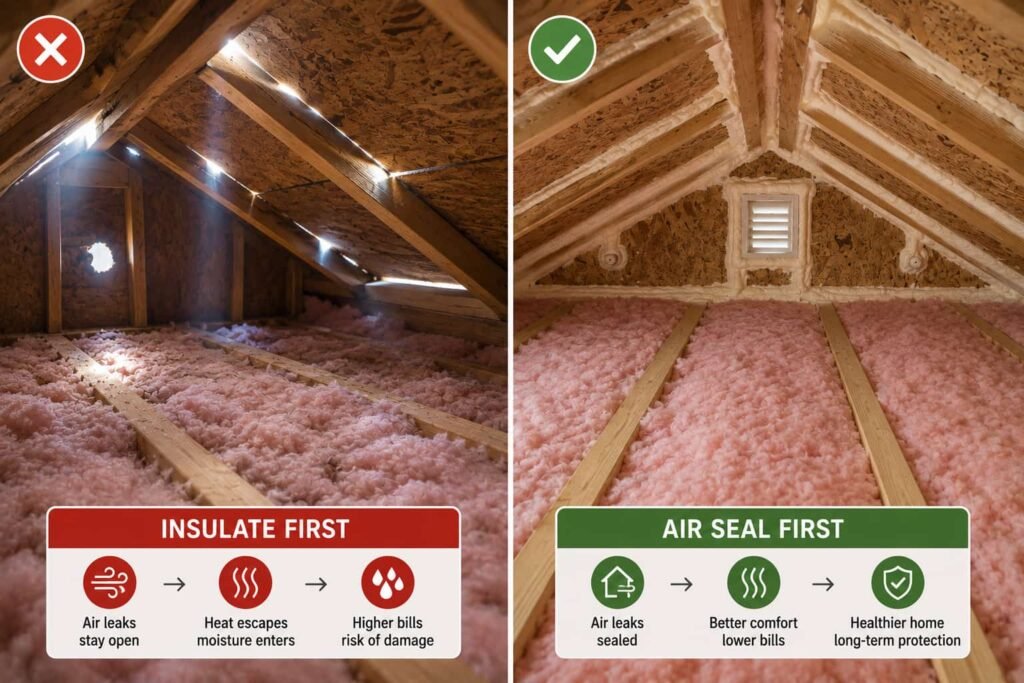
Before you replace a door because of a draft, check where the rest of your heat goes. A patio door is easy to notice because you stand next to it. The biggest leaks in most houses are the ones you cannot see: the attic top plates, the rim joist, wiring and plumbing holes. A DIY home energy audit puts the door in context before you spend money on it.
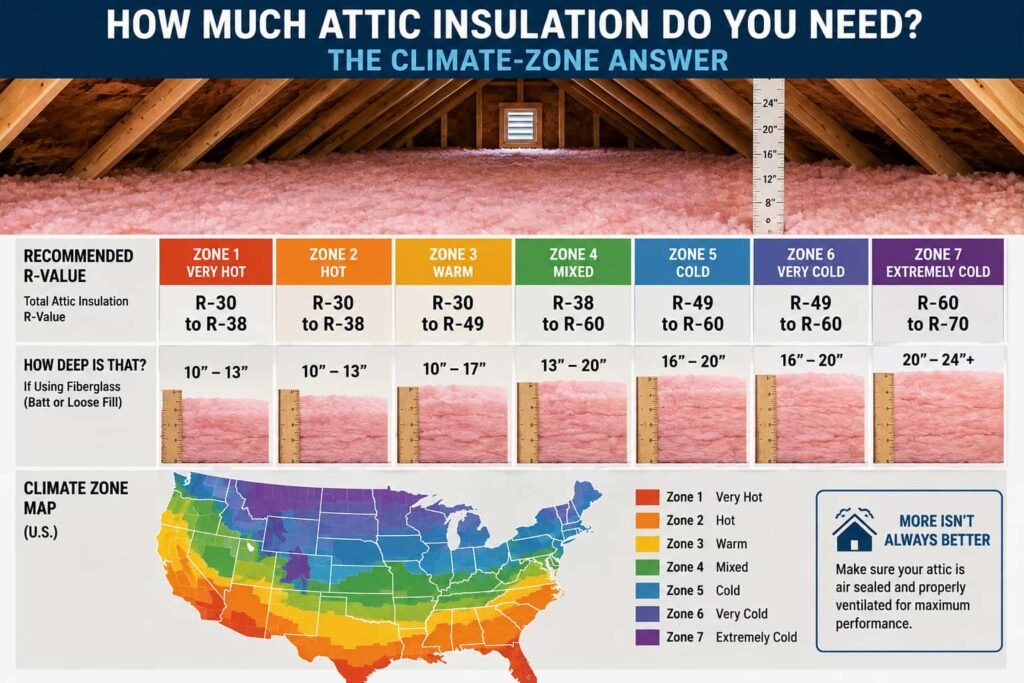
If you do replace it, look for the ENERGY STAR label for your climate zone next to the NFRC label on the glass, and ask which installation instructions the crew will follow.
Frequently Asked Questions
Why is my sliding glass door so drafty?
Most drafts come from one of four joints: the lock-side jamb when the door is not locked or the panel has sagged, the interlock where the two panels overlap, worn pile weatherstrip at the edges, or a gap around the frame. Cold air falling off the glass on a calm night feels similar but is convection, not a leak.
Can I caulk the bottom track of a sliding door?
No. The track and sill are designed to drain water out through weep holes. Caulking them can trap water and send it indoors or into the floor. Seal the gap around the outside of the frame instead, and keep the track clean.
How do I know if the rollers need adjusting?
If the gap at the lock-side jamb is wider at the top than the bottom, or the reverse, the panel is tilted. If the door drags, scrapes or only locks when you lift it, the rollers need adjusting or replacing. Adjust in small turns until the panel edge sits parallel to the jamb.
Is the draft at the bottom of my patio door normal?
A strong draft at the bottom corners usually means worn pile, missing dust plugs at the ends of the interlock, or a panel that has dropped on its rollers. Cold air rolling across the floor from the glass is normal convection and gets worse on calm, very cold nights.
When should I call a professional for a sliding door?
Call a door technician if the glass is cracked or loose, if you cannot identify the door to get parts, if the fixed panel is leaking, or if the door is still under the installer's warranty. Removing a heavy glass panel is never a one-person job.