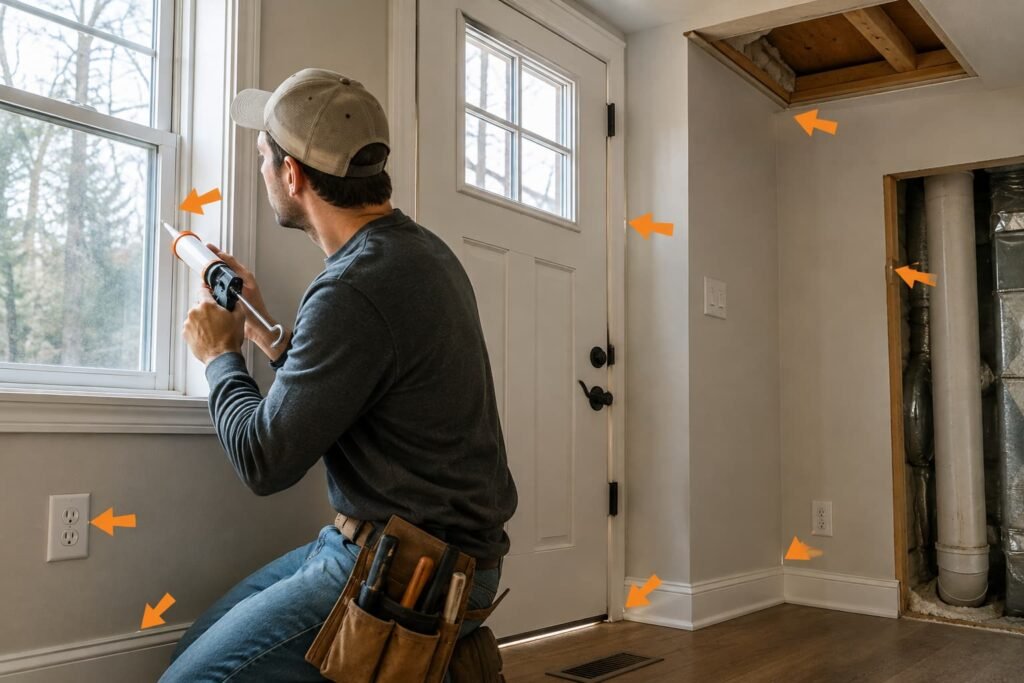
Furnace combustion air in a tight house is only a problem for appliances that take their air from inside the home. A sealed-combustion (direct-vent) furnace pipes its air in from outdoors, so air sealing does not starve it. Older natural-draft furnaces and water heaters, and many fan-assisted ones, draw air from the room. In a tighter house, exhaust fans can pull their exhaust back indoors. The answer is a combustion safety test by a technician, before and after the sealing work.
Safety first: carbon monoxide, and who does what
Read this before anything else in the article. When a gas or oil appliance cannot vent properly, its exhaust can spill into the house, and that exhaust can carry carbon monoxide (CO). The U.S. Consumer Product Safety Commission's carbon monoxide information center, read on October 2, 2026, lists the symptoms of CO poisoning as "headache, dizziness, weakness, nausea, vomiting, sleepiness, and confusion." If you suspect CO poisoning, CPSC's instruction is to "get outside to fresh air immediately, and then call 911." Any home with fuel-burning equipment should have working CO alarms, installed as CPSC and the alarm maker direct.
Now the boundary. Testing an appliance's draft, measuring CO in a flue, changing a flue or vent, adding combustion air openings, and any work on a gas line are jobs for a licensed HVAC technician or gas fitter. This article explains what changes and what to ask for. It stops where their work starts.
Why air sealing changes the furnace rules
A leaky house has always had a free supply of outside air seeping in through gaps. An old natural-draft furnace or water heater quietly depended on that leakage for the air it burns and for the steady draft that carries exhaust up the flue.
Air sealing removes much of that leakage. That is the point of the work, and it is the right thing to do. But it changes the balance. When the house is tighter, anything that blows air out (a bath fan, a kitchen range hood, a clothes dryer, a fireplace) lowers the indoor pressure more than it used to. If the pressure drops enough in the room where the appliance sits, air can flow down the flue instead of up it. That is backdrafting.
The U.S. Department of Energy's Building America Solution Center puts it directly on its direct-vent equipment guide, read on October 2, 2026: naturally drafted appliances are not recommended in air-tight homes, "where exhaust fans or other combustion appliances such as fireplaces could depressurize the home and overcome the natural draft of an atmospherically vented appliance, thus backdrafting the appliance."
So the real question is not "is my furnace starving?" It is "can my house pull the exhaust back in?"
Three kinds of furnace, and which ones a tight house affects
| Type | Where combustion air comes from | How exhaust leaves | Effect of air sealing |
|---|---|---|---|
| Direct-vent, sealed combustion | Outdoors, through its own sealed pipe | A second sealed pipe to outdoors | DOE says the backdrafting risk "is eliminated" |
| Induced-draft (fan-assisted) | The room around the appliance | A small fan pushes exhaust into the flue | Can still be affected; needs testing |
| Natural-draft (atmospheric) | The room around the appliance | Hot exhaust rises up the flue on its own | Most vulnerable; needs testing |
The Building America guide describes the sealed type as bringing "combustion air directly from outdoors to the sealed combustion chamber through one sealed pipe" and exhausting outdoors "through a second sealed pipe." It also notes that Category 1 appliances "draw their combustion air from the CAZ" (the combustion appliance zone, meaning the room or space the appliance sits in) and that "they are susceptible to backdrafting."
How to tell what you have, without touching anything
You can usually learn which type you have from a safe distance. Do not open panels, remove covers or handle the vent pipes.
- The rating plate and the manual. The label on the furnace, and the owner's manual, state the model and venting type. Search the model number on the manufacturer's site if the manual is missing.
- The pipes. Two plastic pipes running from the furnace to the outside wall or roof usually mean direct vent: one for air in, one for exhaust out. A single metal flue pipe running into a chimney or metal vent usually means the appliance takes its air from the room.
- The water heater. A gas tank water heater with a metal flue and a bell-shaped draft hood on top is typically natural draft.
One caution. Some high-efficiency furnaces use a single plastic exhaust pipe and still take their combustion air from the room. A plastic pipe alone does not prove sealed combustion. The manual or a technician settles it.
Do not forget the water heater and the dryer
Most pages about this topic talk only about the furnace. In many homes the furnace is a sealed-combustion unit and the real risk sits right next to it: an older natural-draft gas water heater sharing the same room, sometimes the same chimney.
A tight house is judged by its weakest appliance, not its newest one. When you list what burns fuel in your home, include:
- The furnace or boiler
- The water heater
- A gas clothes dryer
- A fireplace or wood stove
- Any gas space heater
Then list what pushes air out: bath fans, the kitchen range hood, the dryer, and a central vacuum that vents outdoors. A large range hood can move a lot of air, and in a tight house that air has to come from somewhere. Hand both lists to the technician. A test run with every exhaust device off tells you much less than one run with them on.
The right order: test, fix, seal, test again
Here is the order that matters. Combustion safety is checked twice, not once. The Building America guide states that "combustion safety testing must be done before and after renovation work" when air sealing affects those appliances.
- Before you seal. Book a combustion safety test if any fuel-burning appliance takes its air from the house. If the test finds a problem, have it fixed before you tighten anything.
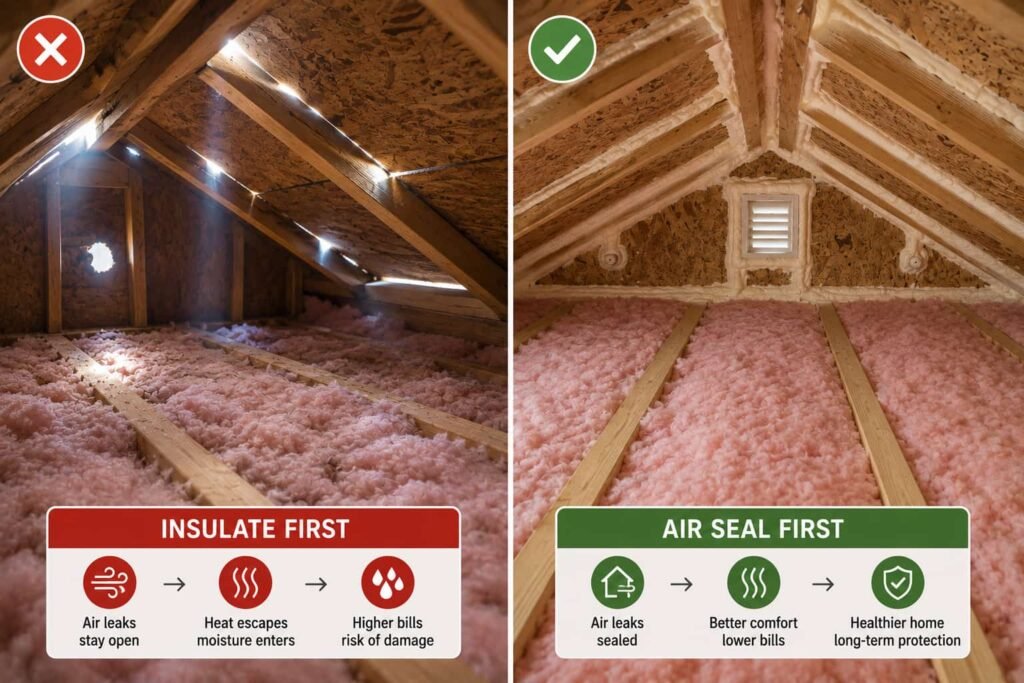
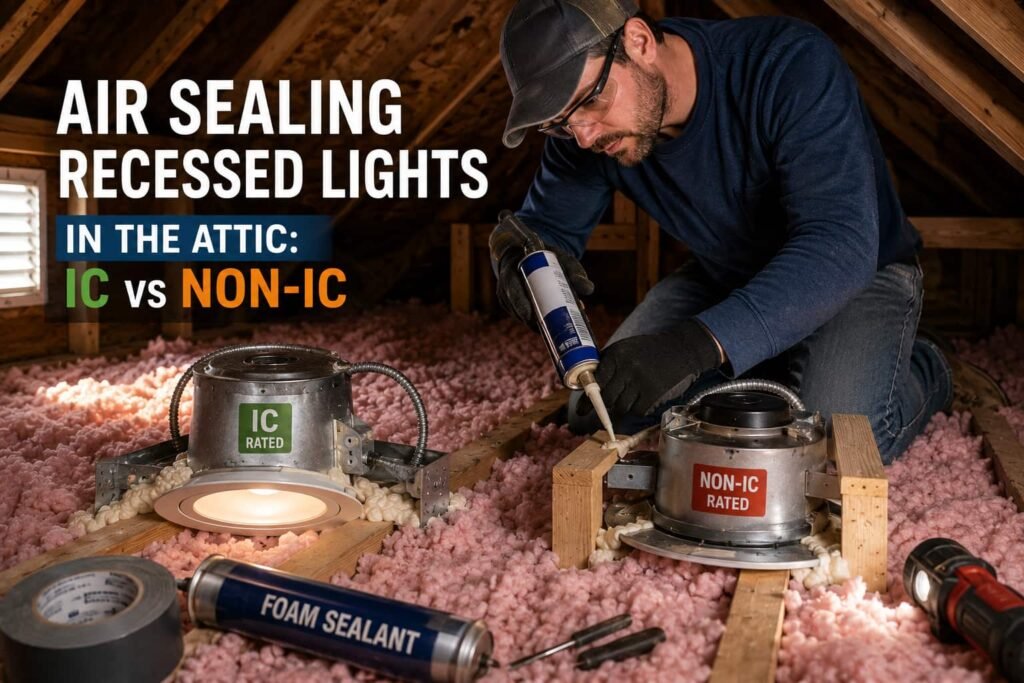
- Seal. Do the air sealing work. Our guide on how to air seal your house shows where the leaks usually are, and why air sealing comes before insulation explains the order of the rest of the job.
- Test again. After sealing, the house is tighter and the result can change. Repeat the test with exhaust fans running.
If you are planning a blower door test to measure how tight the house is, ask whether the same visit can include combustion safety testing.
What a combustion safety test looks at
You do not perform this test. It is worth knowing what it covers, so you can tell a real one from a glance at the furnace.
A technician sets up a worst case: exhaust fans and the dryer running, interior doors positioned to make the appliance room as low-pressure as it can get. Under those conditions they typically check three things.
- Pressure in the appliance room. Whether the space can be pulled low enough to reverse the draft.
- Spillage. Whether exhaust escapes at the draft hood or vent connection instead of going up the flue.
- Carbon monoxide. Readings in the flue gas and in the room.
Ask for the results in writing. A test with no written readings is hard to compare after the sealing work.
If the test finds a problem
The fixes are licensed work, and which one fits depends on the house. A technician might propose:
- A combustion air supply brought in from outdoors to the appliance room. The size of those openings is set by the fuel gas code your jurisdiction adopts, commonly based on NFPA 54 (the National Fuel Gas Code) or the International Fuel Gas Code. Local adoption varies, and the local building department governs.
- Makeup air for a large range hood or other big exhaust device.
- Venting repairs, such as a blocked, undersized or damaged flue or chimney liner.
- Replacing a natural-draft appliance with a sealed-combustion one, or with equipment that does not burn fuel.
Do not try to fix a failed test by leaving gaps unsealed elsewhere in the house. Random leaks are not a dependable air supply, and they work against the sealing you paid for.
What you can safely do yourself
- Never seal a combustion air opening. If your furnace closet has a louvered door, or the utility room has a grille or duct to the outside or to the attic, it may be the appliance's air supply. Do not tape, foam, caulk or insulate over it during air sealing, even if it feels drafty. Ask the technician first.
- Keep the appliance area clear. No storage against the furnace or water heater, and nothing blocking the base of a natural-draft water heater.
- Check your CO alarms and replace them as their makers direct.
- Write the lists of fuel-burning appliances and exhaust devices described above.
- Book the test before the sealing starts, not after.
If you are working in the attic, our attic safety tips cover footing, heat and wiring.
What this article cannot do
We cannot see your appliances, read your flue or measure your house. Whether an appliance in your home backdrafts depends on its type, its venting, the size of your exhaust fans and how tight the house becomes, and only a test answers that. Code requirements for combustion air and venting vary by state and town, and your local building department decides what applies.
This article is general information, not advice for your home. A licensed HVAC technician or gas fitter's test comes first.
FAQ
Can air sealing make my furnace unsafe?
It can affect furnaces and water heaters that take combustion air from inside the house. A tighter house plus exhaust fans can lower indoor pressure enough to pull exhaust back down the flue. Sealed-combustion, direct-vent units take air from outdoors and are not affected the same way. A combustion safety test before and after sealing tells you where you stand.
How do I know if my furnace is sealed combustion?
Check the rating plate and the owner's manual. Two plastic pipes running outside usually indicate direct vent, but some high-efficiency furnaces use only one plastic exhaust pipe and take air from the room. A technician can confirm it.
What are the signs of a furnace backdrafting?
CO alarms sounding, or symptoms like headache, dizziness or nausea that ease when you leave the house, are warning signs. If you suspect CO, CPSC says to get outside to fresh air immediately and then call 911. Do not wait to diagnose it yourself.
Should I leave the house leaky so the furnace gets enough air?
No. Random leaks are not a reliable air supply. The safer path is to seal the house, have the appliances tested, and let a technician add a proper combustion air supply or recommend sealed-combustion equipment if the test calls for it.