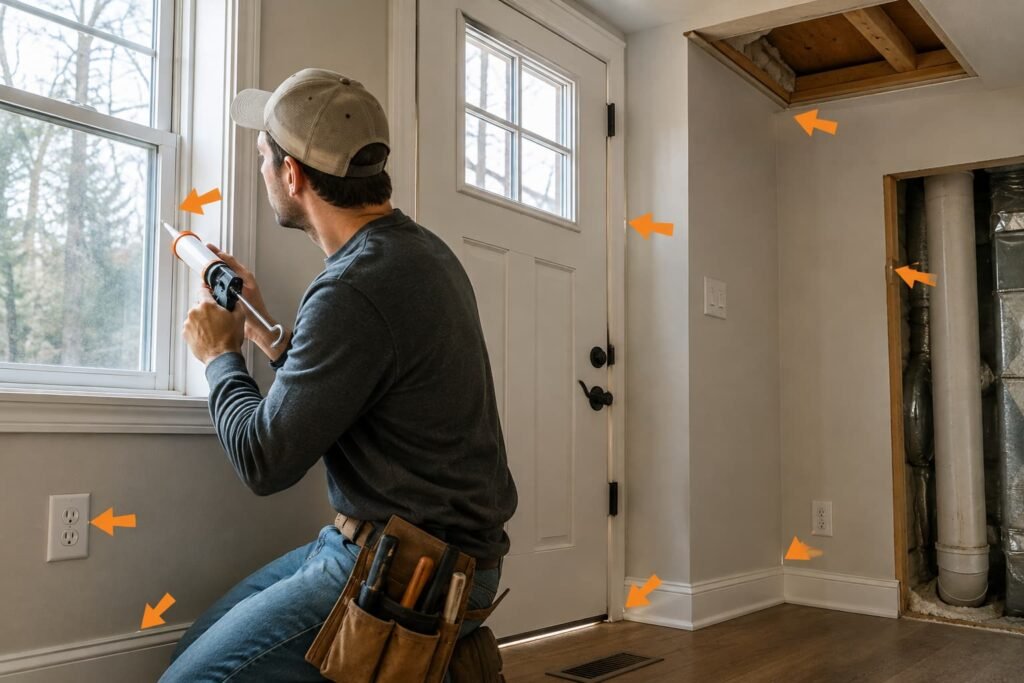
The home energy audit tools you need for a first pass are inexpensive: a bright flashlight or headlamp, a tape measure, an incense stick or smoke pencil, a notebook, and basic protective gear for the attic. A thermal camera is worth borrowing rather than buying for one pass. A blower door and combustion testing come with a trained tester. Almost everything else can wait until you know what you are looking for.
We have not tested any brand, and we name none here. This page sorts tools by what each one can and cannot find, so you can decide what belongs in your own kit.
Home Energy Audit Tools at a Glance
| Tool | What it finds | Buy, borrow or leave to a pro | Where it falls short |
|---|---|---|---|
| Flashlight or headlamp | Gaps, daylight, missing insulation | Buy | Only sees what is exposed |
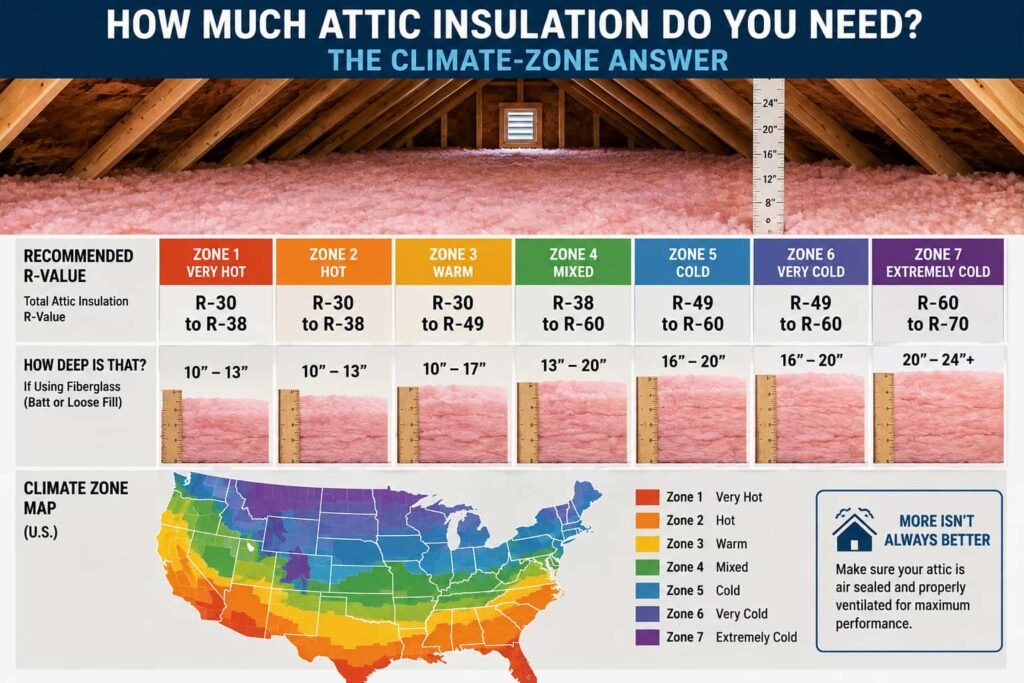
| Tape measure | Attic insulation depth | Buy | Depth alone is not an R-value |
| Incense stick or smoke pencil | Air moving through a gap | Buy | Shows nothing without a pressure difference |
| Notebook or phone camera | Each finding and where it is | Already own | Skipping it is the real risk |
| Coverall, gloves, respirator, glasses | Keeps insulation off skin and out of lungs | Buy | Not optional in an attic |
| Infrared thermometer | Surface temperature of one spot | Budget tier, or borrow | Averages a spot; shiny surfaces mislead it |
| Thermal camera | Temperature pattern across a surface | Borrow | Needs a real indoor-outdoor temperature gap |
| Blower door | Whole-house air leakage as a number | Leave to a tester | Professional equipment and setup |
| Duct leakage tester, pressure pan | How much the ducts leak | Leave to a tester | Same |
| Combustion analyzer | Whether gas and oil appliances vent and burn properly | Leave to a pro | A safety test, not a purchase |
What to Buy: The Basic Kit
ENERGY STAR's DIY Checks and Inspections page (read 2026-09-24) lists two items for the attic: a "Tape measure" and a "Flashlight/headlight." With a notebook, those carry most of a first pass. You measure insulation depth in several spots, look for gaps and open chases, and write down where each one is.
The same page describes low-tech leak finding with incense smoke, talcum powder or baby powder, or just a damp hand, since a leak feels cool against wet skin. It also suggests a two-person test: "Shine a flashlight at night over all potential gaps while a partner observes the house from outside."
A smoke pencil does the same job as incense with a steadier stream and no falling ash. Either one only shows a leak when air is actually moving. On a calm day with the house at rest, a real gap can show nothing at all.
Protective gear belongs in the kit
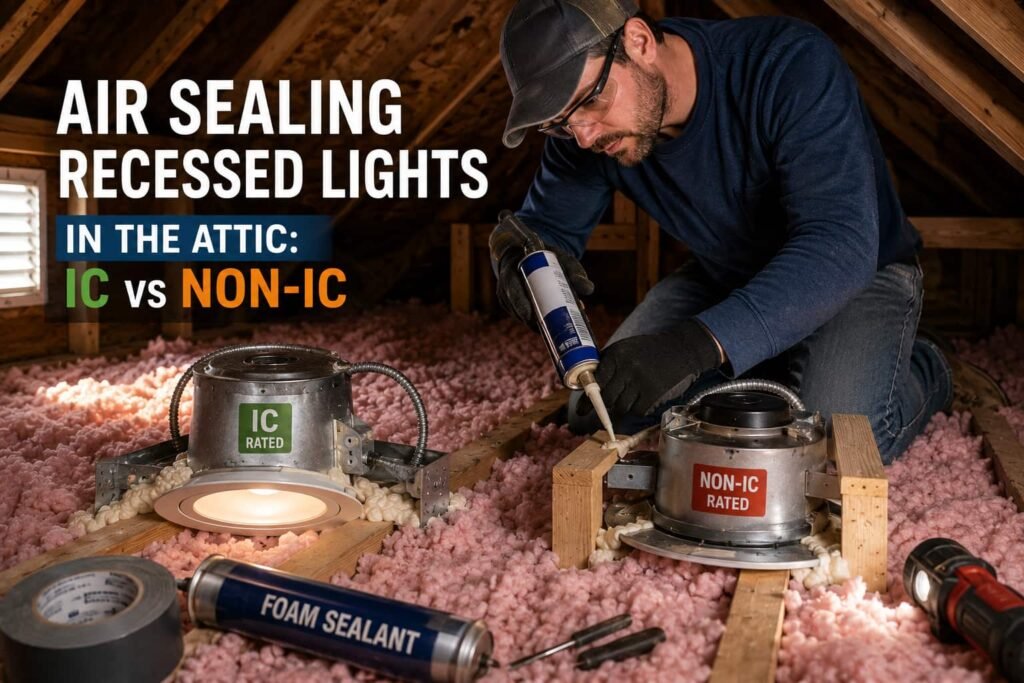
ENERGY STAR's attic tips page (read 2026-09-24) suggests "a lightweight disposable coverall, gloves, and hat" and "an OSHA-approved particulate respirator or double-strap dust mask." Its attic air sealing materials list adds safety glasses. The DIY checks page adds a footing rule: walk on joists or truss chords, "not exposed ceiling drywall or insulation, to avoid falling through the ceiling." Our attic safety tips cover heat, footing and wiring in more detail.
What to Borrow: The Thermal Camera
A thermal camera shows surface temperatures across a whole wall, ceiling or room at once. Missing insulation and cold air paths show up as patterns rather than single readings. After the basics, it is the next tool to reach for, and it rarely makes sense to buy one for a single weekend.
Some public libraries lend them. Arlington Public Library in Virginia, for example, lends thermal camera kits through its Energy Lending Library for two weeks at a time, each with instructions and a "What to look for" guide (checked 2026-09-24). Search your own library's catalog for "thermal camera" before you shop.
If you do buy, phone attachments and standalone cameras work on the same principle: each carries its own thermal sensor. An app alone cannot turn an ordinary phone camera into a thermal camera. When comparing models, look at the thermal sensor's resolution, not the visible camera's, and at whether the maker publishes a thermal sensitivity figure.
Where a thermal camera misleads
- It needs a real temperature difference between inside and outside. On a mild day, most of the house looks the same.
- Shiny surfaces such as foil, glass and bare metal reflect heat from elsewhere, so the reading is not their own.
- A cold patch can be missing insulation, an air leak or damp material. The camera shows the pattern, not the cause.
- It sees surfaces only. What sits inside the wall shows up only as it warms or cools the surface.
The Infrared Thermometer: Budget Tier or Borrow
An infrared thermometer reads the surface temperature of one spot. Moving it slowly along a baseboard, an outlet on an exterior wall or the edge of the attic hatch on a cold day can show where a surface is colder than its neighbors.
Two specs decide whether it tells the truth. The first is the distance-to-spot ratio. The thermometer averages everything inside a circle, and the circle grows as you step back. From across the room you are averaging the wall, the trim and the gap together. The second is emissivity. Most thermometers assume a dull surface, so shiny metal and foil read wrong. Some models let you adjust the setting.
For tracing a draft up close, a budget-tier thermometer is often enough. It will not show the whole picture the way a camera does, which is why the camera sits in the borrow column.
What to Leave to a Tester
Some key audit tools are not homeowner purchases at all.
A blower door is a calibrated fan mounted in an exterior doorway, connected to a pressure gauge. It measures how leaky the whole house is, and while it runs, small leaks are easier to find. It is professional equipment, and the number only means something when the test is set up and run correctly. Our guide to the blower door test and what the number means explains the result you get back.
A duct leakage tester and a pressure pan measure how much the duct system leaks. They belong with the same trained tester.
Combustion testing is the safety one. ENERGY STAR's Attic Air Sealing Project guide (read 2026-09-24) warns: "Sealing in some cases can cause naturally venting combustion appliances to back-draft gases back into your home, creating unsafe conditions." If you have an oil or gas appliance, it suggests hiring a Home Performance Contractor to test it "before and after sealing your home." The same guide lists carbon monoxide among the indoor pollutants that sealing can trap.
The Fan Trick, and When Not to Use It
Read the warning before the trick. If the house has a gas or oil furnace, boiler or water heater that vents naturally up a flue, pulling the house into negative pressure can draw combustion gases, including carbon monoxide, back down that flue and into the living space. Our guide to finding air leaks with a smoke pencil explains when not to run the fan test and what to check first. If you have any doubt, leave the depressurized version to a tester with combustion equipment.
In a house without those appliances, smoke moves more clearly under a slight pressure difference. Closing the windows and running the bathroom and kitchen exhaust fans pulls outside air in through the gaps, and the smoke shows you where.
What to Skip for a First Pass
- A thermal camera bought for one use. Borrow first. A purchase makes sense only if you will use it winter after winter.
- Camera-only "thermal" apps. Without a thermal sensor, a phone cannot read surface temperature.
- A plug-in power meter. It measures what an appliance draws, not where the building loses heat. It answers a different question.
- Humidity and air-quality gadgets. Useful for other jobs, not for finding where the heat goes.
- Anything that promises a savings figure from a scan. A tool can show a cold spot. It cannot tell you what fixing it will save.
Using the Kit in One Pass
- Pick a cold day, ideally with some wind, so there is a real indoor-outdoor difference.
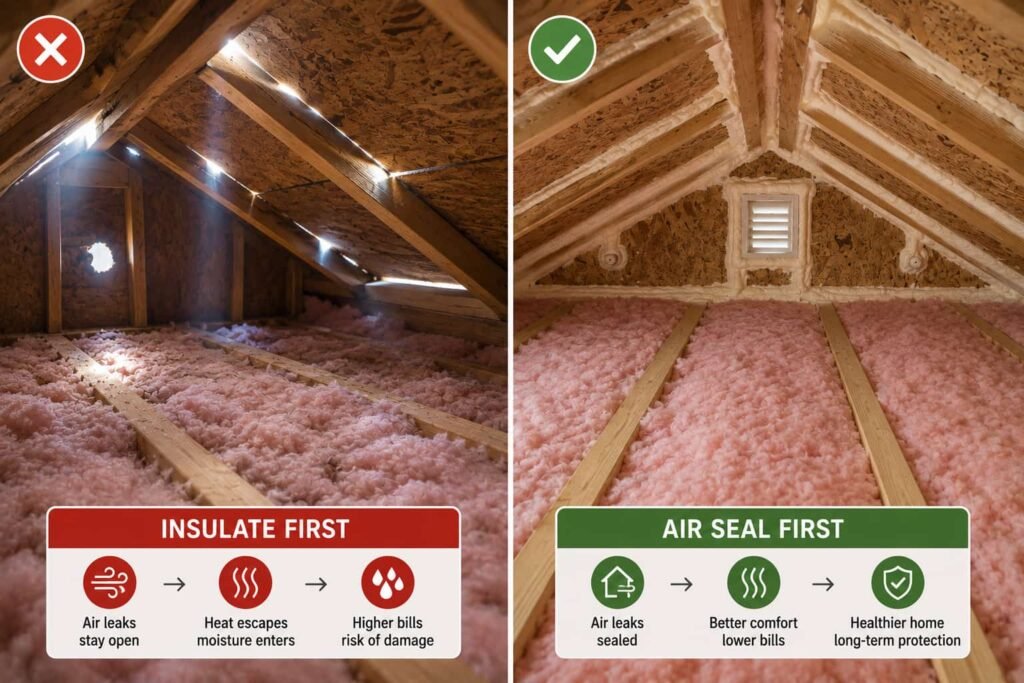
- Start in the attic with the flashlight, tape measure and protective gear. Measure insulation depth in several places, and note open chases, gaps at the top plates and dark, dirty patches in the insulation, which often mark where air has been passing through.
- Walk the living space with incense or the thermometer: exterior-wall outlets, baseboards, trim and the attic hatch.
- Go down to the basement or crawl space: the rim joist, the sill, and every pipe and wire hole.
- After dark, run the flashlight-and-partner test.
- Write each finding down with its location, then rank the list using our DIY home energy audit walk-through.
If you find knob and tube wiring or vermiculite insulation along the way, stop there. ENERGY STAR says not to disturb vermiculite unless an approved lab has tested it, and knob and tube wiring is a licensed electrician's call before anyone works near it.
What a Homeowner Kit Cannot Tell You
A homeowner's kit finds leaks and gaps. It does not measure them. You will learn where the air gets in, but not how much, or how your house compares with others. That number comes from a blower door.
The kit also cannot tell you whether gas and oil appliances vent safely, how much the ducts lose, or what any fix will save. We would rather say that plainly than let a gadget imply otherwise. For a first pass it matters less than it sounds. Open chases, thin attic insulation and gaps at the rim joist can be sealed or insulated without waiting for an exact number.
Frequently Asked Questions
What tools do I need for a DIY home energy audit?
A flashlight or headlamp, a tape measure, incense or a smoke pencil, a notebook or phone camera, and protective gear for the attic. ENERGY STAR's DIY checks page lists the tape measure and flashlight for attic inspections. An infrared thermometer or a borrowed thermal camera adds detail.
Is an infrared thermometer as good as a thermal camera?
No. It reads one spot at a time, averaged over a circle that grows with distance. A thermal camera shows the whole surface at once. For tracing a draft along a baseboard, an infrared thermometer used up close can be enough.
Can I borrow a thermal camera instead of buying one?
In some places, yes. Some public libraries lend thermal camera kits; Arlington Public Library in Virginia lends them for two weeks (checked 2026-09-24). Search your library's catalog for "thermal camera."
Can I do a blower door test myself?
A blower door is professional equipment, and the result depends on setting up and running the test correctly. The practical route to a number is a trained tester. Our blower door guide explains what the number means once you have it.