A vapor retarder goes on the side of the insulation that is warm in winter, which in most US homes means facing the heated interior. In cold climates the 2021 International Residential Code calls for a Class I or II vapor retarder on the interior side of frame walls in Climate Zones 5 through 8 and Marine 4. In Zones 1 through 3 it requires none, and in warm-humid areas interior plastic sheeting can trap moisture. Your local code governs.
That is why the internet disagrees. Two people giving opposite answers can both be right, for different climates. This page sorts out which answer is yours, and when the best vapor retarder is none at all.
Terms first: barrier, retarder and class
"Vapor barrier" is the everyday name. Codes and building scientists say vapor retarder, because almost nothing stops water vapor completely. The code sorts materials into three classes by how much vapor they let through.
| Class | How much vapor it lets through | Common examples |
|---|---|---|
| Class I | Very little | Polyethylene sheeting, foil facing, foil-faced sheathing, sheet metal, glass |
| Class II | Some | Kraft paper facing on fiberglass batts |
| Class III | More | Latex paint on drywall |
Building America's guide to condensation control in cold weather (read September 11, 2026) names poly sheeting as Class 1, kraft facing as Class 2, and latex paint on drywall as Class 3. Its warm-humid guidance (read September 11, 2026) lists rubber membranes, polyethylene film, glass, aluminum foil, sheet metal and foil-faced sheathings as Class I.
Which side of the insulation the vapor barrier goes on
The rule underneath every correct answer is the same: the retarder belongs on the side where the warm, moist air sits for most of the heating season, so vapor is stopped before it reaches a cold surface inside the wall and condenses.
In a heated house in a cold climate, that is the room side. On a fiberglass batt, that means the kraft facing faces the heated space:
- In a wall, the facing is toward the room, stapled to the studs before drywall.
- On an attic floor, the facing is down, against the ceiling below.
- Between floor joists over an unheated crawl space or garage, the facing is up, toward the heated floor above.
Facing up on an attic floor, or toward the outside in a cold-climate wall, puts the retarder on the cold side, where it can collect condensation instead of preventing it.
What the 2021 IRC says, climate zone by climate zone
The model code section is 2021 IRC Section R702.7 and its Table R702.7(2). We could not open the ICC's own page, so what follows is the published summary from continuousinsulation.org (read September 11, 2026), an industry technical resource, for interior vapor retarders on frame walls:
| Climate zone | Class I (poly) | Class II (kraft) | Class III (latex paint) |
|---|---|---|---|
| 1 and 2 | Not permitted | Not permitted | Permitted |
| 3 and 4, except Marine 4 | Not permitted | Permitted | Permitted |
| Marine 4, and 5 through 8 | Permitted | Permitted | Only under the conditions of Table R702.7(3) |
The same summary reports that the 2021 IRC does not require a vapor retarder in Zones 1, 2 and 3, and permits "smart" or responsive retarders, Class I or II materials with a permeance above 1 perm in the wet-cup test, in frame walls in all climate zones.
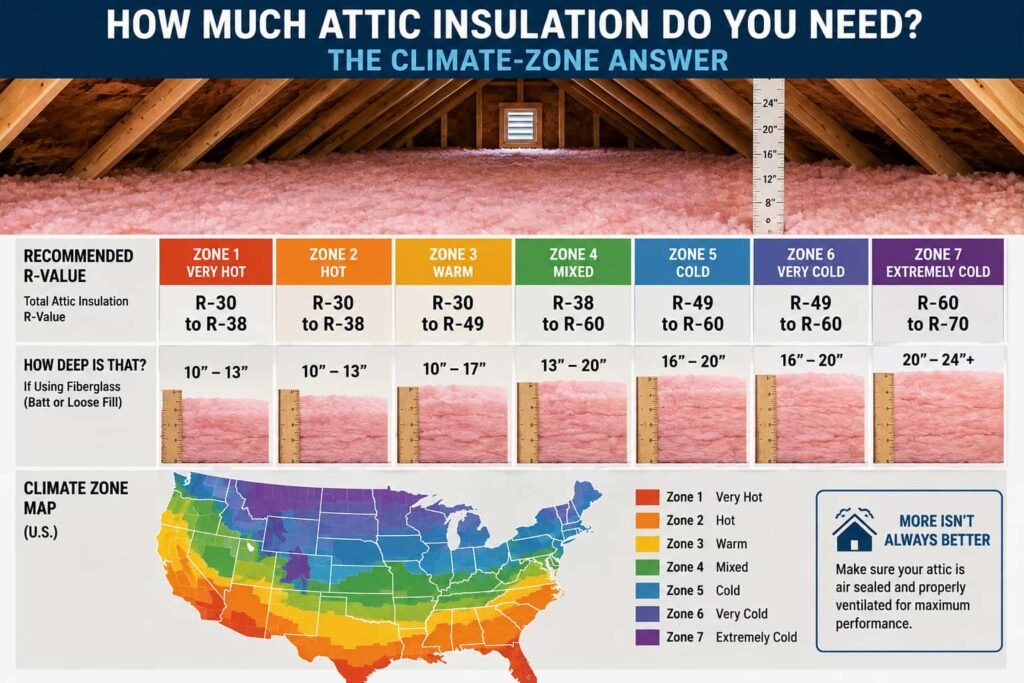
Two cautions. First, your state or city may not use the 2021 edition, and many amend it. Second, a code table is a minimum for a new wall, not a diagnosis of an old one. Your local building department and inspector decide what applies to your house. To find your zone, see our page on how much attic insulation you need by climate zone, which uses the same IECC map.
Cold climates: Zones 5 through 8 and Marine 4
Building America's cold-weather guide says that in Climate Zones 5 and higher, a Class 1 or Class 2 vapor retarder is required on the interior side of the wall, and that code permits a Class 3 retarder, such as latex paint, instead if rigid continuous insulation is installed on the exterior of the sheathing. The exterior foam keeps the sheathing warm enough that the risky condensing surface is gone.
So in a cold climate with ordinary framed walls: kraft-faced batts facing the room, or unfaced batts with a separate retarder if local code prefers one. In a wall wrapped in exterior foam, the heavy interior retarder may not be needed, and a Class I on both sides would trap moisture inside the wall. The code summary notes that a Class I interior retarder in a wall with a Class I exterior needs an approved design.
Hot and humid climates: keep the plastic out
In warm-humid areas the vapor drive reverses for much of the year. Outdoor air is hot and wet and the house is air-conditioned, so vapor pushes inward.
Building America's warm-humid guide explains the failure. With polyethylene on the interior of an above-grade wall, water vapor moving inward during the cooling season condenses on that cool, impermeable surface and accumulates in the wall, leading to ruined insulation, mold and structural rot. Its rule is not to install Class I materials on the interior side of air-permeable insulation in above-grade walls in warm-humid climates, with exceptions for tile at shower and tub walls and for mirrors mounted on spacers that let air move behind them.
In practice, in a hot-humid home: unfaced batts, no interior poly, and latex-painted drywall. If an old wall has vinyl wallcovering on the inside and mold behind it, this is often why.
Mixed climates and when to skip one
Zones 3 and 4 swing both ways across the year. A strong retarder on either side can trap moisture in the season the vapor drive reverses. The code summary above reflects that: no poly, with kraft facing or paint allowed.
Skip a separate vapor retarder when:
- You are in Zones 1 to 3 and local code does not require one.
- You are adding a second layer of insulation over existing insulation in an attic. The new layer should be unfaced, so there is no retarder buried in the middle. Our page on adding insulation over existing insulation covers what to check first.
- The wall has exterior continuous insulation and your local code accepts Class III paint on the inside.
- The assembly is a basement or crawl space wall. Those follow different rules and have their own moisture questions, covered in our pages on basement wall insulation with rigid foam and vented versus encapsulated crawl spaces.
Air leaks carry more moisture than diffusion
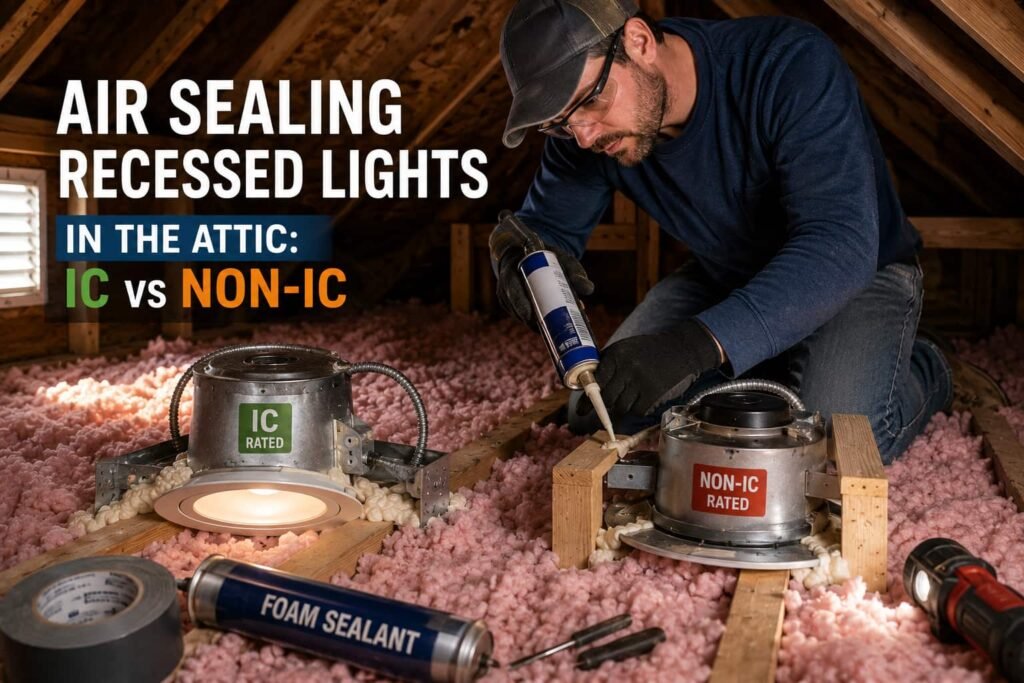
The detail most "which side" pages leave out is that a perfect vapor retarder with holes in it does little. Building America's cold-weather guide says an important aspect of controlling condensation is limiting the leakage of warm, humid indoor air into wall assemblies and framing cavities.
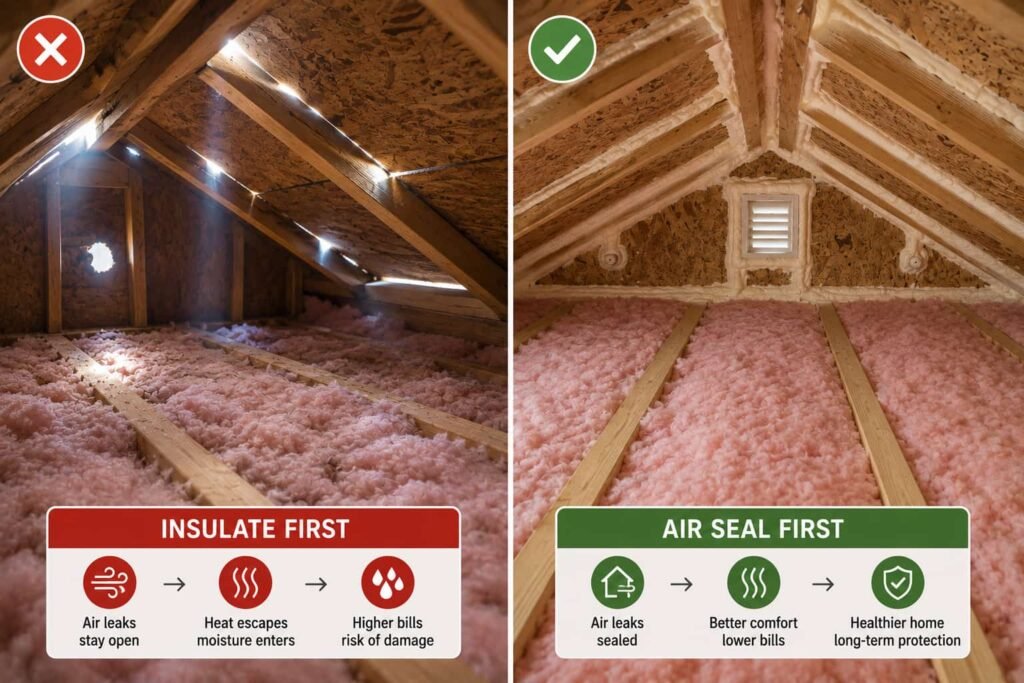
Air moving through a gap at an outlet or top plate carries far more moisture than vapor slowly diffusing through drywall. That is why sealing comes before insulating, and why a torn, unsealed sheet of poly is not the moisture control it looks like. The reasoning is in why air sealing comes before insulation.
Frequently asked questions
Does kraft facing on attic insulation go up or down?
In a heated house, down, toward the heated ceiling below. If you are adding a layer over existing insulation, use unfaced material so no facing ends up between the layers.
Do I need plastic sheeting behind drywall?
Only where your local code requires it. The 2021 IRC permits Class I retarders such as poly on the interior of frame walls in Zones 5 through 8 and Marine 4, and not in Zones 1 through 4 outside Marine 4. Your building department decides for your house.
Is paint really a vapor retarder?
Latex paint on drywall counts as Class III, according to Building America. In some climates and wall designs the code accepts it as the only interior retarder.
What about a smart vapor retarder?
These are membranes that change permeance with humidity. As summarized, the 2021 IRC permits qualifying ones in frame walls in all climate zones. Follow the manufacturer's installation instructions and confirm with your local inspector.
Sources
- US DOE Building America Solution Center, "Condensation Control for Walls in Cold Weather": Class 1 or 2 interior retarder in Zones 5 and higher; Class 3 option with exterior continuous insulation; examples of each class; limiting indoor air leakage. Read 2026-09-11.
- US DOE Building America Solution Center, "Class I Vapor Retarders Not Installed in Above-Grade Walls in Warm-Humid Climate": the rule, the condensation mechanism, exceptions, and Class I examples. Read 2026-09-11.
- continuousinsulation.org, "2021 IBC and IRC Adopt Improved Vapor Retarder Requirements": summary of 2021 IRC Section R702.7 and Table R702.7(2) by climate zone. Read 2026-09-11. The ICC's code page itself could not be opened on that date.
State and local code adoption varies, and your local building department governs what applies to your house.