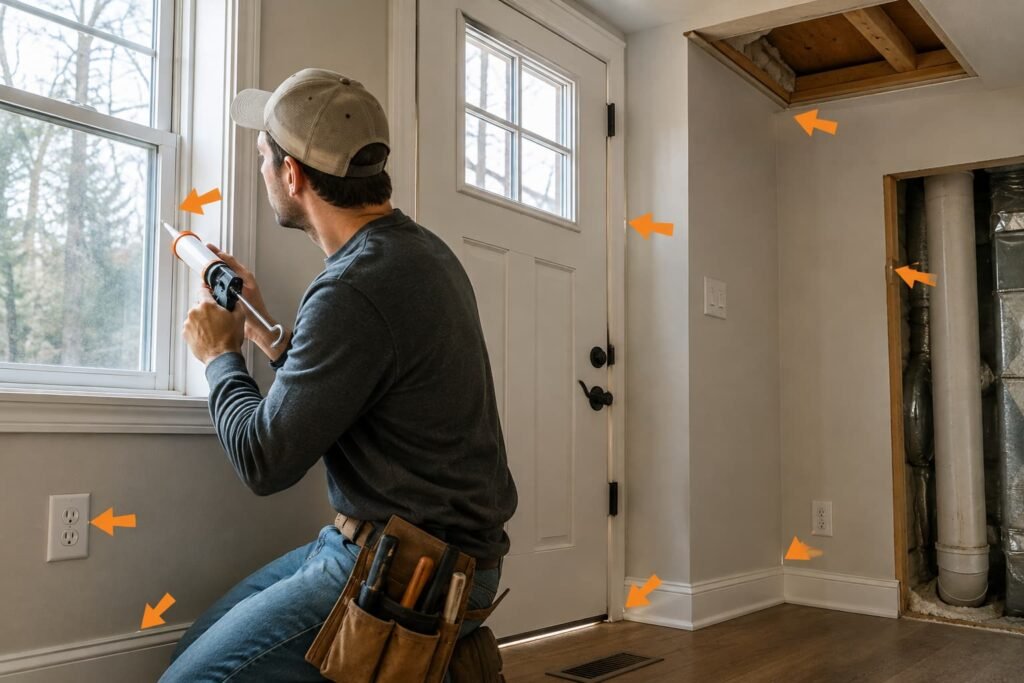
Yes, closed walls can be insulated without tearing out drywall. A contractor drills a small hole into each stud bay, from inside or outside, and blows loose-fill cellulose or fiberglass in at high density, or injects a foam made for closed cavities, then patches the holes. It is mostly contractor work. Old wiring, lead paint, fire blocking and hidden moisture have to be ruled out before anyone drills.
This page explains what the job involves, what has to be checked first, and which parts are genuinely yours. It does not give a step-by-step for drilling and filling, because the checks that make it safe are the part most homeowners cannot do.
Before anything else: the hazards, and who handles them
Read this section first. Each item below is a reason to stop and call a specific trade.
Knob and tube wiring. Individual conductors on ceramic knobs and through ceramic tubes, found in many houses built before about 1930. The US Department of Energy's Building America Solution Center, in its guide to blown insulation for existing exterior walls (read September 11, 2026), notes that the scope of National Electrical Code Article 394.1 does not allow insulation to be applied to or surround it. If it is in your walls, a licensed electrician decides what happens before any insulation goes in.
Lead paint. The EPA's Lead Renovation, Repair and Painting Program (read September 11, 2026) warns that work in a pre-1978 home with lead-based paint can easily create dangerous lead dust, and requires anyone paid to disturb painted surfaces in such homes to be certified. Drilling through painted plaster or siding is that kind of disturbance. Hire an EPA lead-safe certified firm.
Wires and pipes in the cavity. Every stud bay you would drill into may carry cable, plumbing or gas line. A detector helps but does not see everything, and walls behind kitchens, bathrooms and the panel are dense with services. A contractor drilling blind into a live cable or a supply pipe is exactly the accident this work risks.
Moisture. A wall that already takes on water from failed siding, flashing or gutters will hold that water against new insulation. The leak gets fixed first.
How to insulate existing walls without removing drywall: the two methods
There are two families of method, and both work through small holes rather than open walls.
Drill and fill with loose fill. Holes are drilled into each stud cavity, a hose goes in, and cellulose or fiberglass is blown until the cavity is packed. Building America describes drilling from the interior in the center of each stud cavity, roughly 6 inches below the ceiling, and says to confirm the manufacturer's pounds-per-cubic-foot recommendation to achieve "dense" packing. That density is the point. Loose fill blown at attic density would settle in a wall and leave an empty band at the top.
Injection foam. A foam formulated to be pumped into closed cavities is injected through similar holes and cures in place. It is a proprietary, installer-applied product. The mix, the pressure and the fill rate are controlled by the installer and the manufacturer's instructions, not by the homeowner.
Spray foam from a two-part kit, or cans of expanding foam, are not a substitute for either. Sprayed into a closed wall, they cannot be seen, cannot be checked and do not fill the cavity.
Inside holes or outside holes
The holes can go through the drywall or plaster from the room, or through the siding and sheathing from outside.
| From inside | From outside | |
|---|---|---|
| What gets drilled | Drywall or plaster | Siding, then sheathing |
| What gets patched | Interior wall, then repainted | Siding plugs, or siding removed and replaced |
| Best timed with | Interior repainting | Re-siding the house |
| Extra risk | Dust in living space, lead in old paint | Water getting behind siding if the drainage plane is not restored |
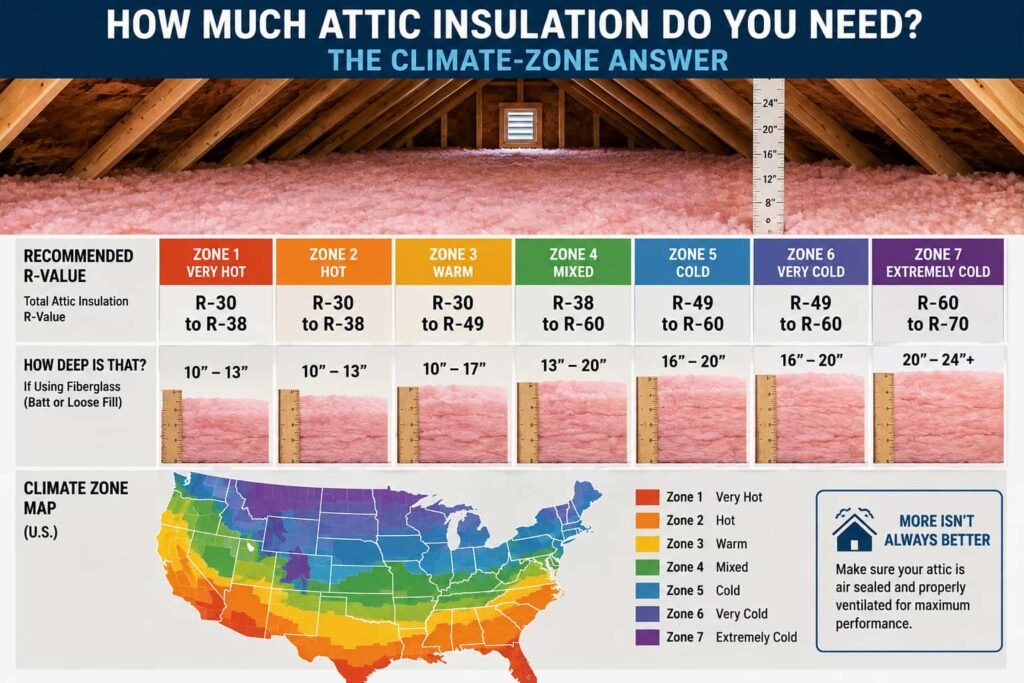
ENERGY STAR's recommended R-values page (read September 11, 2026) gives the outside route for uninsulated walls: drill holes in the sheathing and blow insulation into the empty wall cavity before installing the new siding. For Zones 3 through 8 it also recommends adding insulative sheathing rated R5 to R10 at that stage. If you are planning new siding anyway, that is the moment to insulate the walls.
Building America adds that exterior holes need the drainage plane repaired afterwards. A plugged hole in siding that lets water in has traded a cold wall for a wet one.
The checks that come before any drilling
A competent contractor works through these before quoting a price. Ask to see how each one was answered.
- Is the wall actually empty? Building America lists small cutouts, looking beside an electrical box, or infrared imaging as ways to find out. Many older walls hold some insulation already, often slumped.
- Is there knob and tube wiring? If yes, the electrician comes first, as above.
- Is it balloon framing? Building America says to verify the wall is not balloon framed, and to install blocking if it is. In a balloon-framed wall the stud bays run from foundation to roof with nothing to stop the fill, which would pour into the basement or the attic.
- Where are the fire blocks and obstructions? Horizontal blocking, window headers and diagonal bracing interrupt a bay. Each section needs its own hole, or it stays empty.
- Is there any water getting into the wall? Stains, soft sheathing, peeling paint on the outside, or bubbled interior finish all point to a leak to fix first.
- Was the house built before 1978? Then lead-safe practices apply to any disturbance of painted surfaces.
How a good job is verified
Blown walls fail quietly. The danger is not that insulation goes in, but that some bays or parts of bays do not fill.
Building America's guidance is to fill all exterior wall cavities and then re-verify with an infrared camera, to make sure every cavity is completely filled, before patching. That order matters. Once the holes are plugged and painted, finding a missed bay means drilling again.
Ask any contractor you are considering:
- What density will you blow to, and whose data sheet sets it?
- How do you find blocking and obstructions before you drill?
- Will you scan the walls with an infrared camera before patching, and will you show me the images?
- Who patches, and to what finish?
- Are you EPA lead-safe certified, if the house is older than 1978?
The part of this job that is yours
Most of the work belongs to the contractor. Three pieces belong to you.
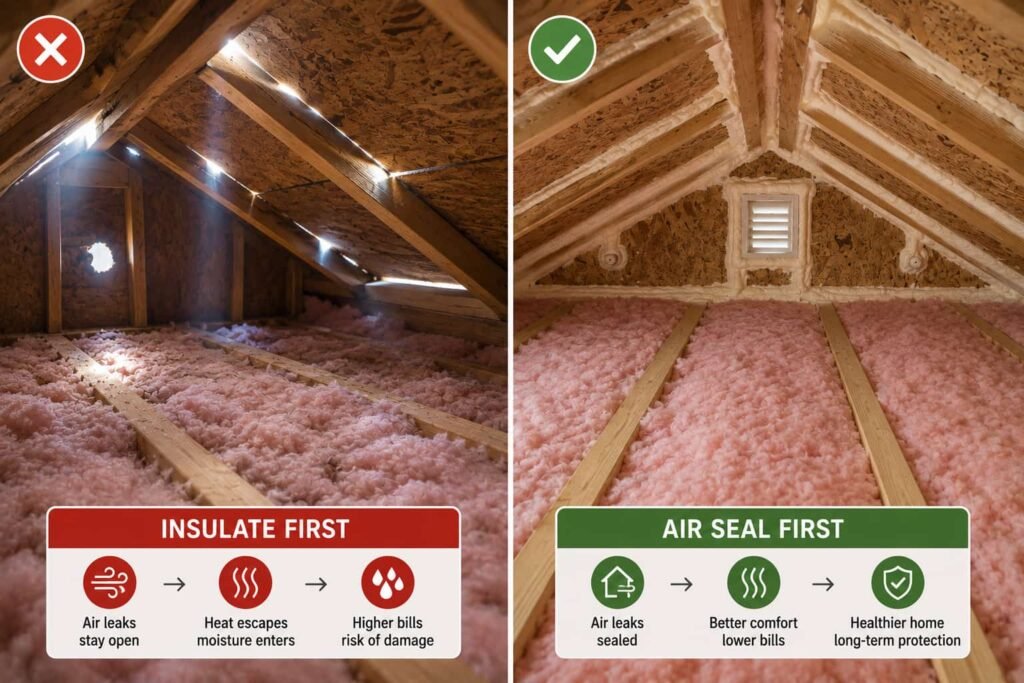
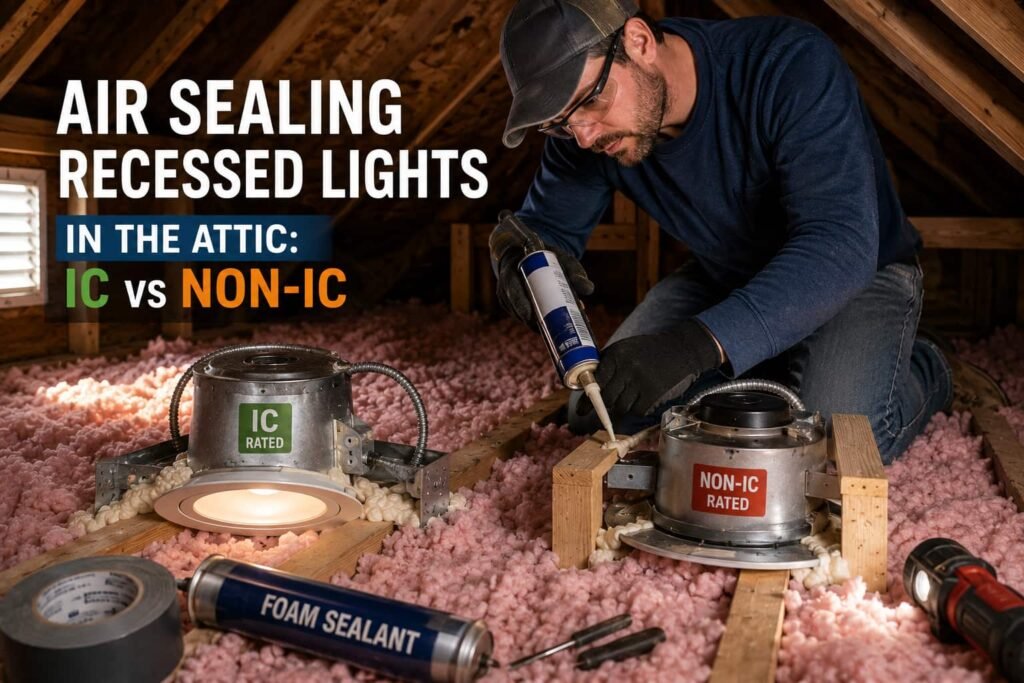
Seal the attic first. Heat leaves a house through the top plates and wire holes above these same walls. Sealing them from the attic is work a homeowner can do, and it keeps warm, moist indoor air out of the wall cavities you are about to fill. The attic targets are covered in our guide to how to air seal your house, and the reasoning in why air sealing comes before insulation.
Know which walls matter. Exterior walls are the target. Walls next to unconditioned space, such as the short walls in a finished attic, are a different job with open framing and are covered in our page on knee wall insulation. The cold band at the top of a basement wall is the rim joist, covered in our page on insulating a rim joist.
Plan the finish. Interior holes mean patching and repainting. Decide in advance whether you or the contractor does it, and put it in writing.
What this cannot do
Filling existing cavities adds insulation only as deep as the studs. It does not remove the thermal bridge through each stud, and it does not fix air leaks at outlets, windows and the band where wall meets floor. It will not make a damp wall dry. The honest expectation is a warmer, quieter exterior wall, not a new one.
Frequently asked questions
Can I rent a blower and dense-pack my own walls?
The machines exist, but the parts that make wall filling safe and effective, finding wiring and blocking, checking for lead, reaching dense-pack density and verifying the fill, are the parts a homeowner is least equipped to do. We recommend a contractor for closed walls.
Is injection foam better than dense-pack cellulose?
They are different products with different installers, and we have not tested either. Ask each contractor for the manufacturer's data sheet, the fill method and the verification they will provide, and compare on those.
Will insulating my walls cause moisture problems?
A wall that is already leaking will get worse, which is why the leak comes first. Keeping indoor air out of the wall, by sealing from the attic and around penetrations, also matters. Vapor control rules vary by climate zone, and your local building department governs.
Does insulating walls require a permit?
Requirements vary by state and locality. Ask your local building department, and ask the contractor whether they pull a permit where one is needed.
Sources
- US DOE Building America Solution Center, "Blown Insulation for Cavities of Existing Exterior Walls": NEC Article 394.1 and knob and tube wiring; balloon framing; interior drilling roughly 6 inches below the ceiling; manufacturer density for dense packing; infrared verification before patching; drainage plane repair for exterior holes; lead safety for older homes. Read 2026-09-11.
- ENERGY STAR, "Recommended Home Insulation R-Values": drilling sheathing and blowing insulation into empty wall cavities before new siding; R5 to R10 insulative sheathing in Zones 3 to 8. Read 2026-09-11.
- US EPA, "Lead Renovation, Repair and Painting Program": pre-1978 homes and certification of paid work. Read 2026-09-11.
Manufacturer installation instructions govern any product used. Electrical work is for a licensed electrician, and local code adoption varies.