Yes, you should insulate ducts in attic and crawl space runs that sit outside your heated and cooled space, but seal them first. Insulation slows heat moving through the duct wall. It does nothing for air escaping through open joints. So the order is: seal every reachable joint, then wrap the duct in insulation with a continuous facing on the outside. The 2021 model energy code sets R-8 for most ducts outside conditioned space. In humid climates, a gap in that facing can let condensation form on a cold supply duct.
That is the whole answer in one paragraph. The rest covers where the job stops, which material to use, and the mistakes that turn good insulation into a wet one.
Before you start: where this job stops
This is attic and crawl space work, around wiring and fuel-burning equipment. Read these lines before the how-to.
- Never wrap a flue pipe or vent connector in insulation. The metal pipe carrying exhaust from a gas furnace or water heater needs its required clearance to combustible materials. Venting is work for a licensed HVAC contractor or gas fitter.
- Do not insulate the furnace or air handler cabinet. Service panels must stay open to a technician, and the equipment has its own clearance rules in the manufacturer's manual.
- Stop at knob-and-tube wiring or damaged wiring anywhere in the work area. A licensed electrician decides what happens next.
- Stop at suspect asbestos or vermiculite. The U.S. EPA lists pipe, furnace and boiler insulation among the materials that can contain asbestos, and advises leaving it alone and using trained, qualified people for removal or major repair. Old papery wrap on ducts in an older home falls in the same "test it first" category.
- Keep working carbon monoxide alarms if the house has gas appliances.
Heat, footing and nails are the other hazards up there. Read our attic safety tips for DIY work before the first trip.
Why insulate ducts in attic and crawl space runs
A duct in an unconditioned attic lives outdoors, in effect. In summer, the attic can run far hotter than the air outside, and cold supply air moving through a bare metal duct picks that heat up before it ever reaches a room. In winter, the reverse happens, and warm supply air loses heat along the run.
Leaks make it worse. ENERGY STAR's duct sealing guide, which we read on September 27, 2026, says that in a typical house about 20 to 30 percent of the air moving through the duct system is lost to leaks, holes and poorly connected ducts. It tells homeowners to seal and then insulate all the ducts they can reach, naming attics, crawl spaces, unfinished basements and garages.
ENERGY STAR's wider seal-and-insulate page, also read on September 27, 2026, says sealing air leaks and adding insulation can "provide up to a 10% savings on your annual energy bills." That is an upper figure for the whole house, not a promise for one duct run.
Seal first, every time
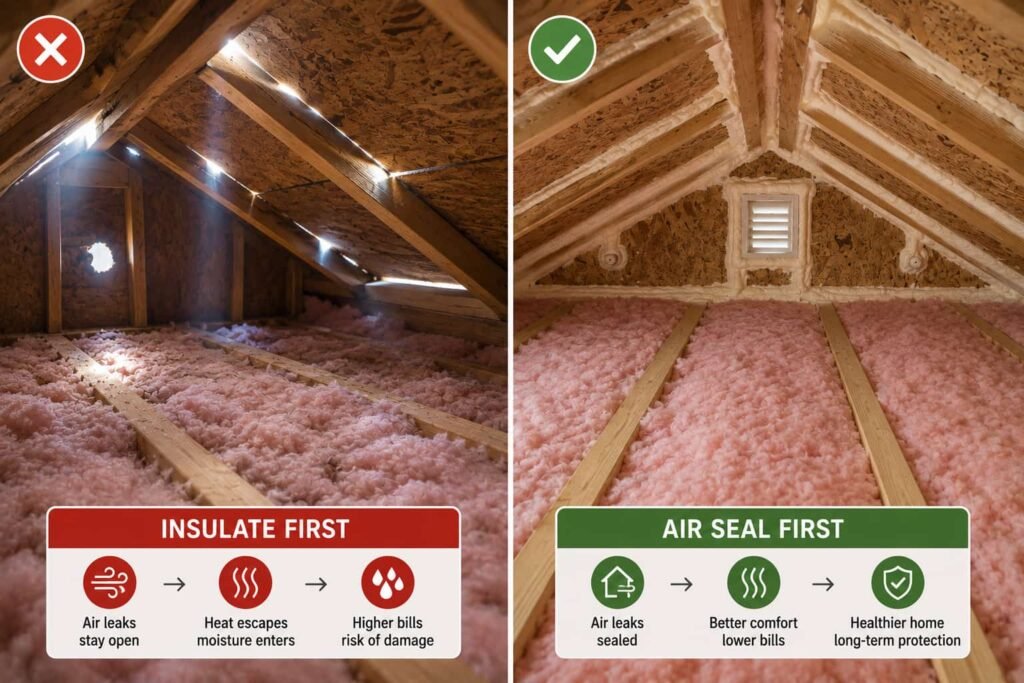
Insulation hides joints. Once a duct is wrapped, no one will see a leaky takeoff again until the wrap comes off. So sealing is step one, not an optional extra.
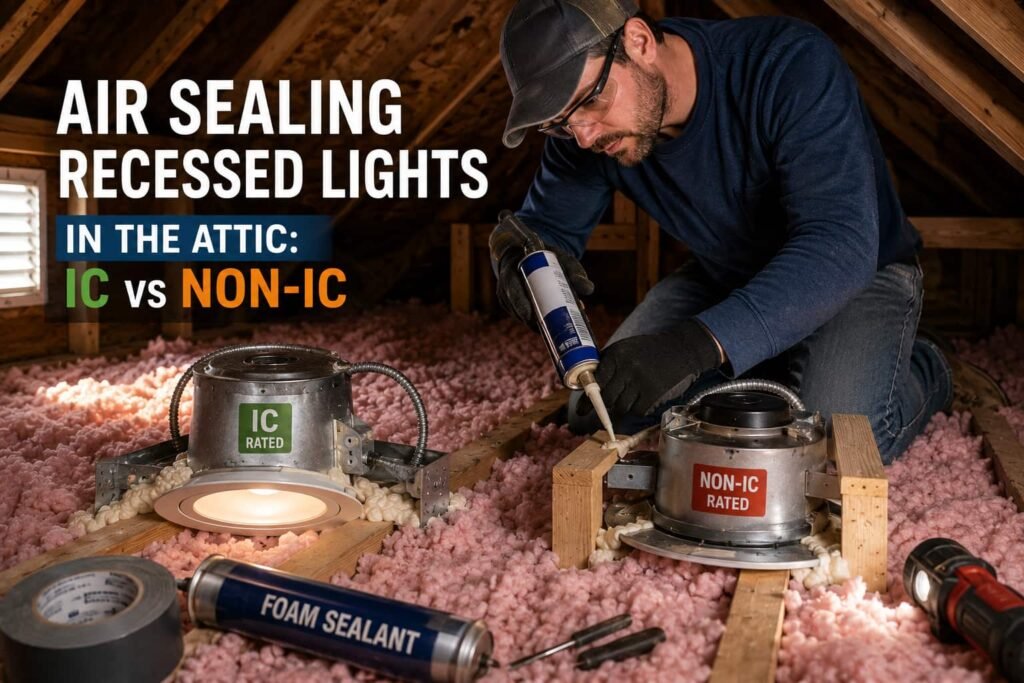
Seal every reachable seam, takeoff, boot and plenum connection with duct mastic or a UL 181 listed foil tape. Mastic suits permanent sheet metal joints; listed foil tape suits duct board, flex connections and panels someone will need to open. Never use cloth duct tape.
The same principle applies to the attic floor around the ducts. Boots that pass through the ceiling leave gaps in the drywall, and those gaps let house air into the attic. We cover why air sealing comes before insulation in its own guide, and the reasoning is the same for ducts as it is for the ceiling.
If you are unsure where the leaks are, run the blower and check joints with smoke or the back of a damp hand before you seal. Then turn the system off while you work.
How much insulation: the code baseline
The 2021 International Energy Conservation Code (IECC), in section R403.3.1, sets the model requirement for ducts outside conditioned space. Washington State adopted that wording in its residential energy code, which we read on September 27, 2026:
- R-8 for supply and return ducts 3 inches in diameter and larger.
- R-6 for ducts smaller than 3 inches.
Earlier editions of the IECC set R-8 only for attic ducts and allowed less in other unconditioned spaces. The 2021 edition treats a crawl space or unconditioned basement the same as an attic.
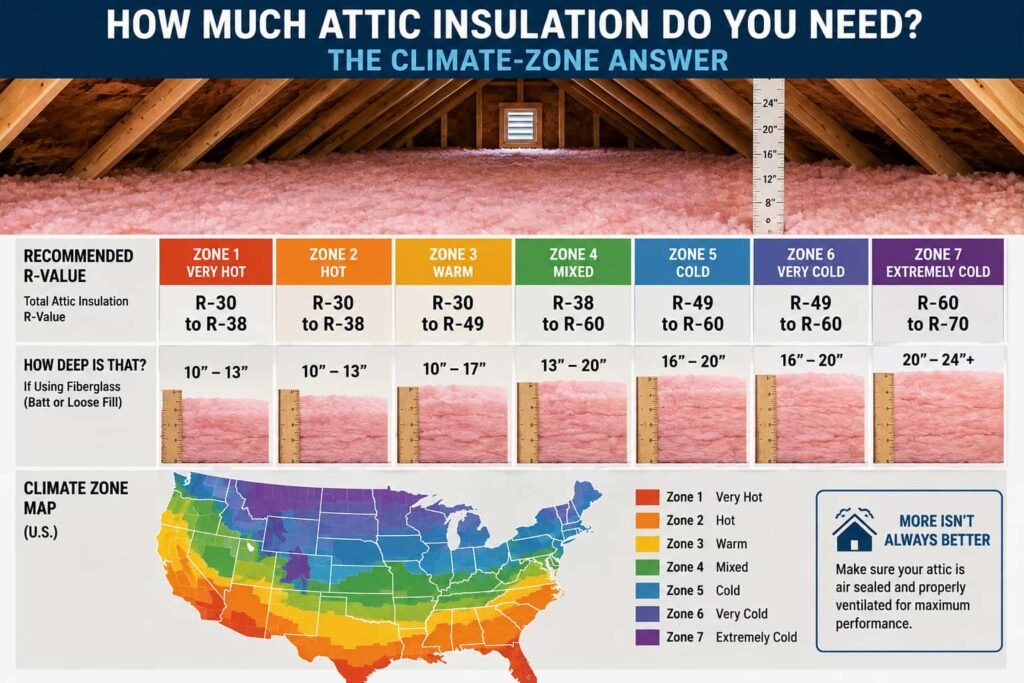
Treat these numbers as a US baseline, not a rule for your house. States and cities adopt different editions and amend them, and your local building department or inspector decides what applies. For a retrofit you do yourself, matching the R-8 baseline is a sensible target where the space allows it.
Choosing the material
For a homeowner wrapping exposed ducts, the common choice is fiberglass duct wrap with a foil or vinyl facing. The facing acts as the vapor retarder and must end up on the outside, away from the duct. The installed R-value is printed on the product.
A few things to know before you buy:
- Flex duct usually comes pre-insulated. Check the jacket for its R-value marking. If the jacket is torn or crushed, the fix is often replacing that section, not wrapping over it.
- Compression costs you R-value. Insulation works because of the air trapped in it. A wrap squeezed flat by a strap or a tie does not perform to its label.
- Duct board ducts are already insulated. Their job is sealing the seams with the right listed tape, not adding a wrap.
- Rigid foam and spray foam can be used around ducts, but spray foam encapsulation is a contractor job, and foam near a heat source has clearance rules of its own.
Our comparison of fiberglass, cellulose and mineral wool covers the materials by problem if you are weighing other options.
Wrapping a duct, in order
- Turn the system off and let the duct reach attic temperature.
- Confirm every joint is sealed and the mastic has cured.
- Measure the duct's circumference and cut the wrap long enough to overlap itself, following the manufacturer's overlap guidance.
- Wrap with the facing outward. Do not stretch the wrap so tight that it compresses.
- Seal every seam and overlap in the facing with a listed foil tape. In a humid climate, a gap in the facing is where condensation starts.
- Hold the wrap with ties or wire loosely, tight enough to stay put, loose enough not to crush it.
- Cover the whole run, including elbows, takeoffs and the boots where ducts meet the ceiling. A bare boot sweats just like a bare duct.
Wear a long-sleeved shirt, gloves, eye protection and a disposable respirator rated for fiberglass. Work in the cooler part of the day.
Condensation: the humid-climate trap
A cold supply duct in a hot, humid attic is a cold glass of water on a summer porch. If humid air reaches the metal, water forms on it. That water can soak the insulation, rust the duct and drip onto the ceiling below.
This is why the facing matters more than the fiberglass in humid regions. A continuous, taped vapor retarder keeps humid attic air off the cold duct.
The U.S. Department of Energy's Building America Solution Center has guidance on burying ducts in attic floor insulation. Its buried ducts guide, read on September 27, 2026, calls for ducts to be mechanically fastened and mastic-sealed, wrapped in at least R-8 duct insulation with an integral vapor barrier, and tested with a duct blaster. It also says that in a humid or marine climate the ducts must be encapsulated in spray foam before the blown insulation goes on. That is a contractor job, not a weekend project.
If you see water stains on the ceiling under a duct run, or sweating on the duct in summer, have an HVAC contractor look before you add more insulation.
Crawl spaces, and the bigger fix
In a vented crawl space, ducts are outside conditioned space and get the same treatment as attic ducts: seal, then wrap with the facing out. Crawl spaces add ground moisture, so check for standing water and a torn ground cover before you start.
In an encapsulated crawl space, the ducts may already be inside the conditioned envelope. Our guide to vented vs encapsulated crawl space insulation explains the difference.
The best duct is one that never leaves the conditioned space. Moving ducts inside, or bringing the attic inside the envelope, is a larger project for a contractor and a designer. When you are replacing the whole system anyway, it is worth raising.
FAQ
Should I insulate ducts in the attic?
Yes, for ducts in an unconditioned attic. Seal the joints first, then wrap them with a faced duct wrap. The 2021 IECC model text sets R-8 for ducts 3 inches and larger outside conditioned space. Your local code may differ.
Which side of duct wrap faces out?
The foil or vinyl facing goes on the outside, away from the duct. It is the vapor retarder, and every seam in it should be taped with a listed foil tape.
Can I insulate ducts without sealing them first?
You can, but you should not. Insulation does not stop air leaking through open joints, and once the wrap is on, those joints are hidden. Seal first.
Can I wrap the flue pipe from my furnace?
No. The flue carries hot exhaust and needs clearance from combustible materials. Leave it alone and ask a licensed HVAC contractor about anything to do with venting.