Replace attic insulation when it is wet or moldy, soiled by rodents, or suspected vermiculite, and only after the cause is fixed. Insulation that is old, gray or just thin is usually not failed. If it is dry and clean, adding more on top is the normal answer. Age alone is not a reason to remove it. Vermiculite is never a DIY removal: the EPA says assume it contains asbestos and leave it undisturbed.
This page separates insulation that has failed from insulation that is only short of depth, explains what removal involves, and names who does each part.
Before you go up to look: stop conditions
Checking your own attic is reasonable. Some things you might find end the inspection on the spot.
- Pebble-like loose fill, gray-brown or silver-gold. The EPA's guidance on asbestos-contaminated vermiculite insulation (read September 11, 2026) says to assume it contains asbestos and not disturb it, not to store items in that attic, not to let children play there, and not to remove it yourself. Removal is for a professional asbestos contractor.
- Rodent droppings, nests or urine staining. Do not sweep, vacuum or dig into it. See the removal section below.
- Knob and tube wiring. ENERGY STAR's Attic Insulation Project (read September 11, 2026) calls pre-1930 knob and tube wiring a fire hazard in contact with insulation. A licensed electrician assesses it before any insulation is moved or added.
- Soft, dark or rotted roof decking or framing. That is a roofer or a structural question.
Wherever you do look, walk only on joists or truss chords, never on the drywall between them, and wear a respirator, eye protection and gloves. In summer, go up early in the day.
When to replace attic insulation, and when old is not failed
Several pages ranking for this question give an age after which insulation should be replaced. We have not found a federal source that sets a service life for attic insulation, and fiberglass and cellulose do not stop working on a birthday. Condition decides, not age.
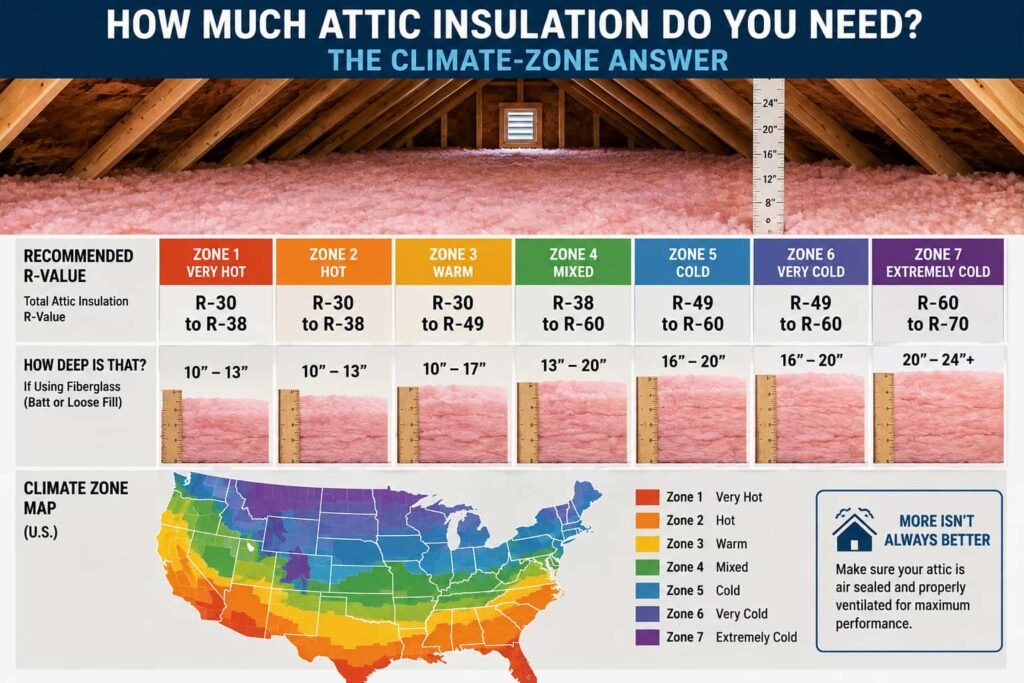
Old insulation that is dry, clean and simply not deep enough has not failed. It is short of the target. ENERGY STAR's recommended R-values by climate zone (read September 11, 2026) include a separate column for attics that already have 3 to 4 inches, which assumes the existing layer stays. The target is lower than for a bare attic, and the difference is made up by adding on top.
Discoloration alone can mislead. Dark streaks in fiberglass often show where air has been leaking through it from the rooms below, filtering out dust. That is a sign of an air leak to seal, covered in our guide to sealing top plates and penetrations, not proof the insulation is ruined.
A triage table: symptom, cause, and what to do
| What you see | Likely cause | Fix first | Then the insulation |
|---|---|---|---|
| Wet, matted or stained in patches | Roof leak, flashing, or condensation | Roofer, or venting fix | Remove wet material; replace once dry and fixed |
| Frost or damp on the underside of the roof deck in winter | Warm moist air leaking up, or a fan venting into the attic | Air seal; route fans outdoors | Usually stays if it dries |
| Mold on insulation or framing | Ongoing moisture | Stop the water | Porous material generally comes out |
| Droppings, nests, tunnels | Rodents, squirrels, raccoons | Pest control and entry sealing | Contaminated areas bagged or removed |
| Flattened paths and bare spots | Foot traffic, storage | Stop storing on it | Top up to depth |
| Thin but even, dry, clean | Settled or under-installed | Nothing to fix | Add on top |
| Gray streaks at wall lines | Air leaking through | Air seal | Usually stays |
| Pebble-like vermiculite | Original material | Do not disturb | Professional asbestos contractor |
Wet insulation: fix the water before anything else
ENERGY STAR's Attic Air Sealing Project (read September 11, 2026) treats wet or damp insulation, indicating a leaky roof, as a reason to hire a contractor. It also lists moldy or rotted rafters or joists, and kitchen or bathroom vents exhausting into the attic.
The order is always the same: stop the water, let the structure dry, then deal with the insulation. The EPA's brief guide to mold, moisture and your home (read September 11, 2026) says water-damaged areas should be dried within 24 to 48 hours to prevent mold growth, that absorbent materials may have to be thrown away if they become moldy, and that if you clean up mold without fixing the water problem, the mold will most likely come back. For mold cleanup, follow the EPA's guide.
Ice on the eaves in winter is a related symptom with an attic cause, explained in ice dams are an attic problem, not a roof problem.
Compressed or thin insulation
Compressed insulation is thinner than it was installed, so it no longer reaches its rated performance at that spot. The usual causes are boxes stored on it, a path worn to the furnace or the hatch, or loose fill installed below the maker's density.
This is rarely a removal job. Take the storage off, lay a proper walkway on the joists if you need access, and add material to bring the whole floor back to depth. Before adding anything, check the conditions in our page on adding insulation over existing insulation, and make sure the soffit vents stay open, as covered in attic baffles and soffit vents.
Pest-damaged insulation
Rodents tunnel through insulation, nest in it and soil it. Soiled insulation is a health issue as much as a thermal one, and the cleanup rules come from the CDC.
The CDC's guide on how to clean up after rodents (read September 11, 2026) says not to vacuum or sweep rodent urine, droppings or nesting materials, to open doors and windows for 30 minutes before cleaning and leave the area during that time, to wear rubber or plastic gloves, and to spray droppings with bleach solution or an EPA-registered disinfectant until very wet and let it soak. It says exposed insulation contaminated with urine and droppings should be placed in plastic bags for removal, and that heavy infestations call for enhanced protective equipment, including respirators with HEPA filters.
An attic is hard to ventilate, and a large infestation spread through loose fill is exactly the heavy case. Get the animals out and the entry points closed first. For more than a small, contained area, hire a contractor who does contaminated insulation removal.
What removal involves
When insulation does need to come out, the work usually looks like this:
- The cause is fixed: roof, venting, pests or wiring, by the relevant trade.
- Loose fill is vacuumed out by a contractor using a high-powered insulation vacuum that runs to a collection bag or truck outside. Batts are bagged by hand.
- Contaminated material is bagged and disposed of according to local rules.
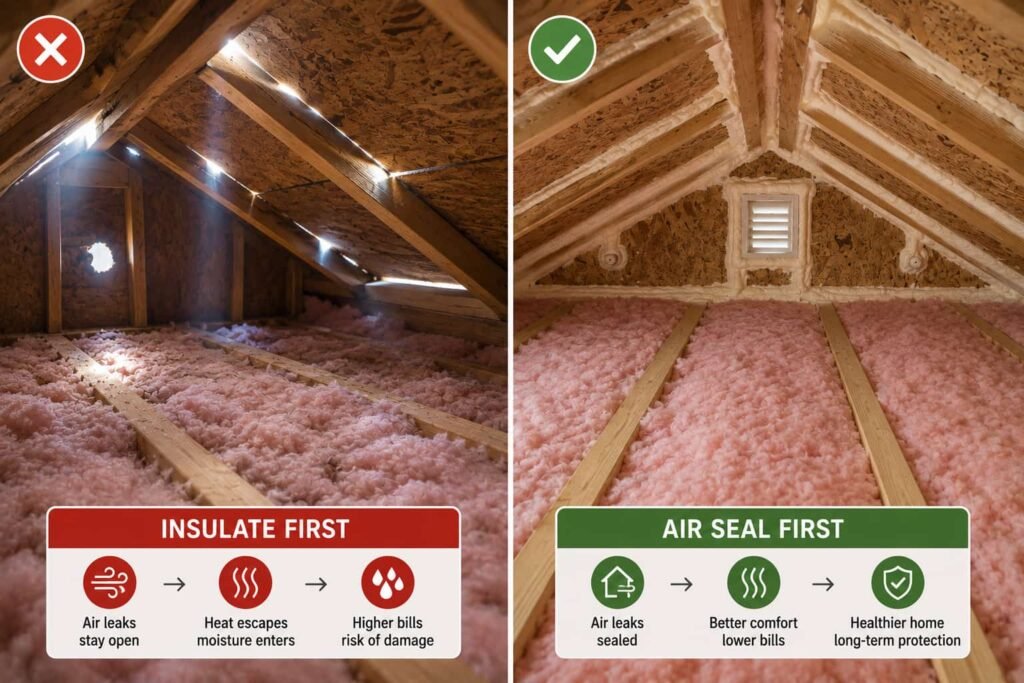
- The bare attic floor is air sealed. This is the best chance the house will ever get, because every top plate and penetration is exposed.
- Baffles, dams and flue clearances go in, then new insulation to the target depth.
Removal of dry, clean material is possible for a determined homeowner, but it is hot, dirty work with heavy dust, and it rarely makes sense when the material could stay. Vermiculite removal is never DIY.
Frequently asked questions
How long does attic insulation last?
We have not found a federal source that gives a service life. Dry, undisturbed fiberglass and cellulose keep working. Moisture, pests, compression and air leakage are what degrade performance.
Should I remove old insulation before adding new?
Not if it is dry, clean and not vermiculite. Top it up with unfaced material after air sealing. Remove it only if it is wet, moldy, soiled or you are air sealing from a bare floor.
Can I remove rodent-soiled insulation myself?
For a small, contained area, follow the CDC's cleanup steps exactly. For widespread contamination, hire a contractor, because the CDC calls for respirators with HEPA filters in heavy infestations.
Is insulation that looks dirty still working?
Often yes. Dark streaks usually show where air has leaked through. Seal the leak and the insulation can stay.
Sources
- US EPA, "Protect Your Family from Asbestos-Contaminated Vermiculite Insulation": appearance, do not disturb, do not remove yourself, hire an asbestos contractor. Read 2026-09-11.
- ENERGY STAR, "Attic Insulation Project": knob and tube wiring as a fire hazard; safety equipment; walking on joists. Read 2026-09-11.
- ENERGY STAR, "Attic Air Sealing Project": wet insulation, mold, rot and misrouted vents as reasons to hire a contractor. Read 2026-09-11.
- ENERGY STAR, "Recommended Home Insulation R-Values," including targets where 3 to 4 inches already exist. Read 2026-09-11.
- US EPA, "A Brief Guide to Mold, Moisture and Your Home": drying within 24 to 48 hours, porous materials, fixing the water problem. Read 2026-09-11.
- CDC, "How to Clean Up After Rodents": cleanup steps, contaminated insulation, protective equipment. Read 2026-09-11.
Local disposal rules and code requirements vary, and your local building department governs.