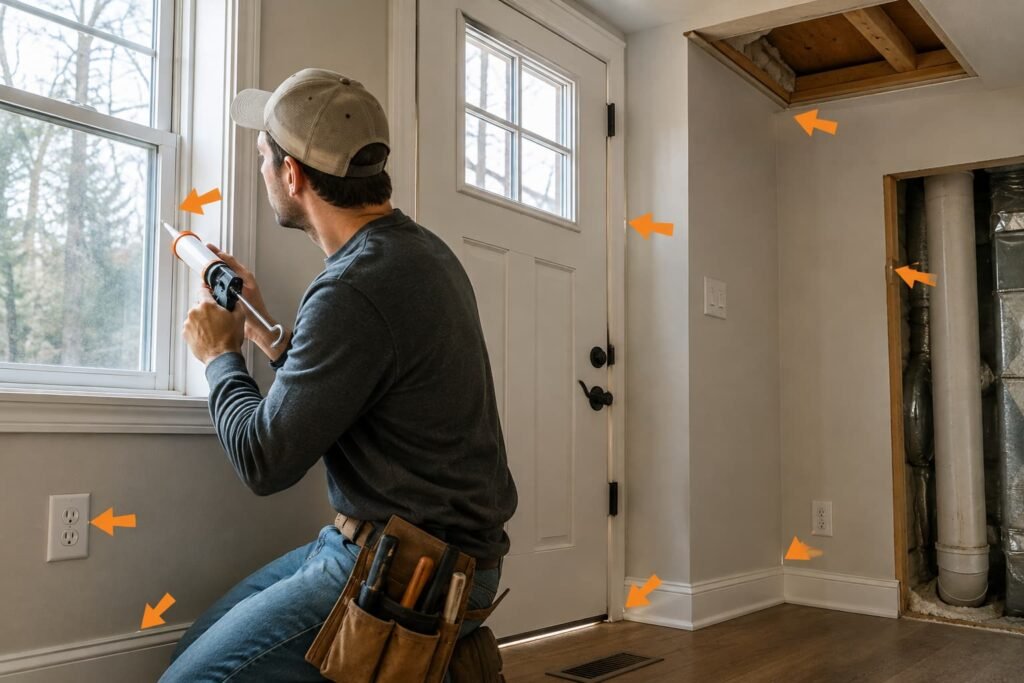
A room that is always cold, no matter how you adjust the vents or the furnace, is almost always losing heat at one specific point the rest of the house does not share: a corner with two exterior walls, a knee wall behind a bonus-room closet, an attic top plate above that one wall, or a rim joist over an unheated crawl space or garage. To diagnose it, check the simple airflow blockers first. Then match the room's location in the house to its likely leak path before you pay for HVAC repairs that will not fix an envelope problem.
That order matters because the two most common fixes people try first, cranking the thermostat and calling for a furnace check, treat a symptom the equipment cannot cause on its own if every other room is comfortable. If the rest of the house holds temperature and one room does not, the furnace is very likely working fine. Something specific to that room's construction is letting heat out, or cold in, faster than the equipment can replace it.
Rule Out the Five-Minute Explanations First
Before any diagnostic walk, close the easy gaps. Confirm the supply register in that room is fully open and not blocked by a bed, couch, or curtain, and that the return air path, under the door or through a return grille, is not sealed off by a rug or a closed door with no undercut. A closed interior door with no return path can starve a room of airflow even when the supply vent is wide open, because the air has nowhere to go back out.
Check whether the room has more exterior wall area relative to its floor space than the rooms you are comparing it to. A small room with two outside walls and a window will run cooler than an interior bedroom of the same size, and that is normal physics, not a defect. If the vents are open, the door has clearance, and the room still runs noticeably colder once those are ruled out, move to the envelope.
Diagnose the Envelope Pattern Behind an Always-Cold Room
Cold rooms cluster into a small number of construction patterns, and knowing which one applies narrows the search fast. Stand in the room and identify what is directly above it, directly below it, and on the far side of its exterior walls. A ceiling with attic space above, a floor over a garage or porch, or a wall shared with a knee-wall attic each fail in a different, predictable place, and each has a different fix.
Walk the room's perimeter and feel along the baseboards, window trim, and any electrical outlets on exterior walls with the back of your hand on a cold day. A steady draft at an outlet or baseboard, rather than general coolness, points to an air leak rather than a simple lack of insulation, and air leaks lose far more heat per square inch than a thin insulation gap does.
A Corner Room With Two Exterior Walls
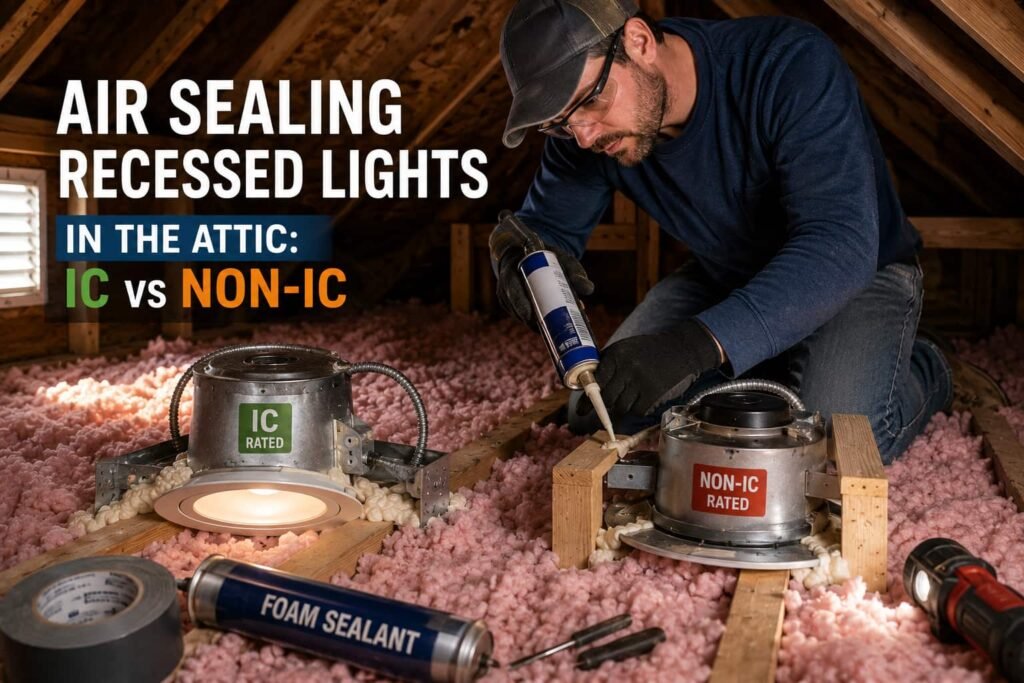
If the cold room sits at a corner of the house, check where the attic ceiling meets those two exterior walls. The top plate, the framing member the wall studs sit on, is one of the most common uninsulated and unsealed gaps in a house, because insulation installers often stop short of the wall line and the plate itself has gaps where wiring and can lights pass through. Heat rises straight out through that seam, and the room below reads cold at the ceiling line even though the walls feel fine. Our guide to sealing attic top plates and penetrations covers what to look for from the attic side and what a sealed plate should look like when the job is done correctly.
A Bonus Room Over the Garage or Behind a Knee Wall
A room built over an unheated garage, or a bonus room tucked under the roofline with a knee wall separating it from unconditioned attic space, is one of the most consistently cold rooms in any house with this layout. The knee wall itself is often insulated on the room side but left open to outside air behind it, which lets wind wash cold air across the back of that insulation and cancel out most of its R-value. If this matches your cold room, the diagnostic and fix are covered in why knee wall insulation fails and how to correct it, including the air-sealing step most installations skip.
A Room Above a Crawl Space or Unheated Basement
When the cold room sits over a vented crawl space, an unheated basement, or a cantilevered floor extension, the rim joist, the band of framing that sits on top of the foundation wall and carries the floor above, is usually the weak point. Rim joists are frequently left with only a thin batt of insulation stuffed against them, which does not stop air movement at all. Cold air moves through and around that batt continuously, and the floor above reads cold at the perimeter even with warm air blowing from a nearby register. Our rim joist insulation guide walks through rigid foam and spray foam options a homeowner can install by hand in a crawl space or basement.
Confirm It With a Home Energy Audit
Feeling for drafts by hand finds the obvious leaks; a proper audit finds the ones you cannot feel. A DIY home energy audit using an infrared thermometer or a smoke pencil at outlets, baseboards, and ceiling penetrations will show a temperature difference or airflow at the exact points this article describes, which turns "the room feels cold" into "the northeast corner ceiling is twelve degrees colder than the interior wall," a finding you can act on.
According to ENERGY STAR (read 2026-09-18), sealing air leaks and adding insulation in attics, floors over unconditioned spaces, and basement rim joists can save homeowners an average of 15% on heating and cooling costs. That figure is a national average from a modeled typical home, not a promise for any one house, but it explains why chasing the envelope problem in a single cold room is usually worth more than a thermostat adjustment or a furnace service call.
If the hand-feel test and a DIY audit both point to widespread leakage rather than one clear spot, a professional blower door test can quantify the whole house and confirm whether the cold room is a local problem or a symptom of a leaky envelope generally.
When the Attic Insulation Itself Is a Stop Sign
If your diagnostic walk takes you into the attic above the cold room and you find a loose, pebble-like, gray-brown or silver-gold insulation rather than fiberglass batts or blown cellulose, stop and do not disturb it. That appearance is consistent with vermiculite insulation, which the EPA (read 2026-09-18) advises should be assumed to contain asbestos and left undisturbed until a trained, accredited asbestos abatement contractor has assessed it. Do not add insulation over it, rake it, or vacuum it yourself. This is one case where the diagnostic walk ends with a phone call rather than a fix, and it takes priority over any air sealing or insulation work in that space.
While you are in the attic for any reason, walk only on the joists or a laid plywood path, not the insulation itself, since drywall below will not hold your weight.
What Not to Fix First
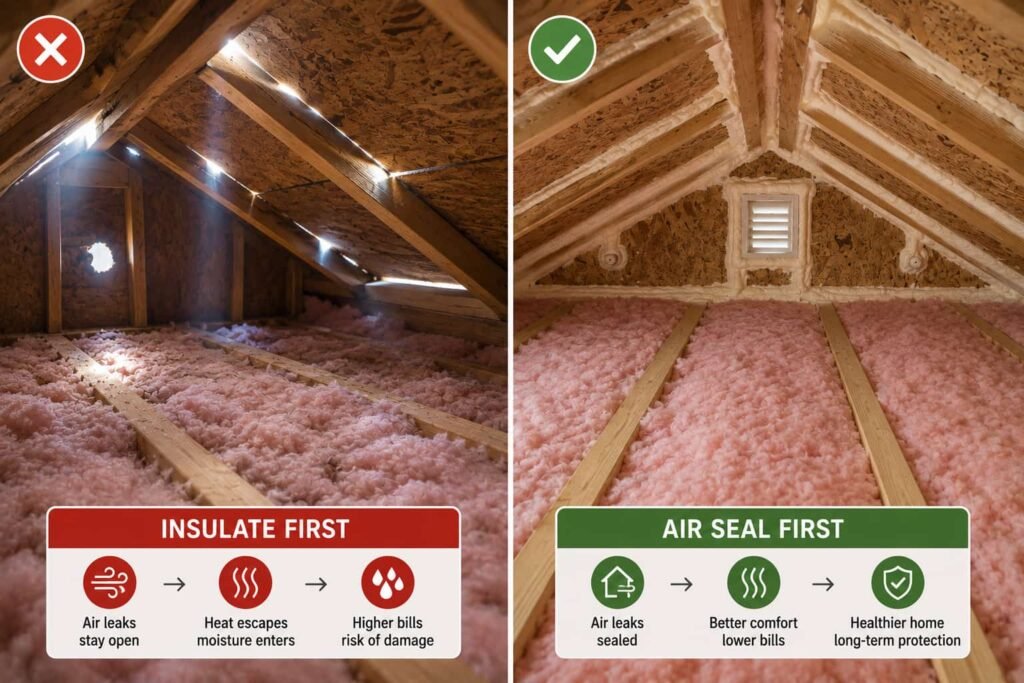
Resist insulating over a leak before it is sealed. Adding batts or blown insulation on top of an open top plate, an unsealed knee wall, or a leaky rim joist traps the moving air instead of stopping it, and the room often stays just as cold because the insulation is doing nothing against a steady draft passing through or under it. Air sealing and insulating are two separate jobs, and the sealing step comes first every time, at whichever of the three locations above matches your room.
FAQ
Why is my room cold even though the vent blows warm air?
A working supply vent proves the duct is delivering air; it does not prove the room can hold onto that heat. If the room's exterior wall, ceiling, or floor has an air leak or thin insulation, warm air arrives and then leaves again through the envelope faster than in the rest of the house.
Does closing the vents in other rooms help a cold room get warmer?
Closing vents can unbalance the duct system's pressure and, on some systems, reduce total airflow rather than redirect it usefully. It does not address an envelope leak, and it is not a substitute for finding where the cold room is actually losing heat.
How much colder is normal for a room with more exterior walls?
There is no single published figure for this because it depends on the home's construction and climate zone, but a persistent difference of several degrees that shows up every winter, rather than during a specific cold snap, points to a construction gap worth diagnosing rather than accepting.
Can I fix a knee wall or rim joist myself?
Both are commonly homeowner-accessible air sealing and insulation projects, covered in the linked guides above. Attic work involving vermiculite insulation, and any work that would require opening finished walls or ceilings, is where this stops being a weekend project.
Should I get a blower door test before or after I check the room myself?
Check the room yourself first. A hand-feel walk and a basic DIY audit are free and often point straight to the leak; a blower door test is most useful afterward, to confirm the whole-house picture or to verify sealing work once it is done.