
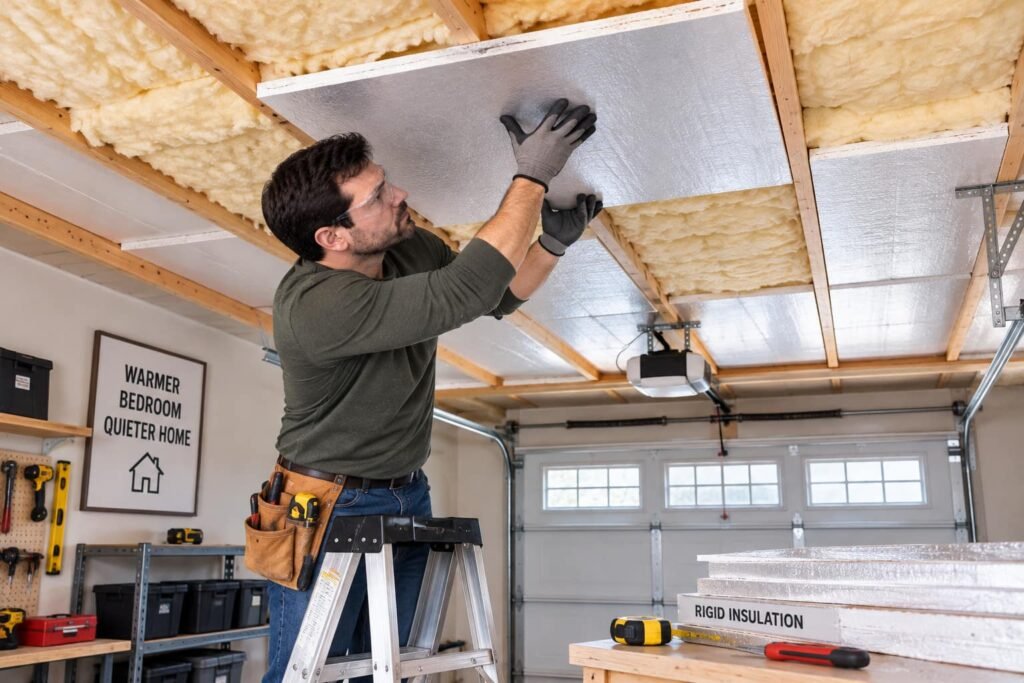
Insulating a Garage Ceiling Under a Bedroom
That garage ceiling is a fire separation before it is insulation. What the code asks for, what you can seal without touching it, and when to call the building department.
That garage ceiling is a fire separation before it is insulation. What the code asks for, what you can seal without touching it, and when to call the building department.
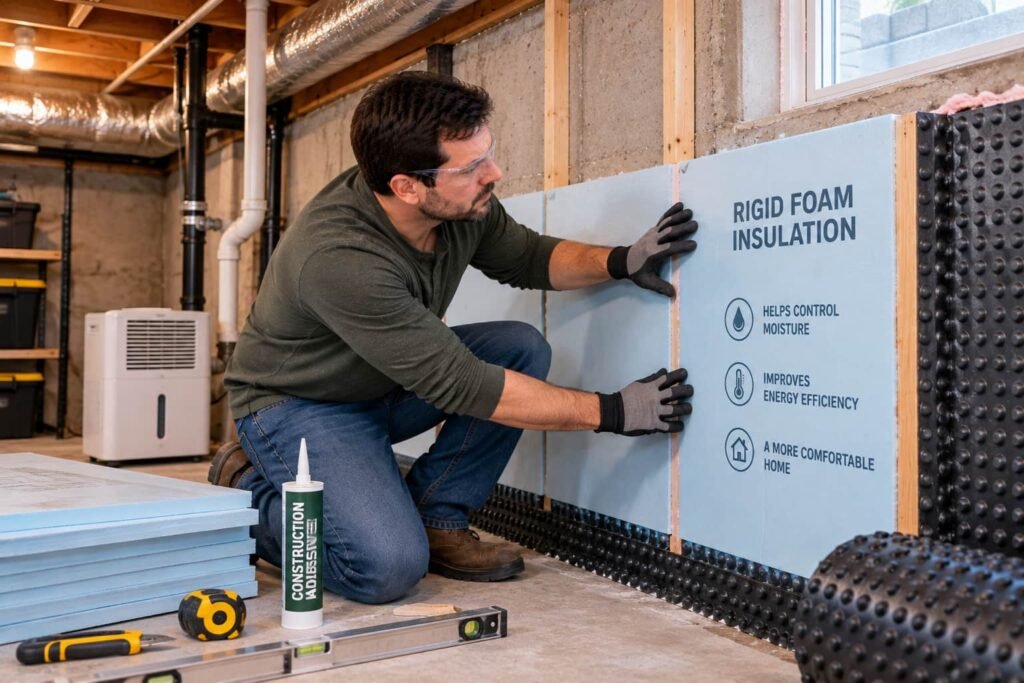
How to insulate a basement wall with rigid foam without trapping moisture: drying direction, why no polyethylene, the thermal barrier rule, and stop conditions.
Basement Wall Insulation With Rigid Foam and Moisture Read Post »
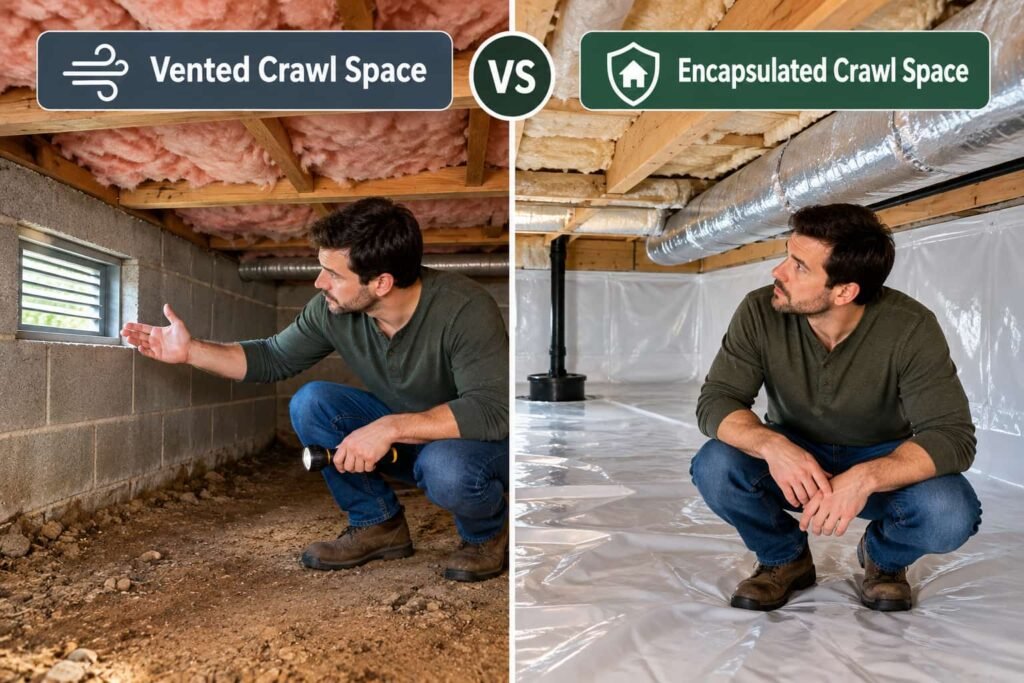
Vented or encapsulated crawl space? How to work out which one your climate and your building department allow, and what a combustion appliance changes.
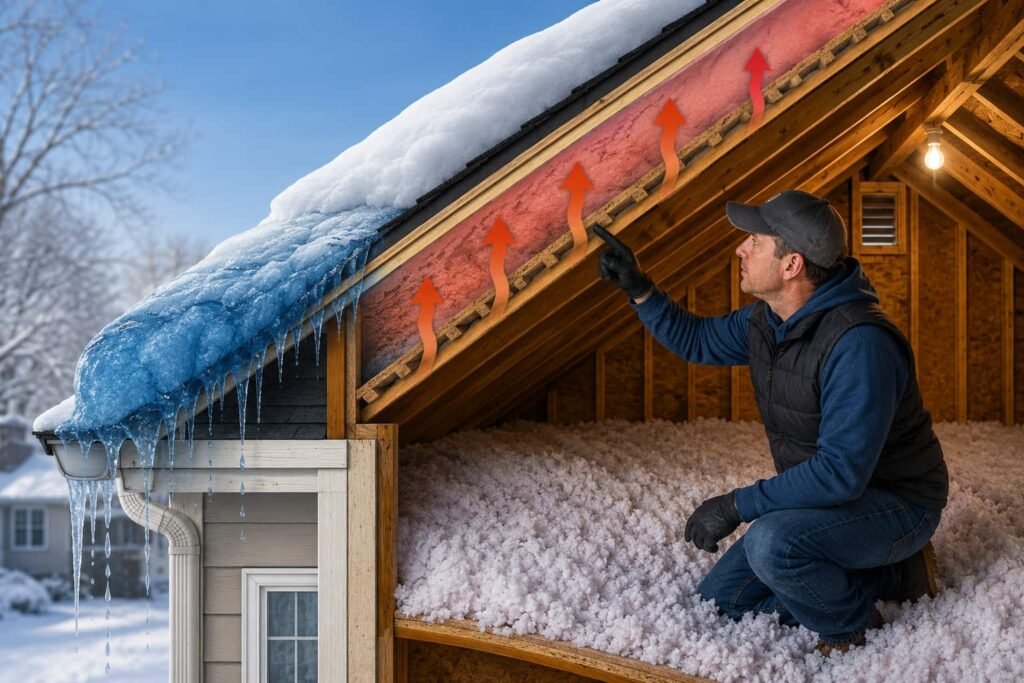
Ice dams start with warm air leaking into the attic, not with the shingles. Read the ice, find the real cause, and fix it in the right order.
Ice Dams Are an Attic Problem, Not a Roof Problem Read Post »
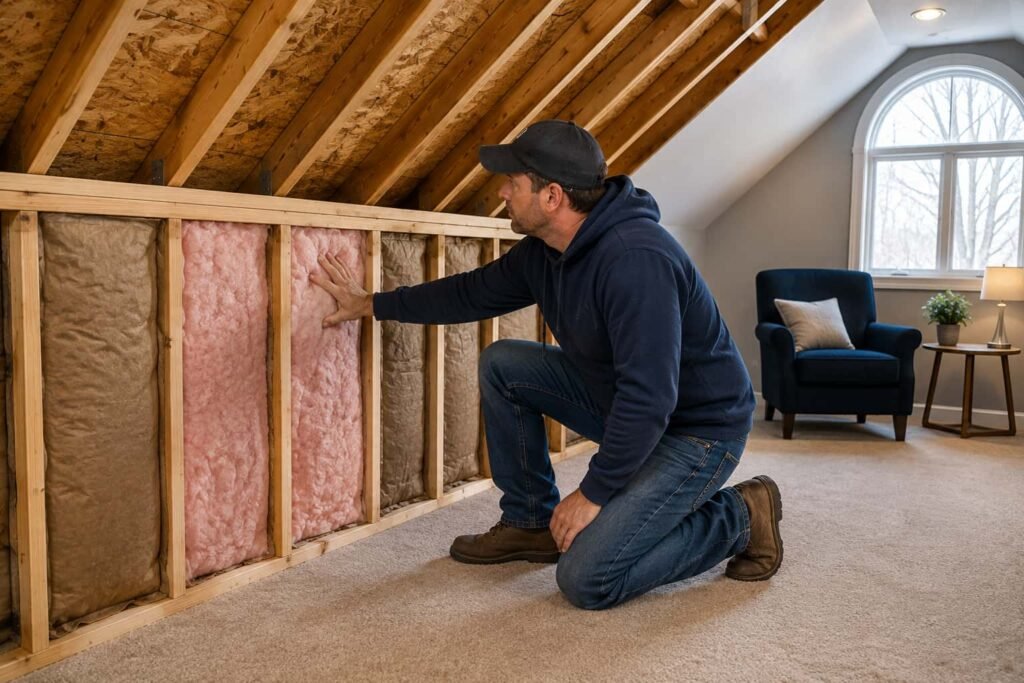
Knee wall insulation fails when the air barrier is in a different plane. What DOE guidance says, and when the fix is moving the boundary to the roofline.
Knee Wall Insulation: Why the Bonus Room Never Warms Read Post »
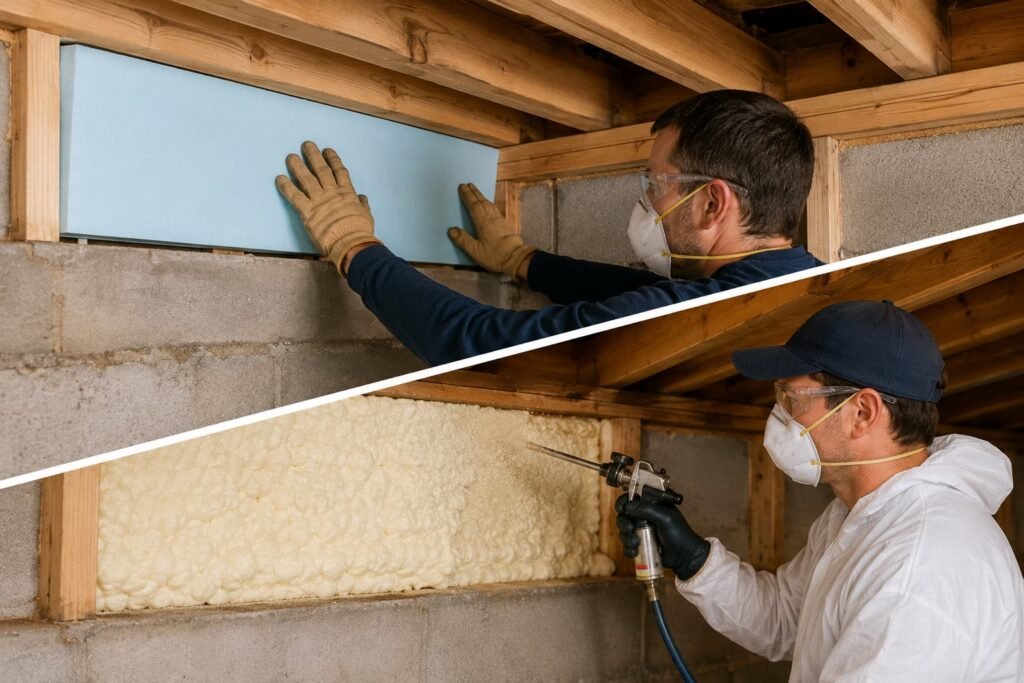
Rigid foam or spray foam at the rim joist, what the IRC says about leaving foam exposed, and the stop conditions that end the job before you start.
Insulating a Rim Joist: Rigid Foam vs Spray Foam, Done by Hand Read Post »
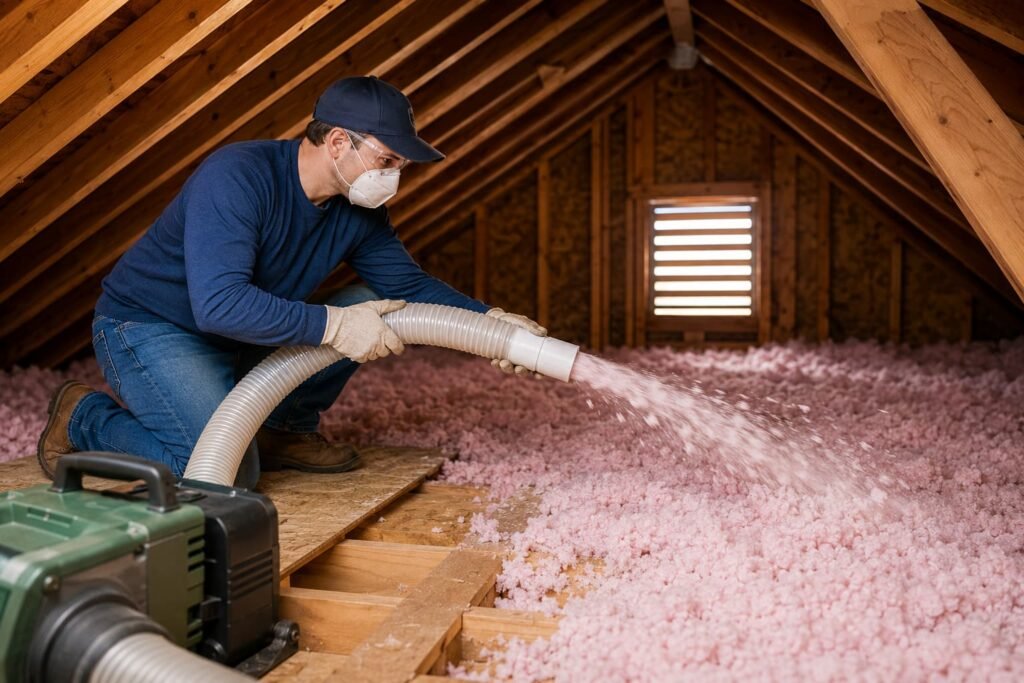
Renting the machine is the least of it. Here is the prep that comes first, why coverage per bag decides the job, and where it stops being DIY.
DIY Blown-In Attic Insulation: Renting the Blower Read Post »
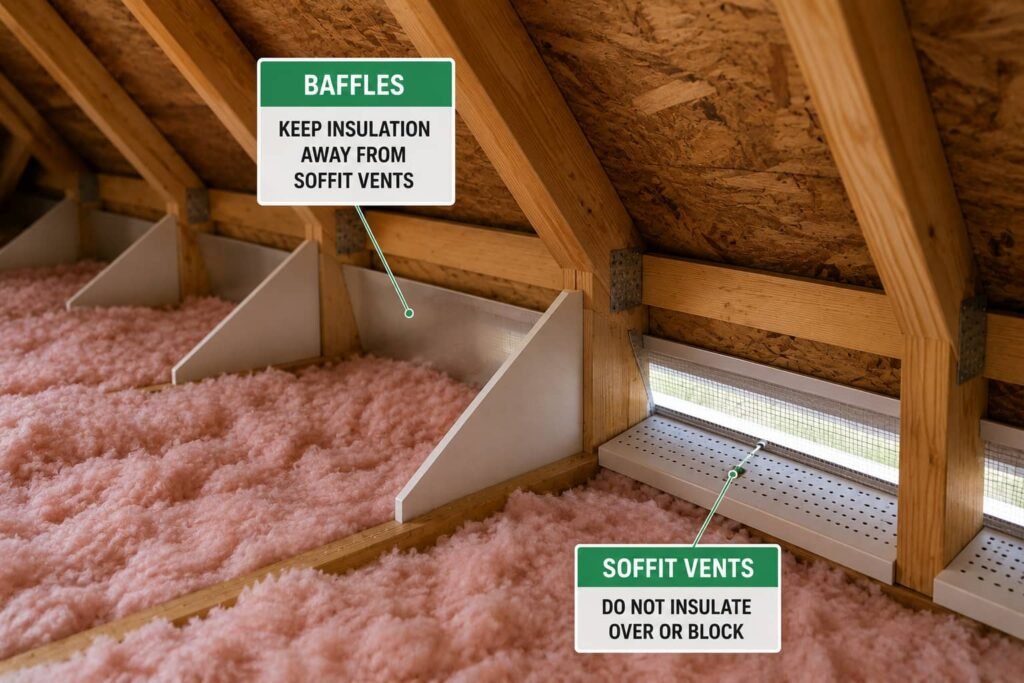
Insulation piled into the eaves blocks the soffit vents and the attic stops breathing. What a baffle does, where one goes, and the 2 inch vent space.
Attic Baffles and Soffit Vents: Do Not Insulate Over Them Read Post »
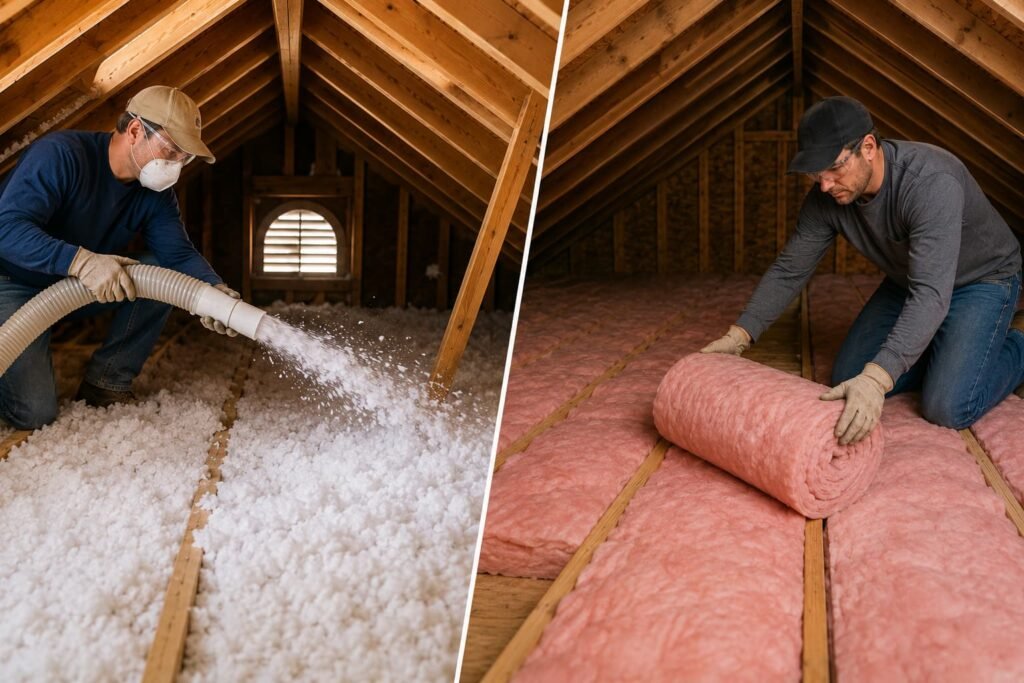
Blown-in or batts? Decide by attic geometry, by the coverage chart the FTC requires on every bag, and by which one you can install without gaps.
Blown-In vs Batt Insulation for an Attic You Do Yourself Read Post »
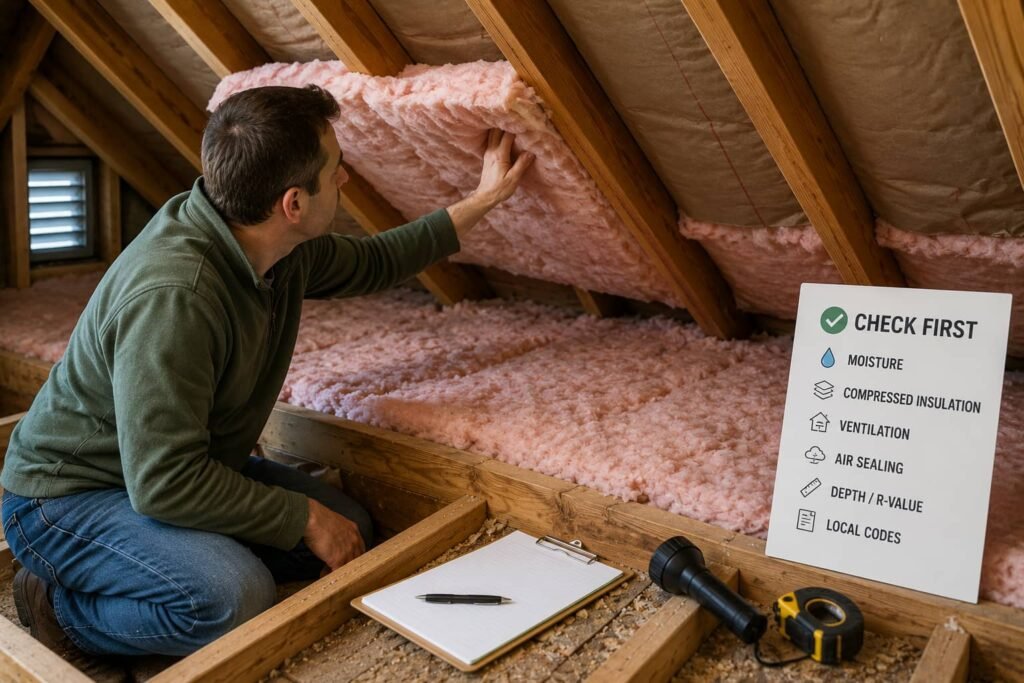
Usually yes, if the old layer is dry, uncompressed and not vermiculite. Here is the attic inspection that decides it, and the unfaced rule.
Add Insulation Over Existing Insulation? Check First Read Post »
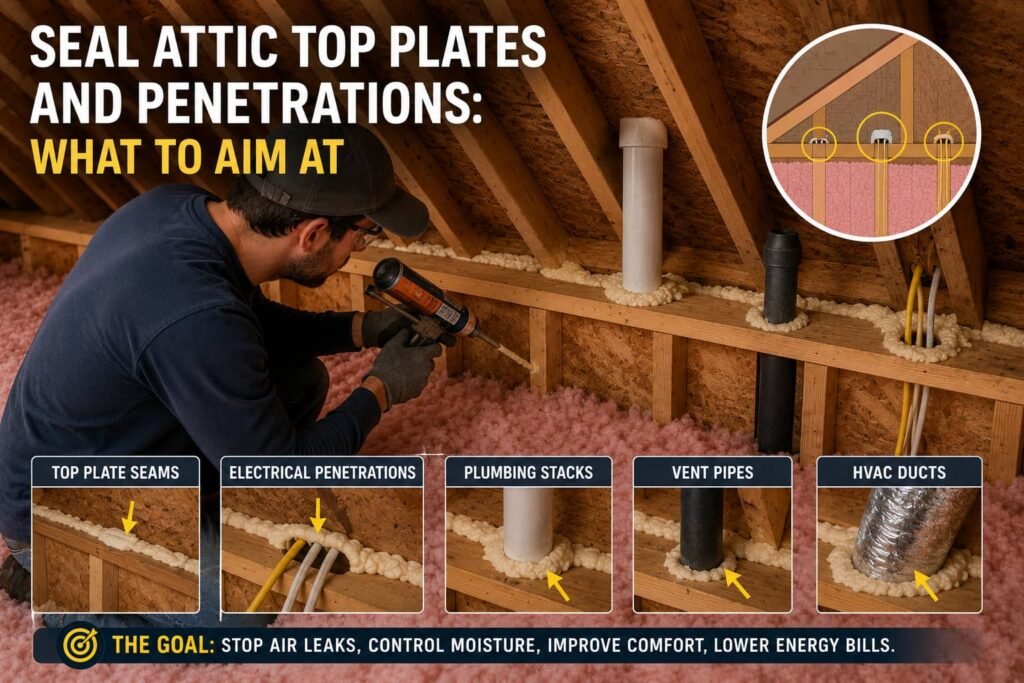
You are in the attic with a foam gun. Here is the DOE gap-size table, the places worth sealing, and where fire-rated material is the only option.
Seal Attic Top Plates and Penetrations: What to Aim At Read Post »
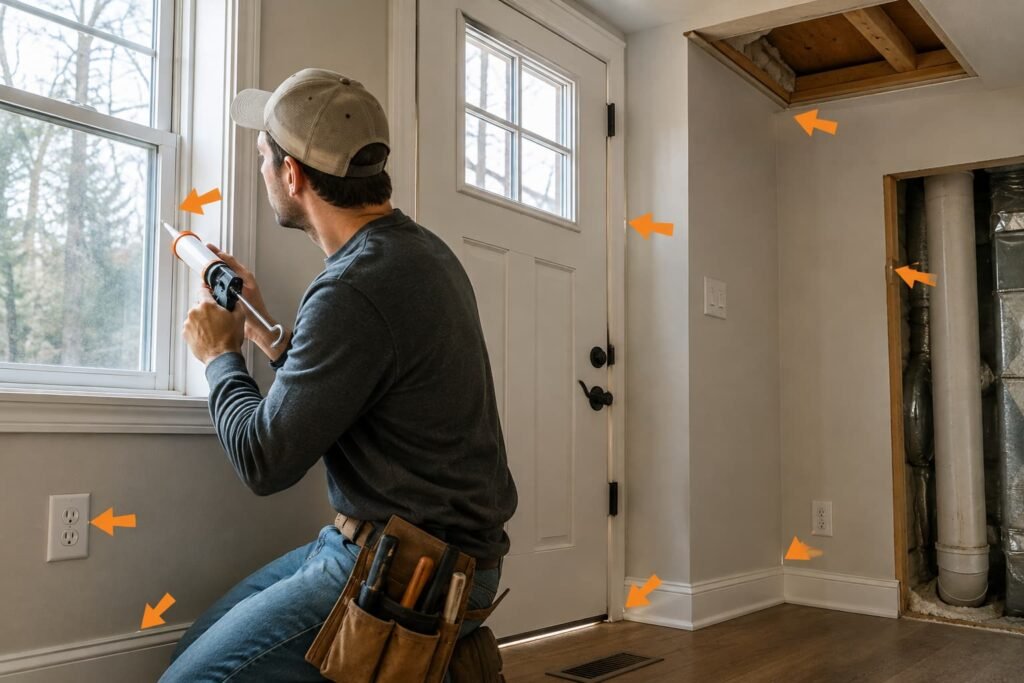
Most of the air leaving your house does not go through the windows. Here is the leak map, top to bottom, and which parts are yours to seal.
How to Air Seal Your House: Where the Leaks Actually Are Read Post »